





Black Painted Lamp
A black painted lamp brings dark, decorative structure to a room, spanning styles from Chinoiserie standards to industrial railway lanterns.
Black Painted Lamp
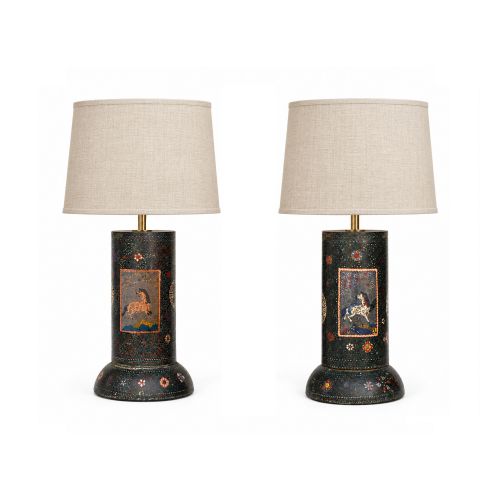
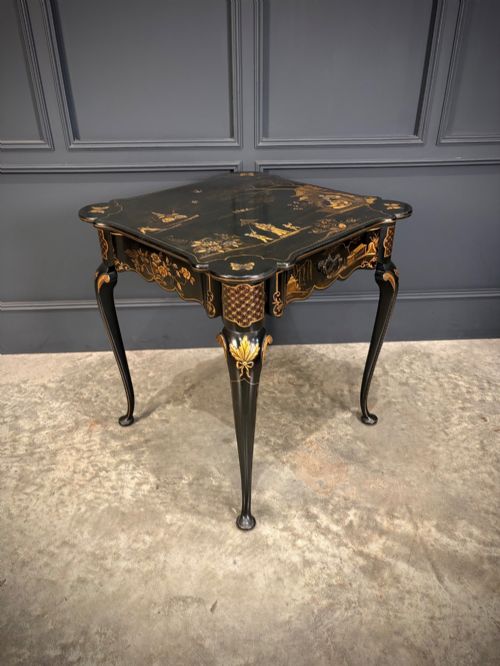
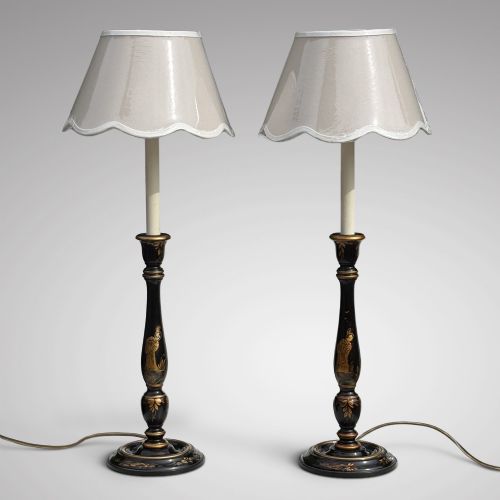
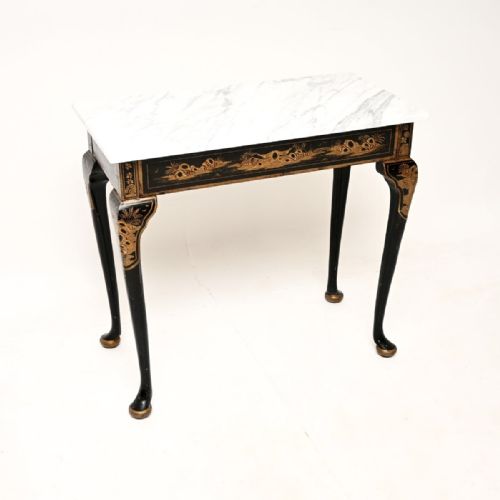
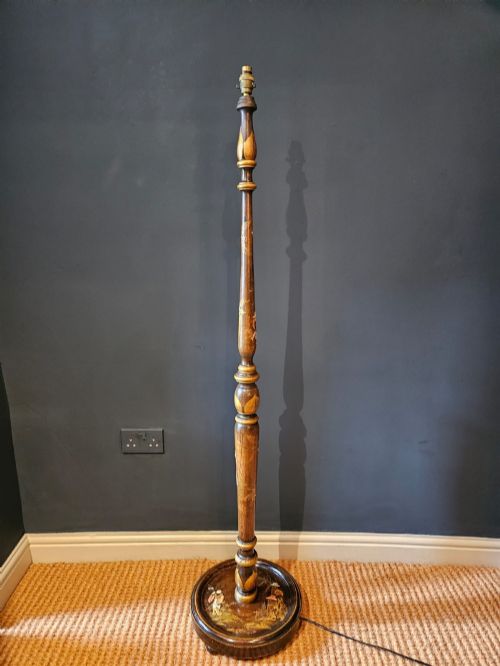
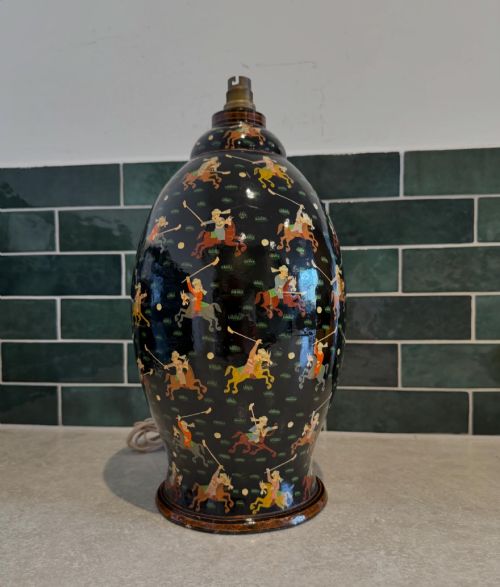
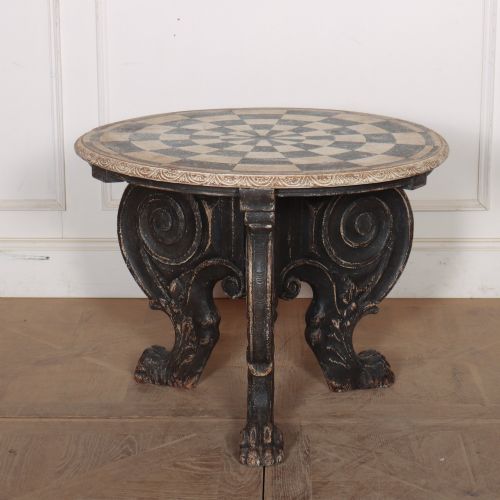
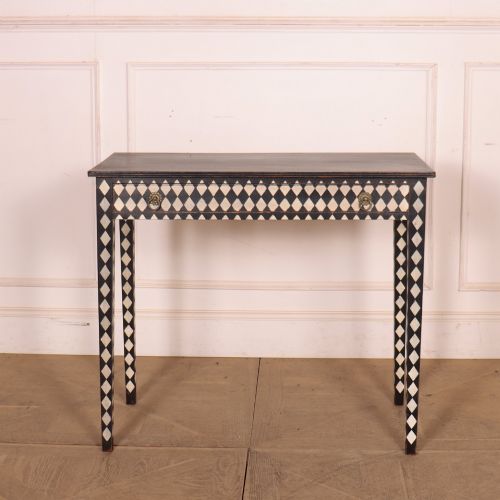
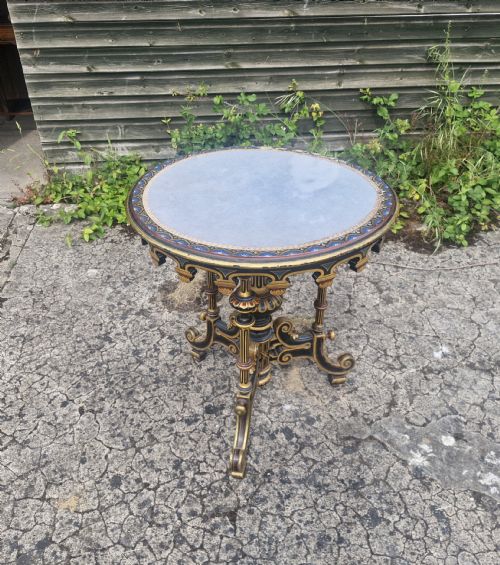
A black painted lamp covers a diverse range of lighting and small furniture adapted for illumination, appearing across the nineteenth and early twentieth centuries. These pieces encompass tall standard lamps, floor-standing lights, and table lamps alongside small occasional tables designated for lamp use.
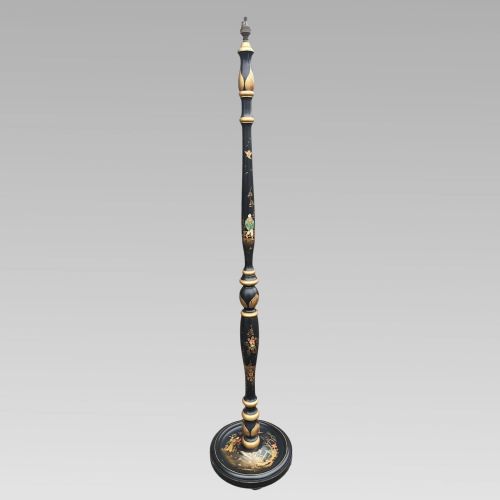
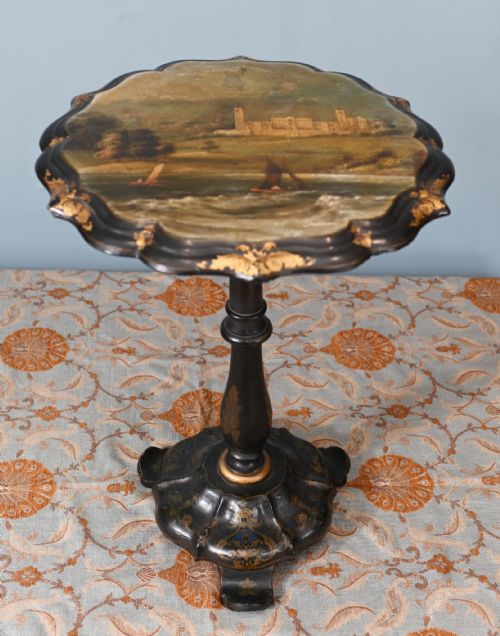
The selection here draws heavily from the early twentieth century and the Victorian era, bringing together decorative lighting and painted furniture. Chinoiserie and Edwardian pieces dominate the aesthetic, utilising dark lacquer and gilt decoration.
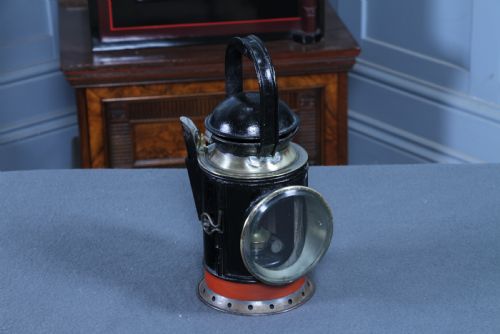
Beyond domestic household lighting, functional industrial examples such as railway lanterns and oil lamps sit alongside folk art pieces. These darker finishes provide strong decorative contrast within period interiors.
How they were made
Construction relies on traditional woodwork and metalworking, employing carved oak, brass, and turned wood foundations. Lacquer and paint form the primary dark surfaces, often built up in multiple layers over wood or papier-mache.
Decorative finishes frequently incorporate hand-painted details, gilt highlights, and applied varnish to achieve depth on the black ground. Metal components combine cast brass with painted toleware and iron elements on functional railway pieces.
Black Painted Lamp Retail Price Guide 2026
Typical asking prices for black painted lamp among the pieces listed under this phrase on Sellingantiques today, from the lower quarter to the upper quarter. They describe what is for sale here now, not the wider market.
The listings here feature pieces dated across the nineteenth century, the Edwardian era, and the nineteen-twenties and thirties.
What varies in quality
The integrity of the surface finish dictates much of the visual success, distinguishing finely applied lacquer and hand-painted Chinoiserie motifs from simpler painted treatments. Crisp detail in the underlying carving and the preservation of original gilt work elevate standard lamps and tables.
Proportion and structural soundness in supporting furniture, such as drop-leaf lamp tables and occasional stands, separate standard utilitarian items from finer decorative examples. Original hardware and authentic period wiring components contribute to the integrity of lamps and lanterns.
The Black Painted Lamp Glossary
- Chinoiserie
- European imitation of Chinese artistic styles, characteristically featuring dark lacquer grounds and gilt figures. This aesthetic defines many of the standard lamps and tables from the Edwardian period and the nineteen-twenties.
- Standard lamp
- A tall, free-standing floor lamp designed to hold a light fitting and shade at upper room height. These pieces often feature decorative turned wooden shafts and weighted bases.
- Toleware
- Painted or lacquered sheet metal utensils and decorative objects. This technique appears on specific table lamps and containers adapted for electrical fittings.
- Papier-mache
- A composite material made of paper pulp reinforced with glue or resin, moulded and painted. Kashmiri pieces utilise this medium for lightweight decorative lamp bodies.
- Occasional table
- A small, movable table intended for specific accessory uses, frequently serving as a lamp table beside seating. These items appear in painted wood and lacquer finishes.
Black Painted Lamp: Frequently Asked Questions
What periods do these lamps come from?
The pieces span the nineteenth century through the nineteen-thirties, encompassing Victorian, Edwardian, and early twentieth-century examples.
Design influences range from formal Chinoiserie lacquerwork to industrial railway lanterns and rustic painted oak items.
How do I style a black painted standard lamp?
A tall standard lamp works well placed beside armchairs or in corners to provide ambient room lighting. The dark finish anchors the surrounding furniture and pairs easily with patterned or neutral shades.
Matching table lamps and occasional surfaces can coordinate smaller lighting schemes across a room.
Are railway lanterns wired for home use?
Railway lanterns and oil lamps are originally functional items produced for transport networks using oil or paraffin. Many retain their original mechanical components, oil reservoirs, and lenses.
Collectors often display them as decorative objects or adapt them for modern electrical lighting.
What is the difference between Chinoiserie and standard painted lamps?
Chinoiserie lamps feature specific decorative motifs inspired by Asian art, executed in black lacquer with gilt or painted ornamentation. These typically date from the Edwardian era up to nineteen-thirty.
Standard painted lamps rely on plain dark paint finishes over wood or metal without the characteristic Orientalist decoration.