



Black Oak Sideboard
A black oak sideboard brings deep grain and substantial presence to a room, offering practical storage through centuries of craftsmanship.
Black Oak Sideboard
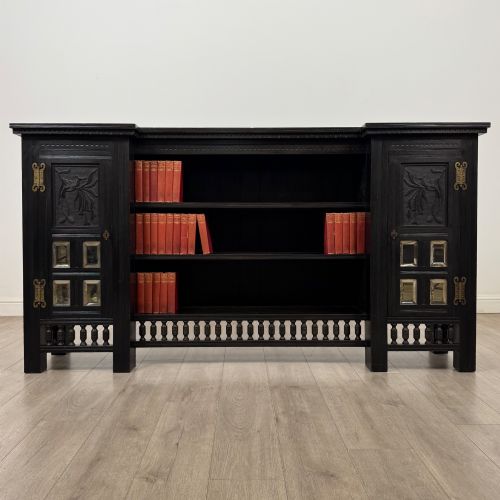
When searching for a black oak sideboard, buyers encounter a robust form designed for dining rooms and large living spaces. The listings feature sideboards and buffets, dressers, cabinets, and commodes spanning the eighteenth century through the Victorian era and the year eighteen ninety.
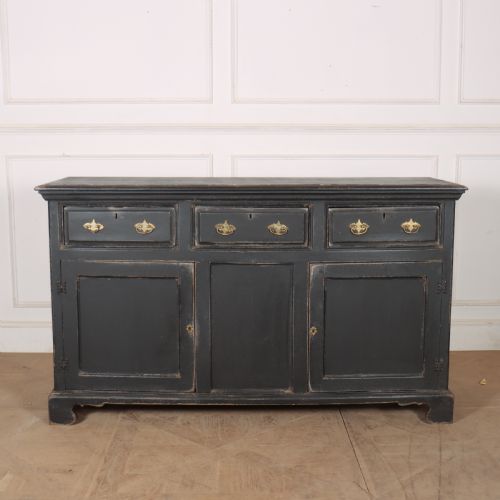
The versions most commonly met here include ebonised wood finishes alongside traditional English country dresser bases and French marble top buffets. Makers such as Garnett and Sons and Krieger of Paris represent the finer end of these robust storage pieces.
Makers utilised dark finishes and carved panels to create heavy, decorative silhouettes suited to period interiors. These functional items served to store tableware and display serving dishes in large households.
How they were made
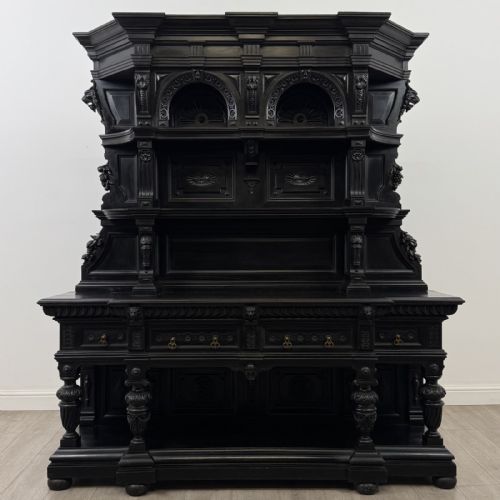
Makers constructed these sturdy storage units primarily from oak and ebonised wood or hardwood, frequently incorporating brass hardware for handles and hinges. Skilled joiners carved decorative details directly into the timber, producing pronounced lion mask carvings and relief panels.
Surface treatments included ebonising to darken the grain, alongside traditional paint and bleached finishes. Workshops also integrated fitted marble tops into specific buffet designs, adding weight and a smooth counter surface.
Black Oak Sideboard Retail Price Guide 2026
Typical asking prices for black oak sideboard among the pieces listed under this phrase on Sellingantiques today, from the lower quarter to the upper quarter. They describe what is for sale here now, not the wider market.
A Victorian sideboard stares back from the room with carved lion masks keeping watch over the dining silver.
What varies in quality
Quality rests upon the depth of the timber carving and the precision of the joinery used in the drawers and cabinet doors. Pieces featuring documented maker stamps or attributed workshops demonstrate superior construction standards compared to unbranded examples.
The integration of materials such as inset marble tops and original brass mounts distinguishes finer cabinets from simpler country dressers. Condition of the ebonised surface and original glass components further separates standard utility pieces from high-style decorative works.
Garnett and Sons·Krieger of Paris
The Black Oak Sideboard Glossary
- Ebonised
- Timber treated with a dark stain or chemical process to imitate ebony. This finish became particularly popular during the Victorian period for dramatic effect.
- Buffet
- A sideboard or low cabinet used for serving food and storing dining accessories. These often feature marble tops in French designs.
- Dresser base
- The lower portion of a kitchen or dining dresser, featuring drawers and cupboards without upper shelving. These typically date to the eighteenth century in English country styles.
- Commode
- A low cabinet or chest of drawers designed for domestic storage. French examples often incorporate marble surfaces and pale oak finishes.
- Arts and Crafts
- A design movement prioritising traditional craftsmanship and honest construction over mass production. Pieces from this style focus on structural simplicity and natural materials.
Black Oak Sideboard: Frequently Asked Questions
What rooms suit a black oak sideboard?
These substantial storage pieces fit naturally into large dining rooms or spacious hallways where their dark timber provides a strong visual anchor.
They also function effectively in generous living areas to hold tableware, linens, or media equipment while adding period character.
How do I care for ebonised wood?
Dust the surface regularly with a soft, dry cloth to prevent abrasive particle buildup on the dark finish. Avoid placing the timber in direct sunlight or near heat sources to prevent cracking.
Apply professional beeswax sparingly when the wood appears dry, rubbing it gently into the grain.
What is the difference between a sideboard and a dresser base?
A sideboard is typically built specifically for dining room service and storage, often featuring decorative carvings and refined proportions. A dresser base derives from kitchen and pantry use, possessing a more utilitarian structure.
Dresser bases frequently display simpler lines and earlier eighteenth century origins compared to formal Victorian sideboards.
How do I identify an Aesthetic Movement cabinet?
These cabinets display ebonised wood surfaces combined with clean geometric lines and understated decorative hardware. They reflect a shift away from heavy Victorian ornamentation towards simpler, art-focused design.
Documentation or maker stamps from firms like Garnett and Sons provide definitive attribution.