





Black Nursing Chair
A black nursing chair brings dark elegance and low seating to a room, offering the compact comfort and historic character that collectors seek.
Black Nursing Chair
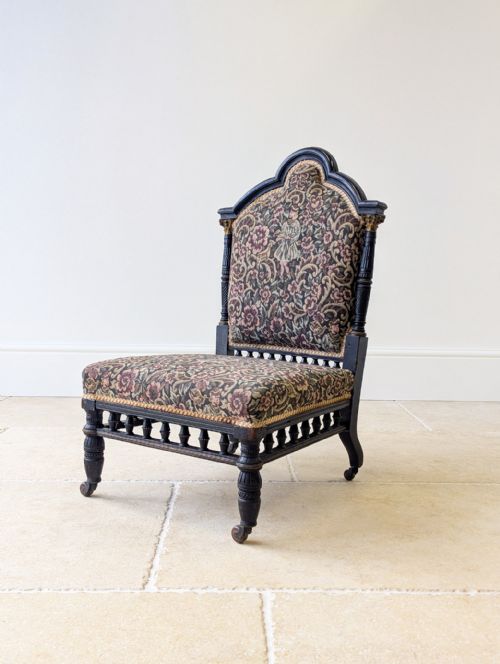
A black nursing chair is a low-seated Victorian or Edwardian chair designed originally for comfort and tending to infants, though equally suited as a low salon or slipper chair today. The pieces seen here span the Victorian, Edwardian, and Napoleon III periods, capturing the dark aesthetic of the late nineteenth century.
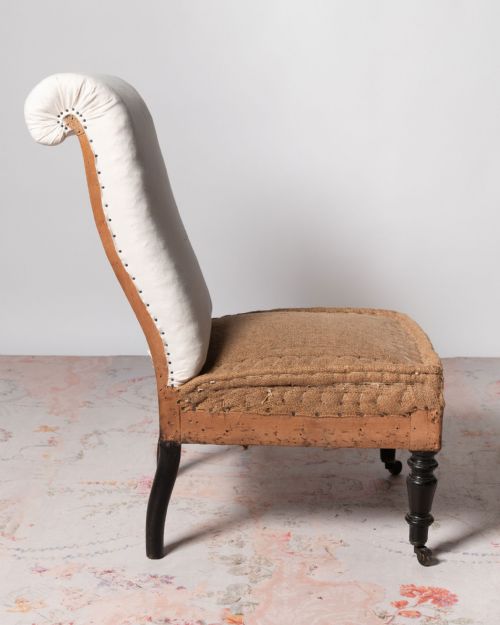
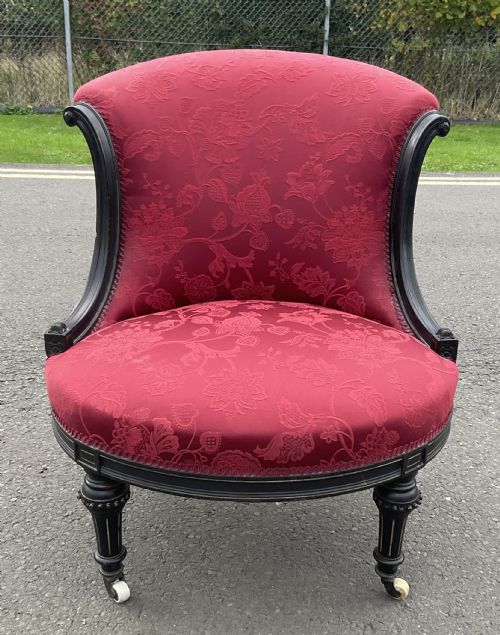
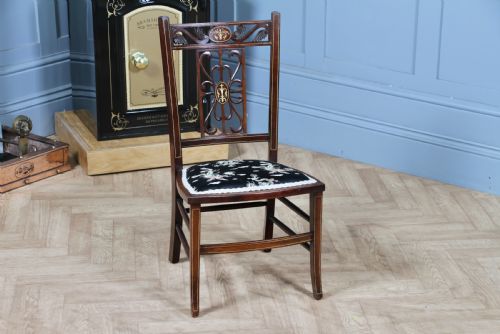
The versions most commonly met on this page are ebonised wood frames paired with period upholstery such as velvet, hessian, fabric, or calico. They appear in forms ranging from scroll back slipper chairs and tub chairs to low salon seating and carved mahogany designs.
Originating predominantly from English and French workshops, these chairs reflect stylistic influences including the Aesthetic Movement and Regency revivals. Their low proportions and dark finishes distinguish them from standard parlour seating.
How they were made
Makers utilised dense timbers, coating them in black ebonising finish to imitate costly ebony, occasionally adding gilt detailing for contrast. Frames were joined using traditional woodworking techniques suited to the scroll backs, low seats, and turned or tapered legs.
Upholstery techniques involved supportive internal webbing and stuffing layered beneath top fabrics like silk, velvet, or hessian, often secured with brass tacks. Carved mahogany and inlaid details appear on later Edwardian examples, showing skilled handcrafting in the woodwork.
Black Nursing Chair Retail Price Guide 2026
Typical asking prices for black nursing chair among the pieces listed under this phrase on Sellingantiques today, from the lower quarter to the upper quarter. They describe what is for sale here now, not the wider market.
Low enough to tend a Victorian infant or slip on a shoe, these dark chairs invite you to sit down and stay awhile.
What varies in quality
The refinement of the ebonised finish and the crispness of any gilt or carved detail separate standard pieces from finer examples. Subtle differences in frame proportions, such as an elegant scroll back or slender turned legs, reveal the maker's hand.
The integrity of the underlying frame construction and the choice of period-appropriate upholstery materials dictate the lasting presence of the chair. Pieces reflecting specific design movements like the Aesthetic Movement often display superior artistic cohesion.
Maple & Co
The Black Nursing Chair Glossary
- Ebonised wood
- Timber treated with a dark stain or finish to resemble genuine ebony. This process was especially popular during the nineteenth century for furniture requiring a sleek black appearance.
- Slipper chair
- A low-seated upholstered chair designed originally for bedrooms and dressing rooms. Their minimal height made them practical for sitting while putting on shoes.
- Tub chair
- An armchair characterised by a rounded, continuous back and armrest shaped like a tub. They provide enclosed comfort and compact proportions.
- Napoleon III style
- A French nineteenth-century eclectic revival style drawing on Louis XIV, XV, and XVI motifs. It favours ornate curves, scroll backs, and rich upholstery.
Black Nursing Chair: Frequently Asked Questions
What is a black nursing chair?
A black nursing chair is a low-seated nineteenth-century chair featuring an ebonised wooden frame and upholstered seat. Originally built for nurseries and dressing rooms, its low profile allowed for easier tending of infants.
Today, these chairs function well as accent or salon seating in living spaces and bedrooms. Their dark finishes and compact dimensions make them distinct additions to historic and modern interiors alike.
How do I date a black nursing chair?
Dating relies on observing stylistic markers, framing materials, and construction methods. Victorian and 1880s examples frequently feature ebonised wood and Aesthetic Movement influences, while Edwardian pieces from around 1900 may incorporate mahogany and inlaid woodwork.
Examining the upholstery webbing, joinery, and turning style helps narrow down the period. Comparing the silhouette to documented pieces from the same decade provides further clarity.
Where should I place a nursing chair?
These chairs suit bedrooms, dressing rooms, and corners of sitting rooms where low seating is desirable. Their compact scale ensures they do not overpower smaller spaces.
Pair them with low side tables or position them near fireplaces and reading nooks. Their decorative ebonised frames allow them to stand alone as feature pieces.
How do I care for ebonised wood?
Ebonised wood requires gentle dusting with a soft, dry cloth to prevent the accumulation of grit. Avoid harsh chemical cleaners that can strip or dull the dark finish.
Keep the timber away from direct sunlight and excessive moisture to protect the surface sheen. Occasional waxing with a suitable polish maintains the lustre of the black finish.