



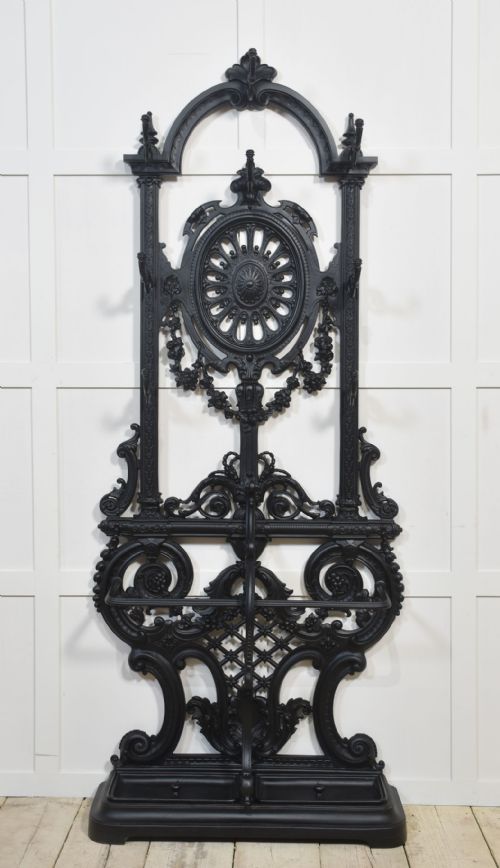

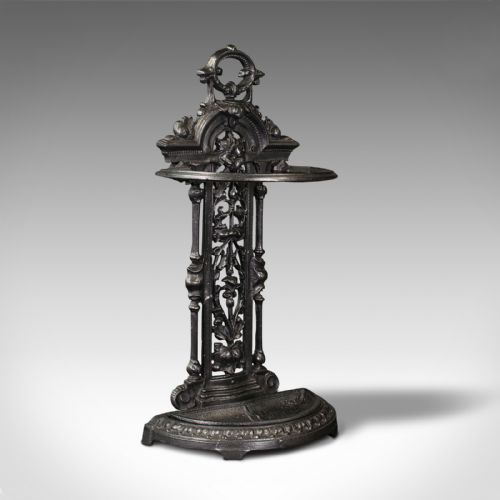

Black Metal Umbrella Holder
These black metal umbrella holder pieces keep hallways tidy while bringing industrial strength and period design straight to your front door.
Black Metal Umbrella Holder
A black metal umbrella holder brings utilitarian practicality together with decorative period design, serving as a dedicated vessel for wet walking sticks and walking gear in the hallway. When you search for a black metal umbrella holder, you encounter robust hall furniture designed to withstand daily domestic use.
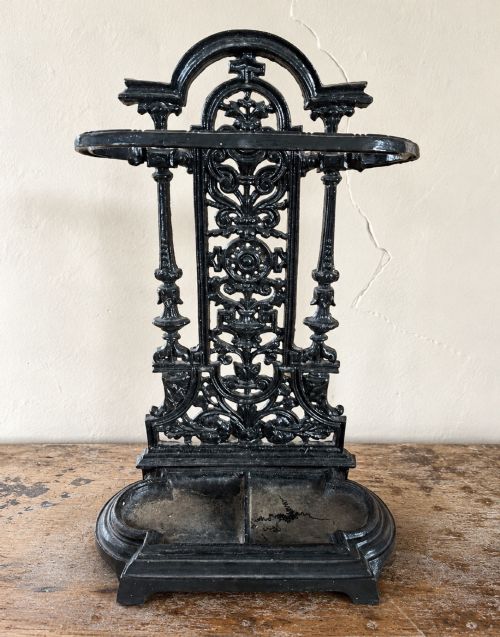
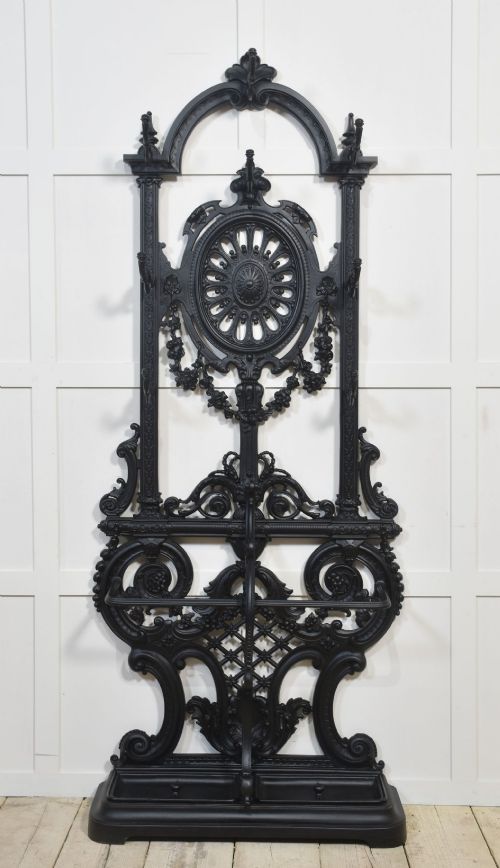
Most examples appearing here belong to the Victorian and Edwardian eras, alongside pieces from the Art Deco period. You will frequently find heavy cast iron stands featuring divisional rings and integrated drip trays, as well as distinct hall stands combining hooks and mirrors.
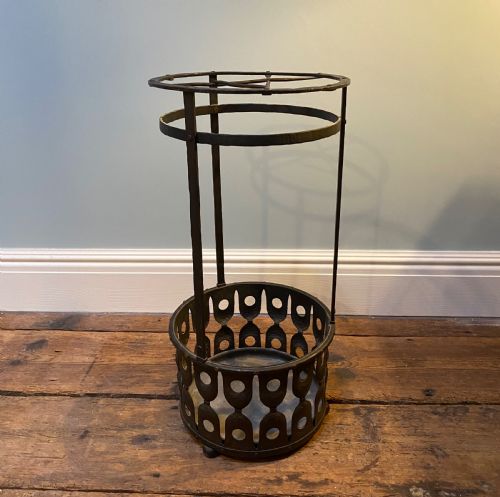
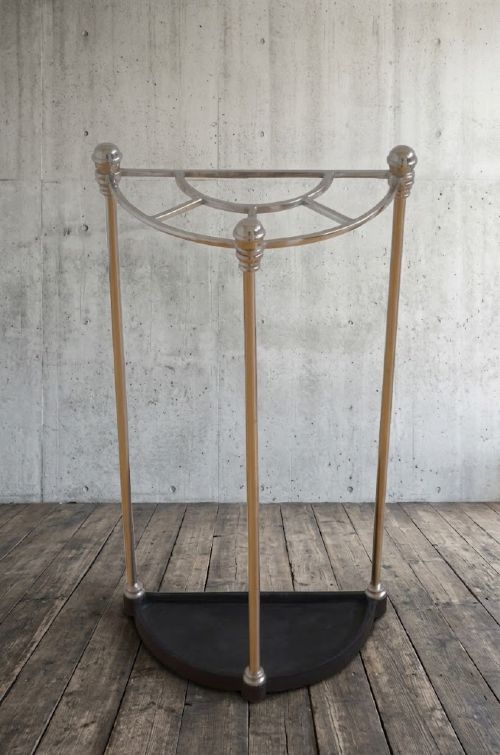
The forms range from compact demi-lune shapes designed to hug a wall to substantial twenty-four ring umbrella stands built for larger country houses. Wrought iron, tubular metal, and nickel plating also appear alongside traditional cast iron constructions.
Construction and materials
Foundry work dominates the production of these pieces, utilising cast iron poured into intricate moulds to achieve openwork patterns and robust structural frames. Makers also employed wrought iron and tubular metal, shaping them through forging and bending to create lighter profiles.
Finishes such as black paint and nickel plating protected the metal surfaces from moisture while defining the visual character of the piece. Some variations incorporate carved wood elements, such as those seen in Black Forest examples, blending organic textures with metal frameworks.
Black Metal Umbrella Holder Retail Price Guide 2026
Typical asking prices for black metal umbrella holder among the pieces listed under this phrase on Sellingantiques today, from the lower quarter to the upper quarter. They describe what is for sale here now, not the wider market.
Some Victorian house guests must have parked entire arsenals of walking sticks inside twenty-four ring stands while shedding their damp topcoats.
Judging quality and craftsmanship
Quality rests upon the crispness of the casting and the complexity of the decorative ironwork, distinguishing standard utility items from ambitious foundry productions. Sharply defined motifs and well-balanced proportions elevate a piece well above simple mass production.
The integrity of the original drip tray and the retention of the structural divisions dictate the ongoing utility and authenticity of the stand. Heavier gauges of metal and intact original plating or coating indicate superior initial manufacture.
The Black Metal Umbrella Holder Glossary
- Demi-lune
- A half-moon shape allowing the stand to sit flush against a hallway wall. This profile saves valuable floor space in narrow entrance passages.
- Drip tray
- The metal pan positioned at the base to catch rainwater from wet umbrellas. It protects the hallway floor from moisture damage.
- Hall stand
- A larger piece of furniture combining an umbrella holder with coat hooks and often a mirror. These items formed the central welcoming hub of a period entrance hall.
- Cast iron
- An iron-carbon alloy poured into moulds while molten to create durable decorative items. It forms the heavy backbone of Victorian umbrella stands.
- Art Deco
- A design style from the early twentieth century featuring geometric lines and sleek forms. Stands from this era discard Victorian ornamentation in favour of streamlined industrial aesthetics.
Black Metal Umbrella Holder: Frequently Asked Questions
How do I clean a cast iron stand?
Dust regularly with a dry cloth and remove the lower drip tray for separate washing. Avoid harsh chemical cleaners that might strip the protective black finish.
Ensure the metal dries completely after cleaning to prevent surface rust from forming in the intricate recesses of the casting.
Were these stands made for homes?
These umbrella holders served grand country houses, suburban villas, and public buildings alike. Their robust construction handled the heavy daily traffic of muddy boots and wet weather gear.
Larger institutions and private residences required sturdy twenty-four ring stands to accommodate numerous visitors and family members.
How do I date a metal umbrella stand?
Examine the decorative style, ranging from heavy Victorian Gothic ornamentation to the sleek geometric lines of Art Deco production. Foundry marks and patent numbers can occasionally pinpoint the exact decade of manufacture.
Materials also offer clues, as tubular metal and nickel plating frequently point towards the early twentieth century rather than the nineteenth.
Will a heavy iron stand damage floors?
Cast iron stands possess considerable weight that can mark delicate wooden flooring if dragged across the surface. Placing small felt pads beneath the base provides adequate protection.
The heavy base ensures the stand remains stable when loaded with heavy walking sticks and damp umbrellas.