





Black Metal Fireplace Screen
A black metal fireplace screen holds the room together while keeping hearth sparks contained behind woven mesh.
Black Metal Fireplace Screen
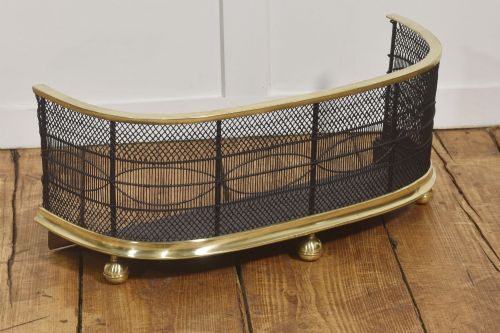
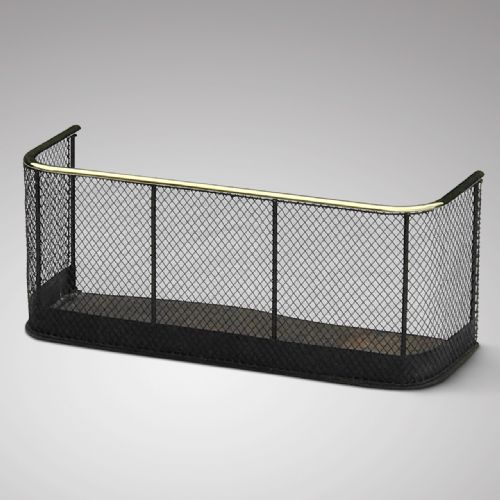
A black metal fireplace screen provides essential protection against hearth embers while adding architectural presence to a room, appearing in forms such as folding spark guards and nursery fenders. When searching for a black metal fireplace screen, buyers encounter sturdy Victorian, Edwardian, and early twentieth-century examples shaped by distinct period aesthetics.
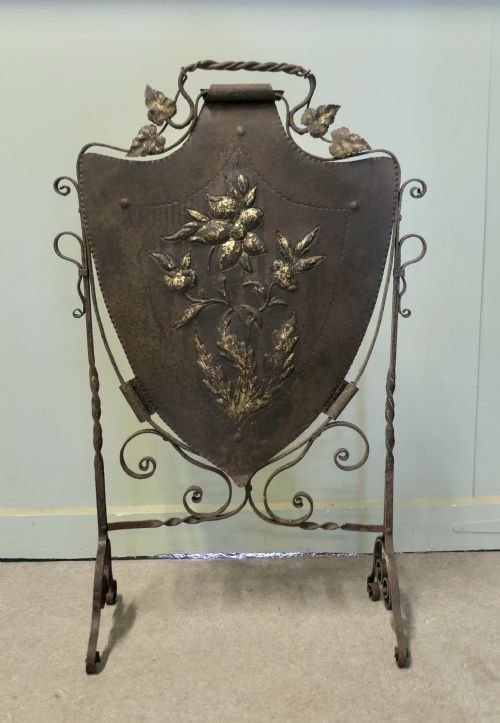
The pieces listed on this page span the nineteenth century through the 1930s, encompassing Gothic Revival and Arts and Crafts styles alongside English Country House pieces. Folding screens and nursery fenders dominate the selection, often combining heavy iron frameworks with delicate wire mesh panels.
Makers and manufacturers utilised iron, wrought iron, and steel mesh to construct durable fire guards that doubled as room ornaments during warmer months. Brass top rails and copper components frequently accent the dark metal structures, providing contrast within the fireplace accessories category.
Construction and materials
Artisans built these fire guards using wrought iron and cast iron, hammering and joining heavy metal bars to form rigid structural frames capable of withstanding intense hearth heat. Woven iron wire and fine steel mesh were then secured within the frames to catch flying sparks effectively without obscuring the fire.
Secondary metals such as brass and copper appear as decorative top rails, corner mounts, or woven panels, introducing tonal variety to the dark iron frameworks. Folding hinges and nursery rails were riveted or forged directly into the design to allow movement and utility.
Black Metal Fireplace Screen Retail Price Guide 2026
Typical asking prices for black metal fireplace screen among the pieces listed under this phrase on Sellingantiques today, from the lower quarter to the upper quarter. They describe what is for sale here now, not the wider market.
Some nursery fenders included integrated clothes rails, allowing Victorian families to dry small garments directly by the hearth.
Assessing quality and craftsmanship
Quality in a black metal fireplace screen rests on the gauge of the iron and the tightness of the woven wire mesh, separating robust architectural guards from lighter domestic variants. Heavier wrought iron frames demonstrate superior forging skill, maintaining stability across multi-fold panels without sagging.
The integration of decorative elements, such as Gothic shield motifs or polished brass top rails, distinguishes finer workshop pieces from utilitarian nursery guards. Well-executed joints and substantial weight indicate a higher standard of period metalwork.
The Black Metal Fireplace Screen Glossary
- Nursery fender
- A low metal barrier enclosing a hearth to keep young children at a safe distance from the fire.
- Spark guard
- A fine mesh screen designed specifically to catch flying embers and prevent them from damaging hearth rugs.
- Wrought iron
- Iron that has been heated and shaped with tools by a blacksmith, recognised by its fibrous texture and strength.
- Gothic Revival
- An architectural and decorative style drawing inspiration from medieval design, featuring pointed arches and shield motifs.
Black Metal Fireplace Screen: Frequently Asked Questions
What is a black metal fireplace screen used for?
These screens serve primarily to catch stray sparks and embers from an open fire, protecting nearby flooring and furnishings.
They also act as decorative focal points during summer months when the hearth is unlit, filling the fireplace opening with texture and form.
How do I choose the right size screen?
Measure the width and height of your fireplace opening, ensuring the screen extends slightly beyond the edges to provide adequate coverage.
Consider whether you need a folding design to angle around hearth furniture or a fixed nursery fender for broader floor protection.
How do I care for antique iron fire guards?
Dust the iron frame and mesh regularly with a dry cloth to prevent the accumulation of soot and debris.
Apply a light microcrystalline wax occasionally to protect the metal surface from moisture without altering its dark patina.
How can I tell a Victorian screen from a later piece?
Victorian examples often incorporate Gothic Revival motifs and heavy cast ornamentation, reflecting mid-to-late nineteenth-century taste.
Later pieces from the 1920s and 1930s tend toward simpler Arts and Crafts lines or functional folding copper and steel mesh constructions.