
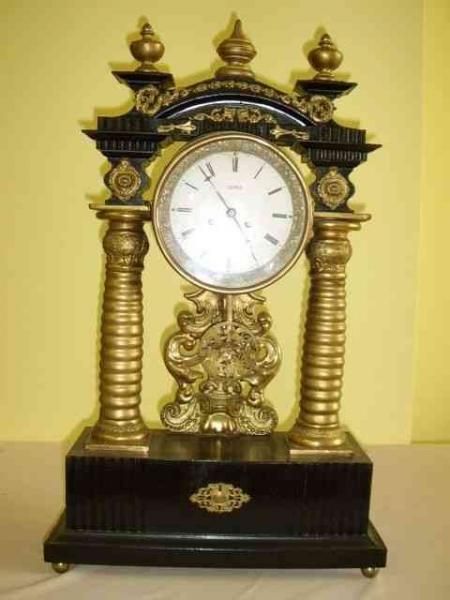
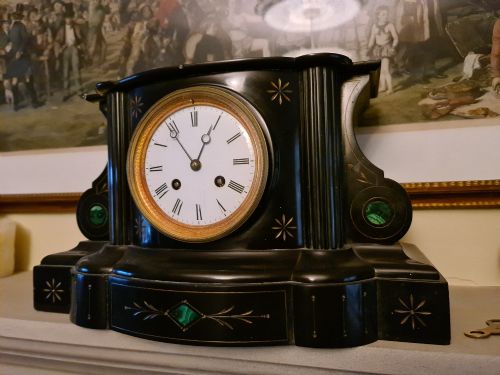
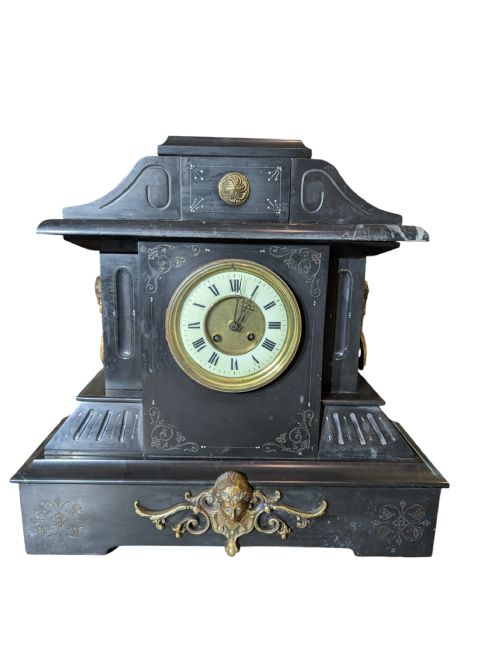


Black Mantle Clock
A black mantle clock brings weight and steady measure to a room, grounding a mantelpiece with architectural presence.
Black Mantle Clock
A black mantle clock stands as a sturdy timepiece designed for domestic interiors, typically taking the form of a substantial architectural case. When searching for a black mantle clock, buyers encounter heavy stone bodies alongside wooden and metal variations from several centuries.
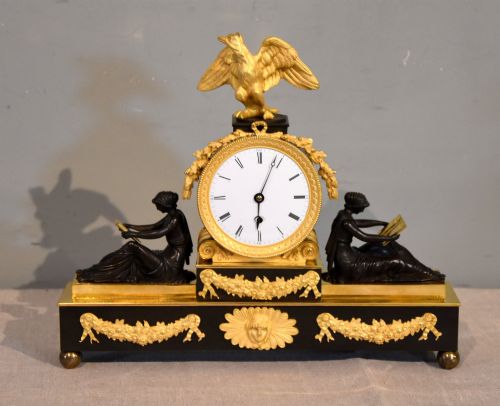
The material record shows a strong presence of black slate and marble, often paired with gilt bronze mounts or brass dials. These examples lean toward the Victorian period and the later Art Deco era, offering geometric or classical silhouettes.
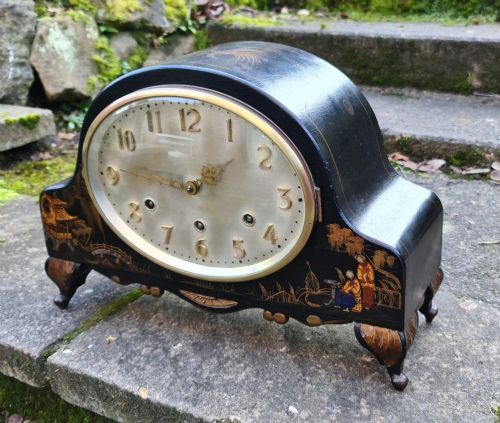
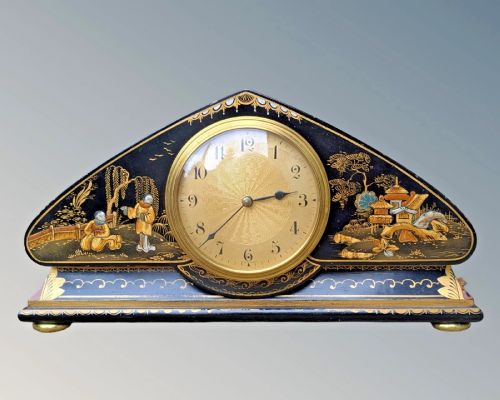
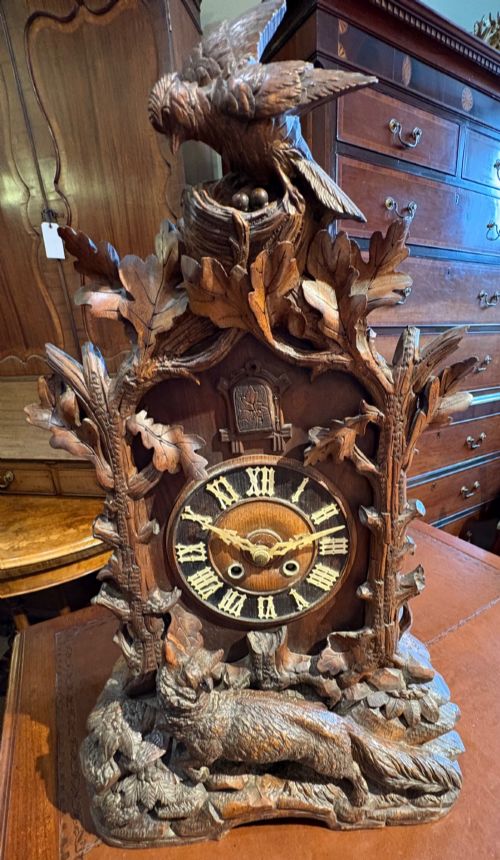
Beyond solid stone cases, the selection includes ebonised wood and carved Black Forest designs that bring dark tones to a shelf or desk. Each piece serves as both a functional timer and an ornamental centrepiece for a room.
Materials and construction
Makers shaped heavy blocks of black slate and marble into architectural temple fronts, urn-topped bodies, and geometric blocks. These stone cases frequently incorporated inlaid coloured marbles, glass panels, and bronze figures.
Woodworking traditions produced ebonised cases and carved wooden structures, notably in Black Forest workshops where woodcarvers formed intricate scenes with animals and foliage. Metal components such as brass, gilt bronze, and enamel dials completed the internal and external assemblies.
Movements inside these cases relied on mechanical engineering, utilising eight-day movements, fusee mechanisms, and striking trains to drive the hands and sound the hours.
Mountain goats peer out from carved Black Forest wooden cases, watching the hours tick by from miniature alpine ledges.
Markers of quality
Quality rests in the precision of the stone cutting and the integration of decorative mounts, where finely cast gilt bronze and crisp marble inlay elevate a standard case. The weight of the slate or marble indicates the substantial nature of the build.
The complexity and execution of the clock movement set superior examples apart, particularly those featuring signed movements from notable makers or specialised eight-day and fusee mechanisms. Original dials and well-preserved enamel numerals contribute further to the standing of a piece.
Philippes Paris·Baby and Jannings·Thomas A Paris·Smiths·Achille Brocot·John Leroux·John Fletcher
The Black Mantle Clock Glossary
- Slate
- A fine-grained metamorphic rock used extensively for heavy, dark clock cases. It takes a smooth polish and mimics black marble.
- Gilt bronze
- Copper alloy coated with a layer of gold, frequently applied to mounts, feet, and figures on nineteenth-century French clocks.
- Fusee
- A conical pulley used in older clock movements to maintain an even pull on the gear train as the mainspring unwinds.
- Garniture
- A set consisting of a central clock flanked by matching decorative objects such as urns or vases designed for a mantelpiece.
- Ebonised
- Wood treated with a dark stain or finish to imitate ebony, common in nineteenth-century case construction.
Black Mantle Clock: Frequently Asked Questions
How do I wind a mechanical mantle clock?
Most mechanical clocks use a key inserted into winding holes on the dial to tension the internal springs. Care must be taken not to over-wind the mechanism.
Ensuring the clock sits level on the mantelpiece helps the pendulum swing evenly and keeps the timekeeping steady.
What is a garniture set?
A garniture set groups a central clock with matching ornamental side pieces, such as urns or vases, arranged together on a shelf. This tradition creates a balanced decorative display.
The materials of the side pieces typically match the main clock case.
How can I tell a Victorian slate clock from an Art Deco model?
Victorian slate and marble clocks usually display classical architectural motifs, heavy stone columns, and gilt bronze mounts. They project a sense of nineteenth-century revivalist weight.
Art Deco clocks from the nineteen-thirties favour streamlined geometric forms, contrasting materials, and simplified dials suited to modern interiors.
Where should I place a heavy marble clock?
A heavy marble or slate clock requires a sturdy, level surface capable of supporting significant weight, such as a strong mantelpiece or a heavy sideboard.
Keeping the clock away from direct sunlight and damp environments protects the internal metalwork and the exterior stone finish.