



Black Lacquered Bookcase
A black lacquered bookcase brings deep tone and hand-painted detail to a room, offering both display space and practical storage.
Black Lacquered Bookcase
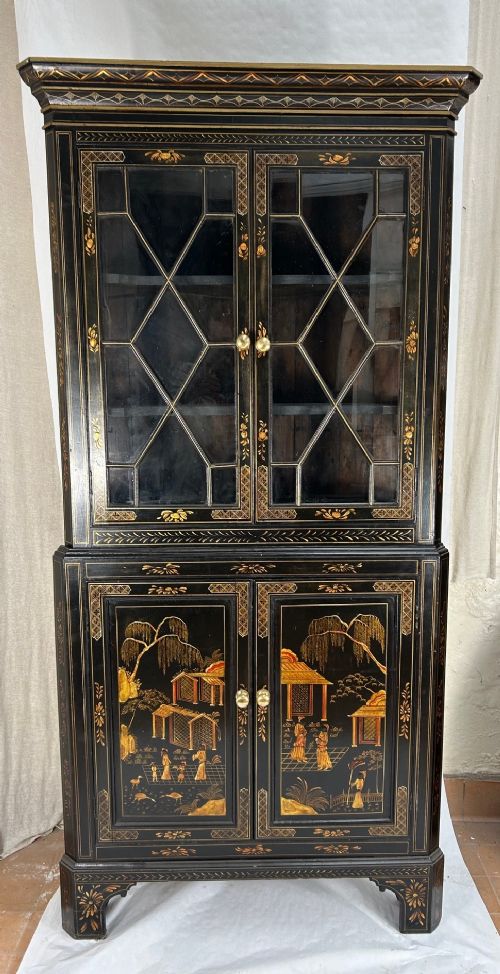
A black lacquered bookcase combines deep dark surfaces with decorative ornament, appearing in forms such as bureau bookcases, corner cupboards, and tall display cabinets. These pieces span several distinct eras, drawing on styles from William and Mary periods through to Edwardian interpretations.
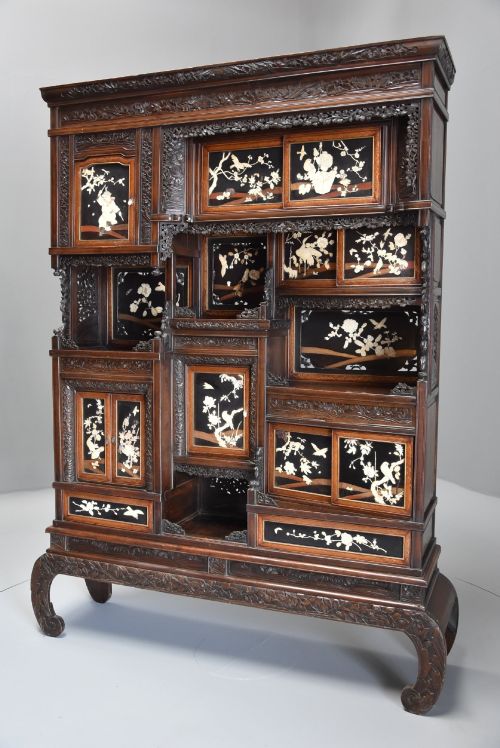
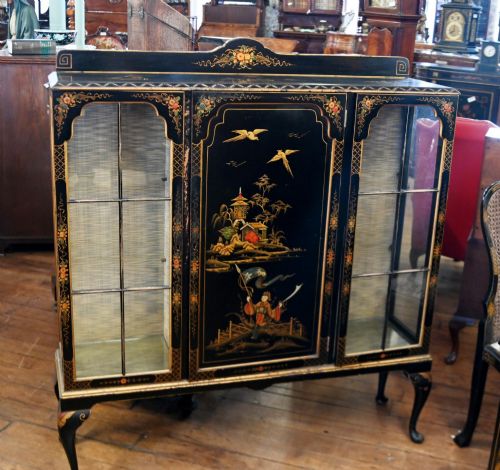
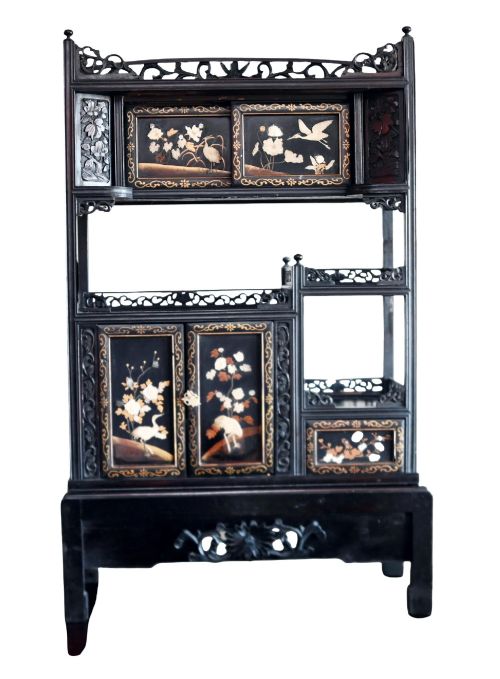
The versions most commonly met on this page range from nineteenth-century ebonised timber cabinets to early twentieth-century Chinoiserie display cases. Makers frequently applied gilt motifs, oriental scenes, or mother-of-pearl inlay across the dark polished background.
Buyers often encounter bureau bookcases that conceal writing slopes behind drop-front panels alongside open display shelves and glazed cabinets. Each form provides a specific balance of enclosed storage and open presentation for books and objects.
Materials and construction
Craftsmen built these items using solid wood substrates, frequently applying layers of dark lacquer or ebonising the timber to achieve a deep black finish. Artisans then built up surface decoration using gold leaf, paint, and occasional mother-of-pearl inlay.
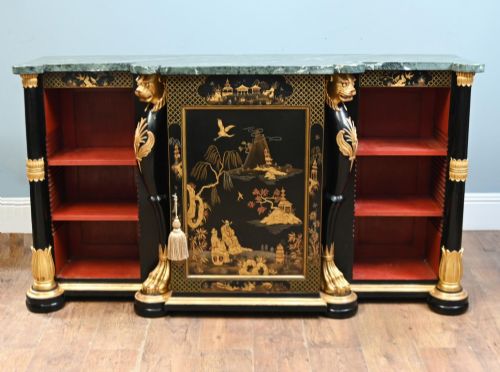
Many examples incorporate brass or ormolu mounts, glass door panels, and occasional marble tops to add structural contrast and decorative weight. Surface ornamentation often follows traditional Chinoiserie motifs executed by hand over the dark ground.
Black Lacquered Bookcase Retail Price Guide 2026
Typical asking prices for black lacquered bookcase among the pieces listed under this phrase on Sellingantiques today, from the lower quarter to the upper quarter. They describe what is for sale here now, not the wider market.
Listings span periods from 1700 to the 1920s, incorporating materials such as lacquer, glass, brass, marble, and gold leaf.
Distinguishing quality
Quality rests in the depth of the lacquer finish and the precision of the hand-painted or inlaid detail across the doors and panels. Finer examples display crisp gilt work and securely fitted brass hardware that integrate smoothly with the timber body.
Construction standards differ between mass-produced revival items and bespoke pieces featuring detailed joinery and high-grade internal shelving. The integrity of the surface polish and the balance of decorative proportion determine the standing of each piece.
The Black Lacquered Bookcase Glossary
- Chinoiserie
- European decorative style reflecting Chinese artistic influences, frequently featuring figures, landscapes, and pavilions rendered in gold or colour upon a dark background.
- Ebonised
- Timber treated with stain or finish to imitate ebony, creating a dense black surface seen across various nineteenth-century items.
- Japanning
- European imitation of East Asian lacquerwork involving layered varnishes baked and polished to a hard sheen, often decorated with raised metallic designs.
- Breakfront
- Furniture design where the central section projects forward from the flanking wings, adding architectural depth to large cabinets.
- Ormolu
- Gilded bronze mounts applied to furniture for decorative accent and edge protection.
Black Lacquered Bookcase: Frequently Asked Questions
How do I clean a lacquered surface?
Dust the surface regularly with a soft, dry cloth to prevent grit accumulation.
Avoid chemical polishes or water, which can damage the aged lacquer finish.
Are these bookcases suitable for heavy books?
Most display cabinets and Chinoiserie bookcases are designed for lighter volumes and decorative objects.
Check the thickness and support of internal shelves before loading them with heavy folios.
How do I date a black lacquered piece?
Examine the underlying timber construction, joinery methods, and the style of the hardware.
Nineteenth-century ebonising differs noticeably in finish and material structure from earlier William and Mary japanning.
Where should I place a dark cabinet?
Position the piece away from direct sunlight to protect the lacquer and painted details from fading.
Place it against a lighter wall to let the dark silhouette and gold motifs stand out clearly.