

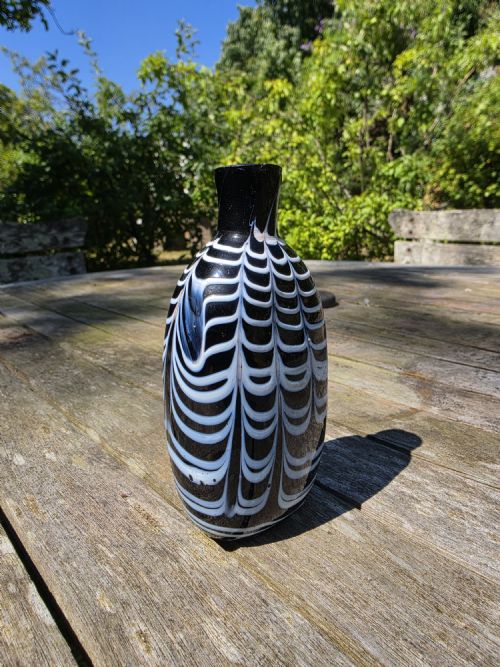
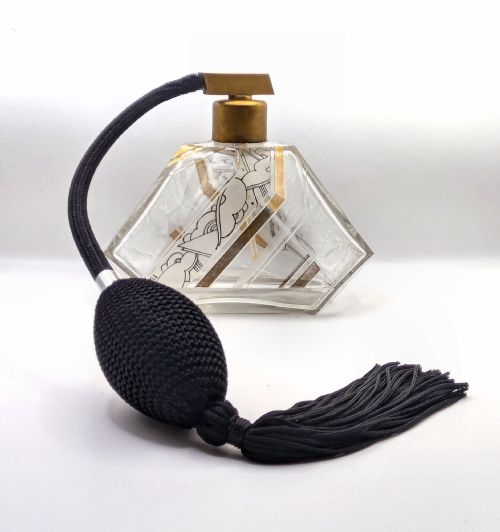


Black Glass Bottle
A black glass bottle brings deep, dark lustre and tactile weight to a room, ranging from Georgian wine vessels to Art Deco atomisers.
Black Glass Bottle
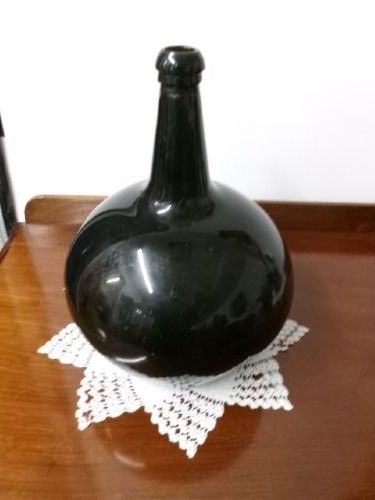
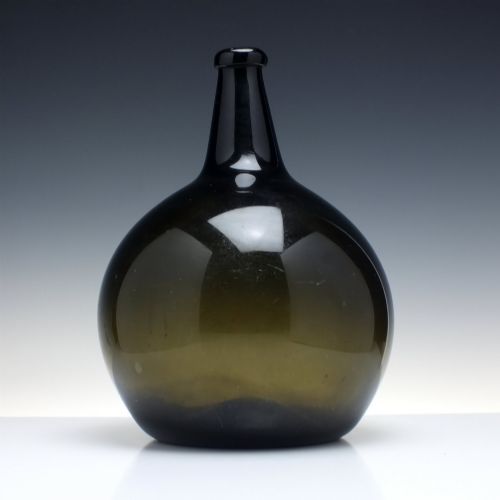
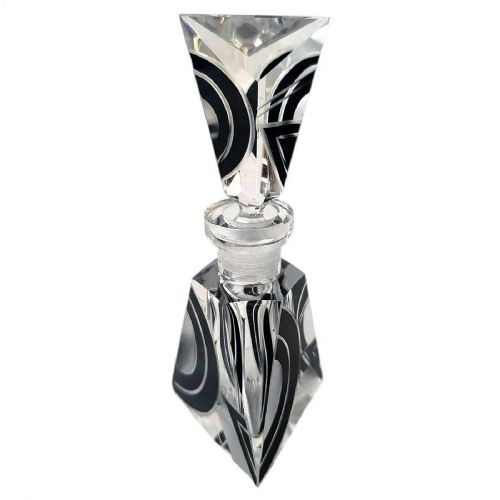
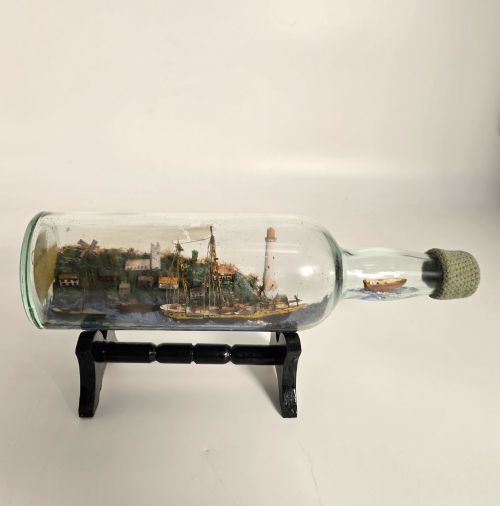
When you search for a black glass bottle, you encounter a surprisingly varied group of objects spanning centuries of domestic and decorative use. These pieces include large wine vessels, pocket flasks, intricate snuff containers, and dressing table atomisers.
The selections on this page lean heavily towards the Art Deco period, particularly Czech pieces from the 1930s, alongside earlier Georgian wine bottles and Victorian examples. You will find that many of these twentieth-century items incorporate enamel, chrome, or cut glass details alongside the dark body.
Earlier pieces tend to be utilitarian wine and spirits containers from glassworks such as Alloa or Nailsea, while later examples focus entirely on vanity and display. Each type carries the distinct manufacturing marks and stylistic traits of its respective era.
Materials and construction
The primary material is glass, formed through traditional blowing techniques or moulded into geometric Art Deco shapes. Some early examples utilise hand-blown methods that leave subtle irregularities in the surface texture and wall thickness.
Makers enhanced the dark glass bodies with secondary materials such as enamel, silver, fabric, and chrome hardware for atomiser pumps. Certain Venetian pieces incorporate aventurine inclusions to create sparkling metallic flecks within the opaque dark glass.
Black Glass Bottle Retail Price Guide 2026
Typical asking prices for black glass bottle among the pieces listed under this phrase on Sellingantiques today, from the lower quarter to the upper quarter. They describe what is for sale here now, not the wider market.
Materials featured across the inventory include hand-blown glass, chrome, enamel, and aventurine inclusions.
Assessing quality and execution
Quality in these pieces rests upon the precision of the glass cutting, the crispness of the enamel work, and the integrity of any mounted metal hardware. Finer Art Deco pieces show exact geometric cuts that catch the light sharply against the dark surface.
The presence of distinguished maker attribution, such as works by Karl Palda, elevates a piece through superior design complexity and refined finishing. Earlier wine and spirit vessels are judged by the depth of the metal oxides used to colour the heavy glass and the stability of the free-blown form.
Karl Palda·Mosey·Rene Lalique
The Black Glass Bottle Glossary
- Atomiser
- A small bottle fitted with a bulb and spray mechanism for diffusing perfume. These are frequently found among 1930s vanity sets.
- Aventurine
- Glass containing fine gold-coloured metallic speckles suspended within the matrix. This technique creates a shimmering effect reminiscent of natural quartz.
- Nailsea
- A style associated with the historic English glassworks known for producing idiosyncratic domestic flasks and bottles. Pieces often display looped or splashed colour trails.
- Georgian
- A period spanning the eighteenth and early nineteenth centuries, characterised in these listings by heavy, dark wine and cylinder bottles. These utility vessels were designed to protect contents from light degradation.
Black Glass Bottle: Frequently Asked Questions
What are black glass bottles?
They are dark glass containers ranging from eighteenth-century utility wine vessels to 1930s Czech dressing table atomisers and scent flasks.
The dark colour was originally developed to protect sensitive contents from light damage, later evolving into a striking stylistic choice for vanity items.
How were old glass bottles used?
Early examples served to store, mature, and pour wine or spirits safely in domestic dining rooms and cellars.
Later Victorian and Art Deco iterations transitioned to personal grooming, housing perfumes, cosmetics, and decorative powders on dressing tables.
How do I date a glass bottle?
Dating relies on identifying the manufacturing technique, the stylistic markers of the period, and any associated metalwork or maker attributions.
Free-blown pontil marks suggest eighteenth-century origins, while sharp geometric cutting and chrome hardware point firmly to the 1930s.
How should I display them?
Position them where natural light can catch the polished facets of cut glass or contrast against the opaque dark surfaces.
Keep atomisers and decanter sets away from direct, harsh heat sources to preserve the integrity of any applied enamel or vintage metal fittings.