
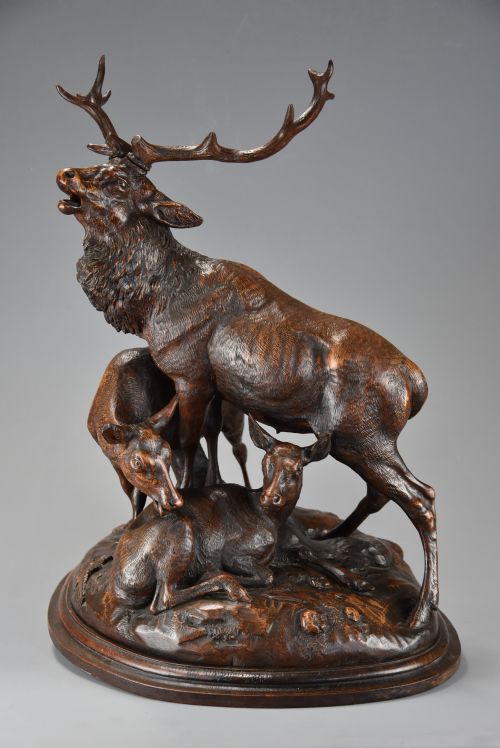


Black Forest Deer
These black forest deer carvings and mounts bring the deep forests of the nineteenth century straight into the Victorian hunting lodge.
Black Forest Deer
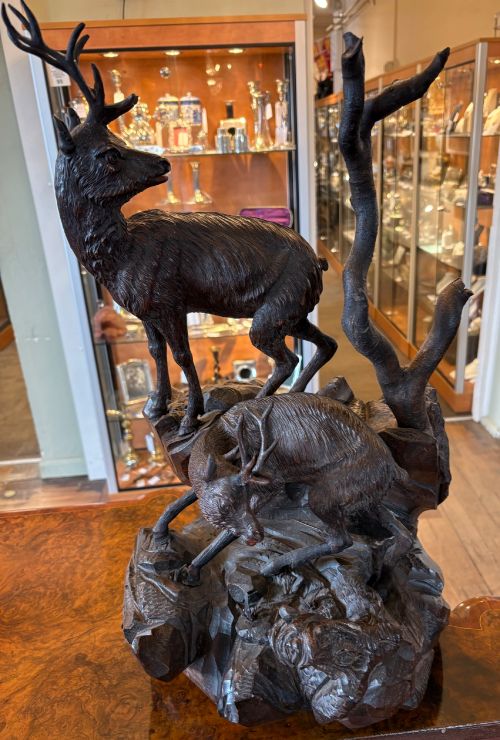
When you search for black forest deer, you encounter a striking array of nineteenth century wooden sculptures, armchairs, and wall mounts. These works capture the robust spirit of continental hunting culture, originating mainly from Swiss and German workshops.
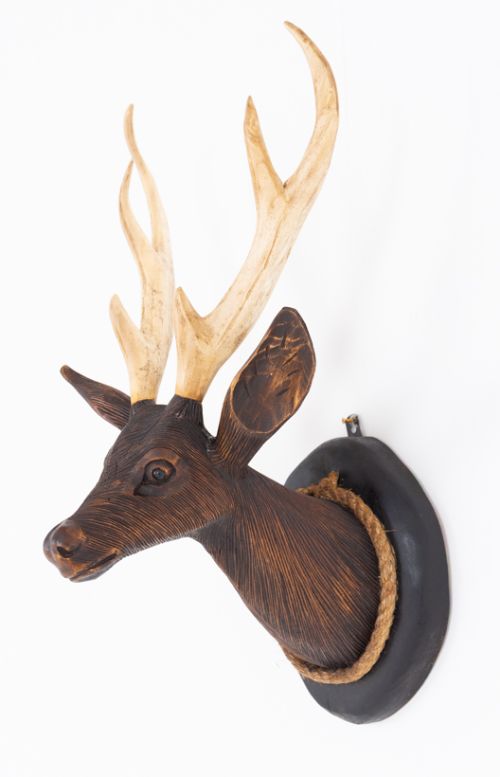
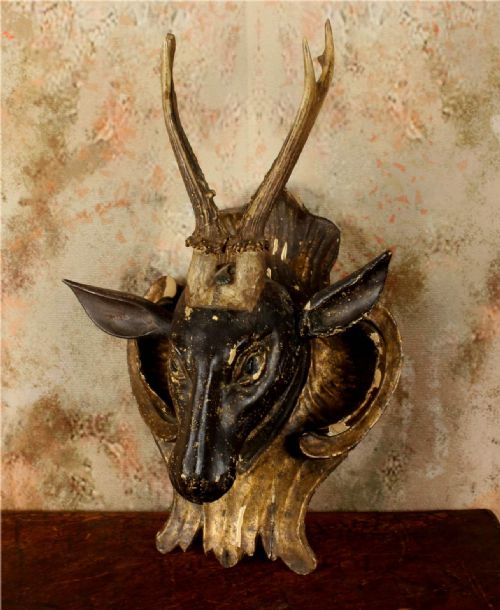
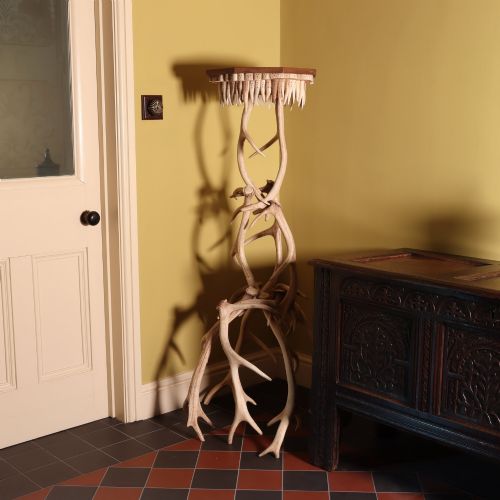
The most common forms on this page include carved deer heads, antler trophies, and functional rustic furniture such as coat racks and armchairs. They range from naturalistic studies of red deer and roe deer to folk art interpretations utilising real horn and bone.
The aesthetic bridges domestic interior decoration with the rugged atmosphere of the Victorian hunting lodge. Pieces often incorporate real antlers attached to carved wooden shields or naturalistic lime wood heads.
How they were made
Carvers predominantly utilised soft and responsive woods such as linden wood, lime wood, and walnut, which allowed for deep, expressive detailing of fur and muscle. These carved wooden elements were frequently combined with organic materials including real deer antlers, bone, and horn.
Sculptors relied on traditional hand chisels and gouges to build texture, creating the signature cross-hatched fur effects seen across the nineteenth century corpus. Structural pieces like armchairs and coat racks combined this intricate carving with robust oak or walnut frames.
Even the stags needed somewhere to leave their hats after a long day wandering the nineteenth century woodlands.
What varies in quality
The division between average and exceptional work lies in the anatomical accuracy and the depth of the carving. Master carvers captured the tension in a stag's neck and the realistic asymmetry of natural antlers, whereas lesser pieces appear stiff and formulaic.
Integration between the carved wooden head and the natural antler defines the higher tiers of craftsmanship. When the transition from wood to bone feels seamless and the surface shows crisp, unsoftened tool marks, the piece represents the height of the genre.
J. Huggler
The Black Forest Deer Glossary
- Black Forest
- A style of nineteenth century wooden carving originating from the mountainous regions of central Europe, famous for naturalistic animal studies and rustic furniture.
- Linden wood
- A pale, fine-grained timber favoured by Swiss and German carvers for its lack of prominent grain, allowing for minute detail in animal sculptures.
- Taxidermy trophy mount
- The mounting of real animal parts, such as antlers or skulls, onto carved wooden shields for display on interior walls.
- Folk art
- Items created by traditional artisans outside the formal academic academies, often displaying charming regional variations in proportion and technique.
- Torchiere
- A tall decorative stand or floor lamp, occasionally constructed from natural antlers in nineteenth century rustic interiors.
Black Forest Deer: Frequently Asked Questions
How were black forest deer mounts used?
These pieces served primarily as decorative wall trophies and functional furnishings within nineteenth century hunting lodges and domestic country houses.
Larger carved heads and antler panels were mounted high on wood-panelled walls, while clever variants doubled as hat and coat stands or sturdy armchairs.
Are the antlers real on these carvings?
Many pieces combine hand-carved wooden heads with genuine natural deer antlers, red deer antlers, or roe deer horns sourced from the forest.
Some smaller or purely folk art examples feature entirely carved wooden antlers, but the integration of real bone and horn remains a defining characteristic of the tradition.
How do I date a black forest deer carving?
Dating relies heavily on the style of the mounting board, the species of wood utilised, and the specific tool marks left by the carver.
The majority of these works date from the nineteenth century, particularly the Victorian era, reflecting the period's intense enthusiasm for rustic and hunting-inspired interiors.
How do I care for antique carved wood?
Keep wooden sculptures and mounted antlers away from direct heat sources and drastic humidity changes to prevent the timber from splitting.
Dust gently with a dry, soft brush and avoid applying modern chemical polishes that might damage the historic patina of the lime wood or walnut.