





Black Forest Decor
Black forest decor brings heavily carved wildlife and woodland motifs straight into a room through nineteenth-century wooden sculptures, mirrors, and practical household objects.
Black Forest Decor
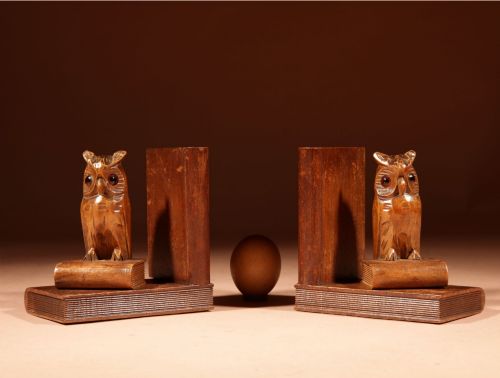
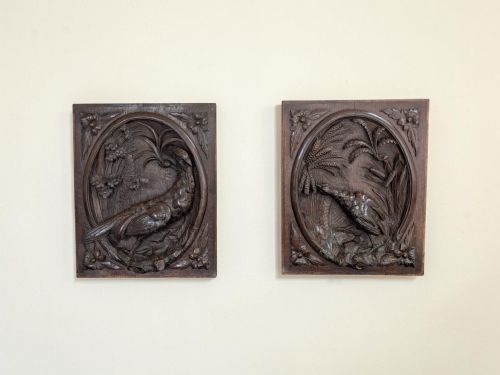
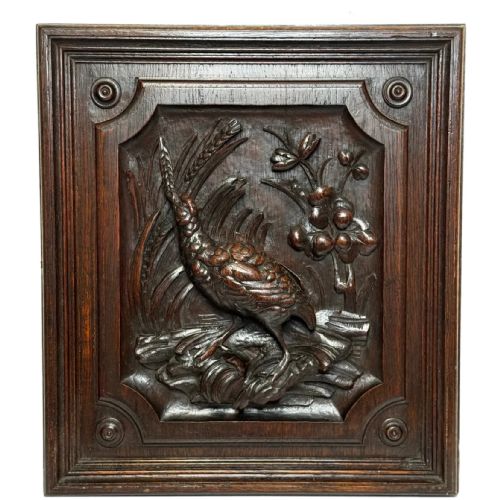
When searching for black forest decor, you encounter carved wooden objects and furnishings rooted in nineteenth-century European traditions. The most common forms on this page include animal bookends, figural wall mirrors, and detailed plaques featuring bears, owls, and birds of prey.
The style heavily embraces naturalism and woodland themes, spanning items from small tobacco boxes and candlesticks to large centrepieces and wall panels. Pieces frequently incorporate depictions of brown bears, deer, fish, and game birds rendered in distinct regional carving styles.
Originating largely from nineteenth-century workshops, these pieces bridge the gap between ornamental art and practical utility. Buyers find domestic items such as barometers and carved shields mounted with antlers, reflecting the Victorian taste for natural history and rustic design.
Materials and Craftsmanship
Makers utilised native timbers such as linden wood, oak, walnut, and tiger oak to achieve deep, textured reliefs and realistic animal forms. Linden wood offered a soft, uniform grain ideal for intricate fur and feather details, whilst heavier hardwoods provided structural integrity for furniture and panels.
Craftsmen combined manual carving gouges and chisels with applied elements like brass, bronze, and glass to complete functional items such as candlesticks and barometers. Natural wood finishes preserved the grain, occasionally highlighting the carved subjects through careful staining and polishing.
Black Forest Decor Retail Price Guide 2026
Typical asking prices for black forest decor among the pieces listed under this phrase on Sellingantiques today, from the lower quarter to the upper quarter. They describe what is for sale here now, not the wider market.
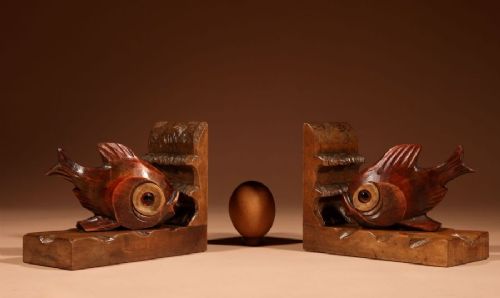
Several items feature remarkably expressive goldfish and owls, proving that nineteenth-century carvers enjoyed adding unexpected whimsy to forest scenes.
Judging Quality and Execution
The distinction between average and exceptional work lies in the depth of the carving and the realism of the animal anatomy. Superior pieces display lifelike muscle structures, detailed feather textures, and expressive faces without mechanical stiffness.
Composition and proportion also dictate the standing of a piece, particularly in complex figural groups like opposing bears or multi-animal plaques. Integrated hardware, such as original mirror glass and robust mounting shields, completes the standard of the superior examples.
The Black Forest Decor Glossary
- Linden wood
- A pale, fine-grained timber favoured by nineteenth-century carvers for its cooperative texture and lack of prominent grain interference. It allows craftsmen to execute microscopic feather and fur details.
- Humidor
- A specialised box or container designed to keep tobacco moist and fresh. In this tradition, they frequently take figurative animal forms such as bears.
- Pugin Design
- A decorative style associated with Augustus Pugin and the Gothic Revival movement. It emphasises medieval architectural motifs and structured ornamentation.
- Chamois
- A species of goat-antelope native to European mountains, frequently depicted in regional carved wooden figures and panels.
- Tiger Oak
- Quarter-sawn oak displaying prominent medullary rays that create a distinct tiger-stripe pattern. It provides a striking background for hunting panels and wall sculptures.
Black Forest Decor: Frequently Asked Questions
What animals appear most often in these carvings?
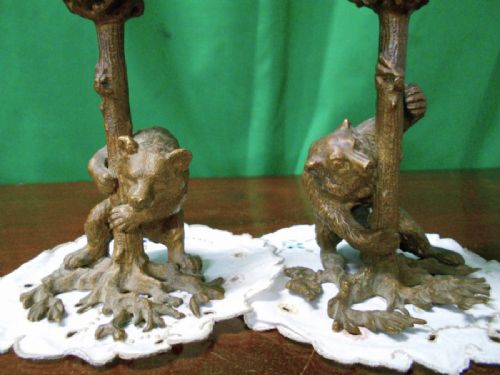
Brown bears dominate the sculptural output, appearing as bookends, humidors, and candle holders. Owls, birds of prey, deer, and game birds also feature prominently across plaques and mirrors.
Craftsmen frequently selected alpine and forest fauna to appeal to Victorian collectors who favoured rustic, nature-inspired domestic accessories.
How were these carved items used historically?
Many pieces served daily domestic functions despite their heavy ornamentation. Humidors stored tobacco, barometers measured atmospheric pressure, and wall mirrors provided practical reflections in hallways and parlours.
Bookends and candlesticks brought woodland themes directly onto library desks and mantelpieces, combining utility with elaborate sculptural artistry.
Are all carved wooden panels from the same period?
The inventory spans the nineteenth century, with specific dates pointing to the eighteen-eighties and the nineteen-hundreds. Victorian Gothic Revival and standard nineteenth-century aesthetics overlap in many of the surviving oak panels.
Stylistic shifts occurred gradually as workshops transitioned from deep naturalistic hunting scenes to more stylized early twentieth-century interpretations.
How do I care for antique wooden carvings?
Keep carved wooden objects away from direct heat sources and strong sunlight to prevent the timber from splitting or drying out. Dust the deep recesses regularly using a soft, dry brush to protect the fine details.
Avoid applying modern liquid polishes, as they can build up within the carved fur and feather textures and darken the natural wood grain over time.