







Black Entry Table
A black entry table grounds a hallway with strong colour and classical proportion, offering a surface for letters, lamps and seasonal flora.
Black Entry Table
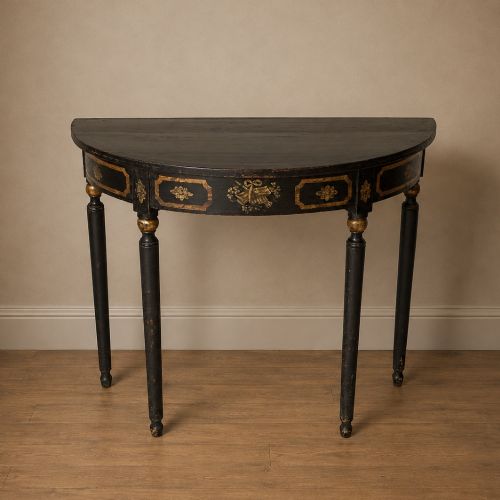
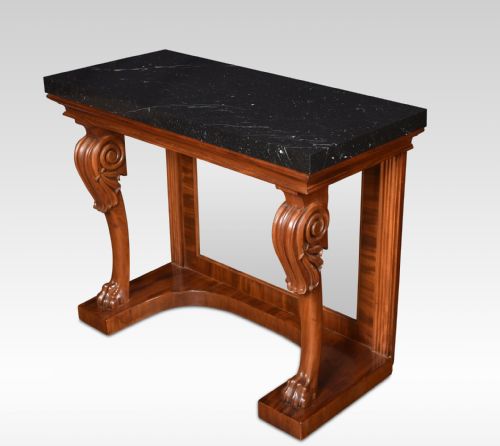
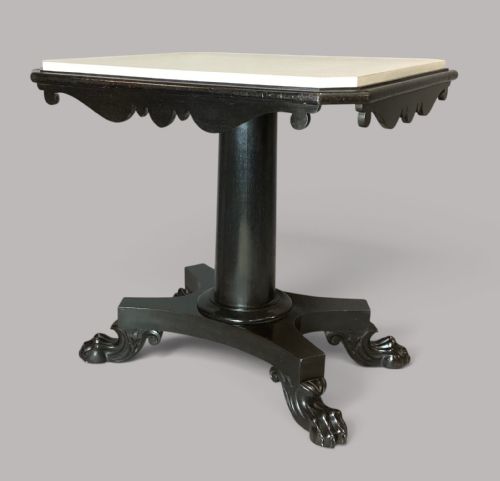
A black entry table on this page typically takes the form of a console table, centre table or side table designed to stand against a wall or in the middle of a room. These pieces emerge predominantly from the nineteenth century, spanning Regency, George IV, Victorian and Charles X periods, alongside French Chateau, Chinoiserie and Biedermeier styles.
The most common forms you meet are console tables, often featuring demi-lune or rectangular surfaces supported by painted wood, mahogany, elm or satinwood frames. Many incorporate decorative details such as parcel gilt, ebonised finishes and associated mirrors to enhance their visual presence in a hallway or reception space.
Makers and origins stretch across England, France, Sweden and China, reflecting international tastes for dark, polished or painted furniture. A buyer finds everything from heavy wrought iron consoles to refined mahogany and lacquered wood surfaces suited to period and traditional interiors.
Materials and construction
Cabinetmakers utilised solid timbers like mahogany, satinwood, elm and painted wood as the structural backbone for these tables, often applying ebonisation or black paint to achieve a dark, uniform finish. Parcel gilt accents and gold leaf were carefully laid by hand to highlight carved details, mouldings and edges against the dark ground.
Heavy stone tops in marble provide durable, cool surfaces on select console and centre tables, requiring sturdy wooden or wrought iron underframes for support. Glass and brass elements appear as secondary materials, adding reflective quality and structural stability to the designs.
Black Entry Table Retail Price Guide 2026
Typical asking prices for black entry table among the pieces listed under this phrase on Sellingantiques today, from the lower quarter to the upper quarter. They describe what is for sale here now, not the wider market.
Console tables, centre tables and side tables represent the primary forms found within this category, spanning Georgian to 1930 periods.
Judging quality and execution
The distinction between ordinary and superior examples lies in the crispness of the carving, the depth of the ebonised or painted finish and the selection of timber underneath. Finer pieces display meticulous application of parcel gilt and balanced proportions that reflect sophisticated cabinetmaking traditions.
Materials dictate much of the character, with heavy marble slabs and dense mahogany providing substance that lighter secondary woods lack. The integration of mirrors or specialised ironwork further separates standard utility tables from more ambitious decorative works.
The Black Entry Table Glossary
- Console table
- A table designed to stand against a wall, frequently fixed with brackets or supported by two front legs. These tables are narrow in depth, making them suited for hallways and entryways.
- Centre table
- A freestanding table intended to occupy the middle of a room rather than sit against a wall. They often feature finished detail on all sides.
- Demi-lune
- Half-moon shape, commonly applied to the tops and frames of console tables. This profile allows the piece to sit flush against a wall while projecting into the space.
- Parcel gilt
- Wood or gesso partially covered with gold leaf or gold paint to highlight specific carved motifs or mouldings. It creates a contrast against painted or ebonised surfaces.
- Ebonised
- Wood finished with a dark stain or black paint to imitate expensive ebony wood. It was widely used in nineteenth-century cabinetmaking.
- Gueridon
- A small French table, typically supported by a central column or tripod base. They often function as centre or lamp tables in period rooms.
Black Entry Table: Frequently Asked Questions
Where should a black entry table go?
These tables sit naturally in hallways, corridors and reception spaces where surface space is needed without blocking foot traffic. Their narrow depth allows them to hug the wall effectively.
Pairing a console version with a mirror creates a functional focal point near the front door for checking appearance or placing keys.
How do I clean marble top tables?
Marble surfaces require gentle wiping with a soft, damp cloth and neutral soap to avoid scratching or dulling the polished finish. Acidic liquids like citrus juice or wine can etch the stone and should be wiped away immediately.
Polishing with specialised stone wax helps maintain the lustre without harming the historical integrity of the piece.
What is a console table used for?
Historically, console tables displayed decorative objects, clocks and candelabra while serving as architectural accents in formal rooms. Today, they provide a practical drop-zone in an entryway for post and accessories.
Their slim profiles make them versatile enough for narrow spaces where larger sideboards cannot fit.
How do I date a nineteenth-century table?
Dating relies on examining the construction methods, timber choices and stylistic markers associated with periods like the Regency, George IV or Victorian eras. Tool marks, joint types and secondary woods often reveal the manufacturing era.
Comparing the decorative motifs, such as Chinoiserie or French Restauration styles, against known historical periods helps narrow down the timeframe.