




Bird Cage Table
A bird cage table gives you a clever pivoting mechanism that lets the top tilt and turn.
Bird Cage Table
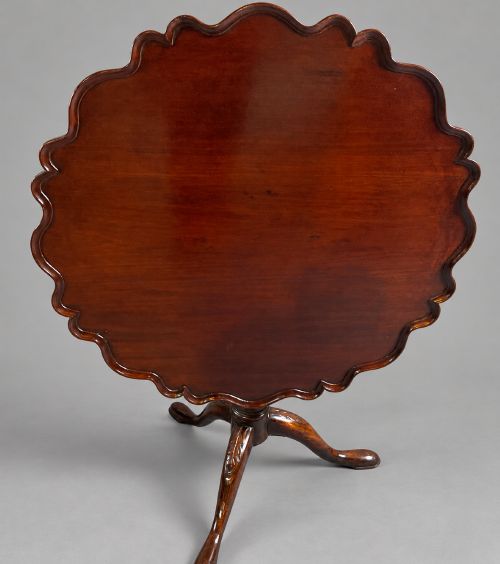
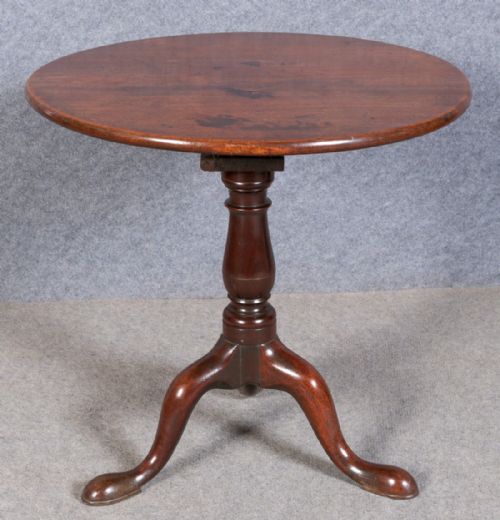
A bird cage table centres on a distinctive rotating and tilting mechanism mounted beneath the top, allowing the surface to swivel and tip when not in use. These pieces appear primarily in mahogany during the Georgian and 19th Century periods, taking the form of tripod or occasional tables.
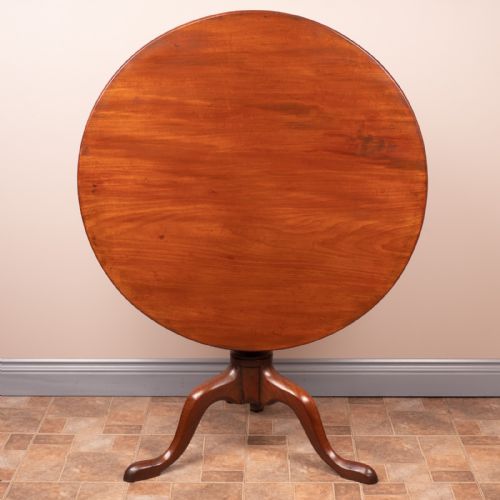
Most examples on this page are circular or rectangular occasional tables featuring a one-piece top, dish top, or snap top supported by a central pillar and tripod legs. You will also encounter specific stylistic variations such as Early Georgian, Georgian Style, French Empire, and William IV.
The nomenclature frequently highlights the bird cage action itself, describing tables with bird cage bases or supports alongside traditional tip and tilt functions. These occasional tables served versatile domestic roles in historic interiors, functioning as tea tables or display surfaces.
How they were made
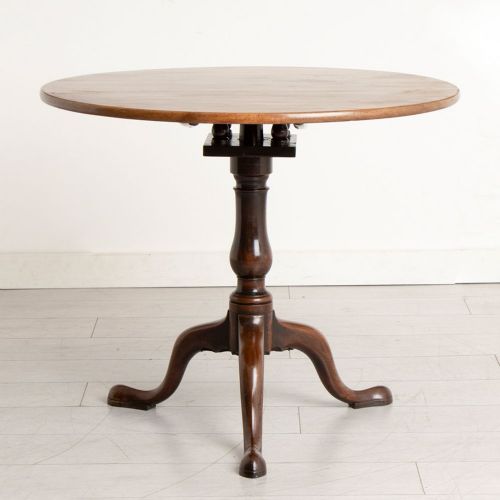
Cabinet makers constructed these tables predominantly from solid mahogany, frequently selecting wide timber to create desirable one-piece tops. The distinctive bird cage mechanism employs a square wooden frame containing small wooden spindles that connect the tabletop to the central column, permitting both rotation and tilting.
Support comes from a turned central pillar resting upon tripod legs, ensuring stability despite the movable upper section. Joinery relies on traditional artisan techniques to allow the moving parts of the bird cage action to function smoothly over centuries of use.
Bird Cage Table Retail Price Guide 2026
Typical asking prices for bird cage table among the pieces listed under this phrase on Sellingantiques today, from the lower quarter to the upper quarter. They describe what is for sale here now, not the wider market.
Listings span the Georgian period, the 18th Century, and the 19th Century, alongside William IV and French Empire styles.
What varies in quality
The distinction between ordinary and superior examples often rests upon the timber selected for the top, with wide one-piece mahogany boards commanding greater appreciation than joined boards. The refinement of the turning on the central pillar and the delicate shaping of the tripod legs further separate standard production from master craftsmanship.
The precision and integrity of the internal bird cage mechanism dictate how smoothly the table pivots and locks into position. Finer pieces maintain crisp detailing in the woodwork and retain their original tipping hardware without excessive looseness in the moving joints.
PAUL LELONG
The Bird Cage Table Glossary
- Bird cage action
- A wooden frame with small vertical spindles situated beneath the tabletop. This ingenious assembly allows the surface to rotate horizontally and tilt vertically.
- One piece top
- A tabletop fashioned from a single wide board of timber rather than multiple planks joined together. This feature is particularly prized on circular tripod tables.
- Snap top
- A tabletop fitted with a spring catch or latch that secures the surface in a horizontal position when lowered. It prevents the table from tipping accidentally during use.
- Dish top
- A circular tabletop with a raised, concave rim carved directly from the solid wood. This rim prevents small objects or cups from sliding off the edge.
- Tripod table
- A freestanding small table supported by a central pedestal and three legs. It provides stable placement on uneven historic floorboards.
Bird Cage Table: Frequently Asked Questions
What is a bird cage table?
A bird cage table is a small occasional table featuring a rotating wooden frame beneath the top that allows the surface to swivel and tilt. They date predominantly from the 18th Century and Georgian eras.
These versatile pieces were designed to be moved easily around a room and tipped flat against a wall when space was needed. The central pivoting mechanism resembles a small wooden cage, giving the form its traditional name.
How do you use a bird cage table?
You use a bird cage table as a convenient occasional surface for serving tea, displaying decorative objects, or holding books. The tilting top allows the table to be stored compactly out of the way.
To operate the mechanism, you release the catch and tilt the surface upward on its pivot. The entire top can also rotate horizontally in a complete circle while in the flat position.
How do you date a bird cage table?
You date a bird cage table by examining the timber, the construction of the top, and the turning style of the central pillar and legs. Georgian and 18th Century examples typically feature heavy solid mahogany and hand-turned components.
Later 19th Century and William IV pieces often display different proportions, rectangular tops, or stylistic details like French Empire influences. The construction of the internal bird cage mechanism also evolves across these periods.
What woods are used for these tables?
Mahogany is the primary wood used for these tables across the Georgian, 18th Century, and 19th Century periods. Craftsmen valued its strength and rich grain for creating stable occasional tables.
While mahogany dominates the selections, other materials like giltwood, glass, iron, paper, and gouache appear across related items on this page. The quality of the mahogany timber heavily influences the character of each piece.