


Bevelled Hand Mirror
A bevelled hand mirror offers a touch of personal luxury, combining practical reflection with fine period craftsmanship from the late nineteenth and early twentieth centuries.
Bevelled Hand Mirror
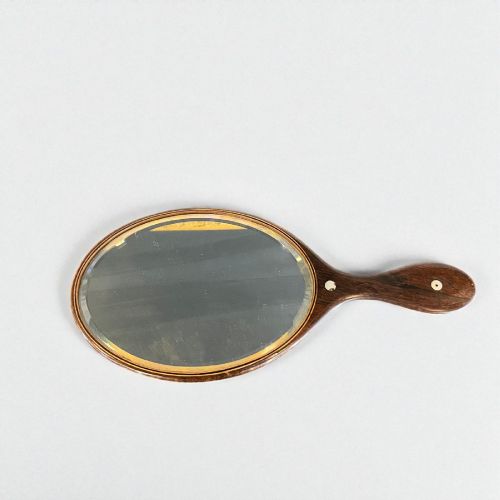
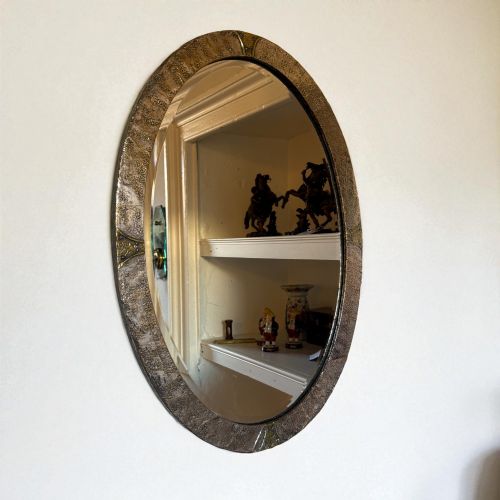
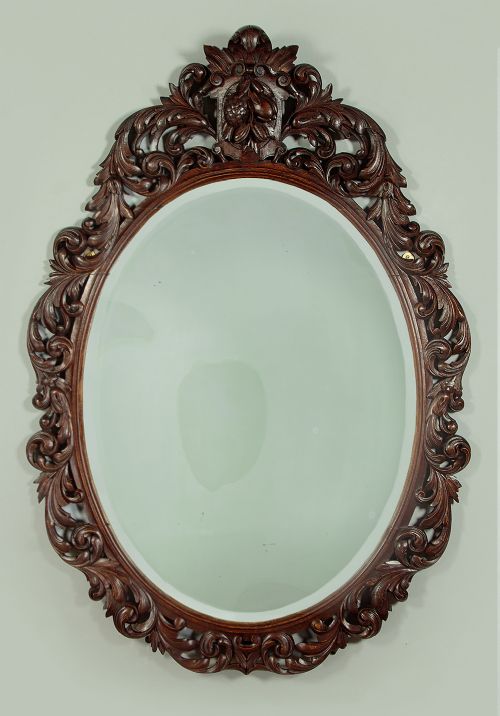
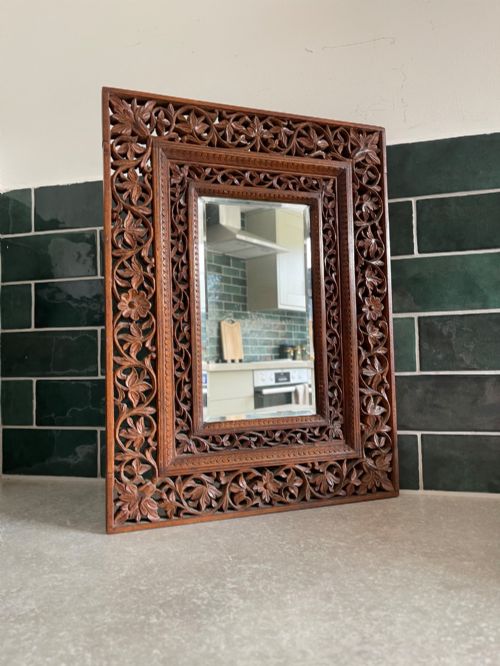
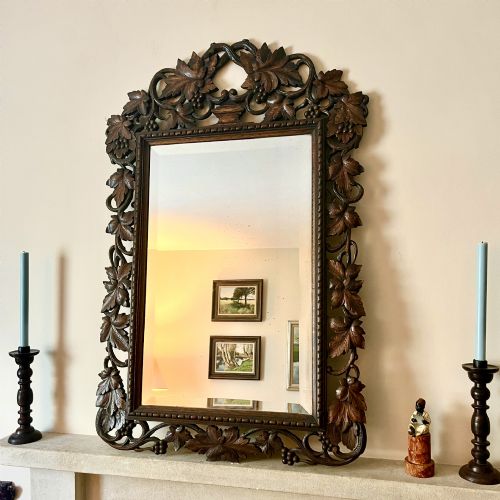
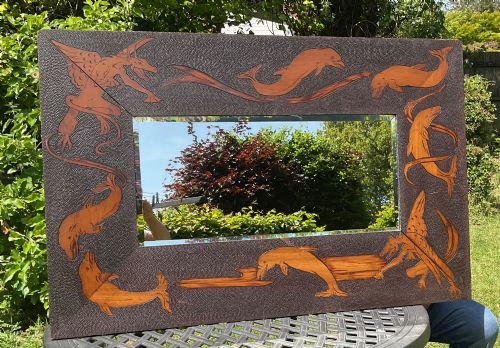
The selection on this page includes hand-held pieces alongside wall mirrors framed in carved oak, rosewood, copper, and lacquered wood. Many examples reflect the distinct aesthetics of the Arts and Crafts movement, featuring hand-worked metal and natural motifs.
Materials and construction methods
Frames take shape from native and exotic timbers such as oak and rosewood, often enhanced with mother of pearl inlay or hand carving. Metal frames utilise copper and brass, frequently shaped by hand through hammering and beaten work characteristic of Arts and Crafts workshops.
Glass is cut with angled edges that create a sloping border around the perimeter of the reflective surface. This bevelling technique requires careful grinding by hand to achieve a clean refraction of light.
Assessing craftsmanship and finish
Quality rests in the depth of the carving and the crispness of the hand-beaten metalwork on the frame. Finer pieces display deliberate attention to detail in materials like rosewood and mother of pearl, whereas simpler items rely on plain moulded timber.
The clarity and weight of the glass plate also distinguish better examples from standard production. Well-preserved silvering and securely seated frames indicate superior original construction.
The Bevelled Hand Mirror Glossary
- Bevelled glass
- Glass with an edge that is ground and polished to an acute angle. This creates a decorative border that catches the light.
- Arts and Crafts
- A design movement valuing hand-craftsmanship and traditional materials over mass production. It often employs exposed metalwork and natural motifs.
- Mother of pearl
- The iridescent inner layer of certain mollusc shells, utilised for decorative inlay on wooden frames. It adds a lustrous sheen to the surface.
- Rosewood
- A heavy, durable timber with a rich dark grain, favoured for fine decorative objects. It takes a high polish and endures centuries of handling.
Bevelled Hand Mirror: Frequently Asked Questions
How do I clean an antique mirror?
Use a soft, dry cloth to remove dust from the frame and glass surface without applying excessive pressure.
Avoid commercial liquid cleaners that might seep behind the glass or damage aged wood and metal finishes.
Are all these mirrors portable?
While the search term refers to hand mirrors, the selection also includes wall-hanging pieces designed for stationary display.
Check the object type in each listing to confirm whether the piece includes a handle or hanging fixings.
What defines Edwardian mirror design?
Edwardian pieces often lighter in feel than their Victorian predecessors, drawing on neoclassical or Arts and Crafts influences.
They frequently incorporate varied materials like inlaid mother of pearl or hammered copper frames.
How is bevelled glass produced?
Craftsmen ground the outer edges of flat glass panes at a slant using abrasive wheels and polishing agents.
This traditional technique creates the characteristic prismatic border seen on period looking glasses.