
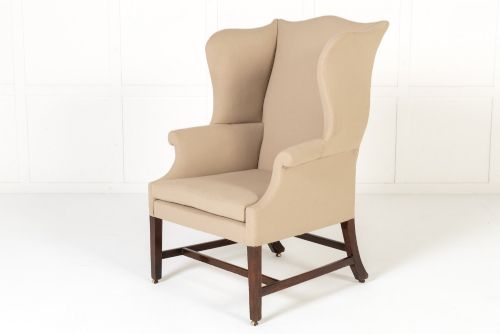


Beige Wingback Armchair
A beige wingback armchair brings warmth and traditional comfort to a room, offering deep seating wrapped in neutral fabric.
Beige Wingback Armchair
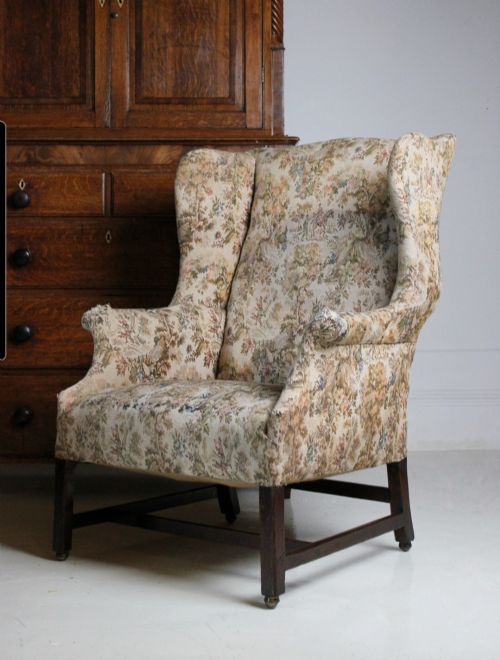
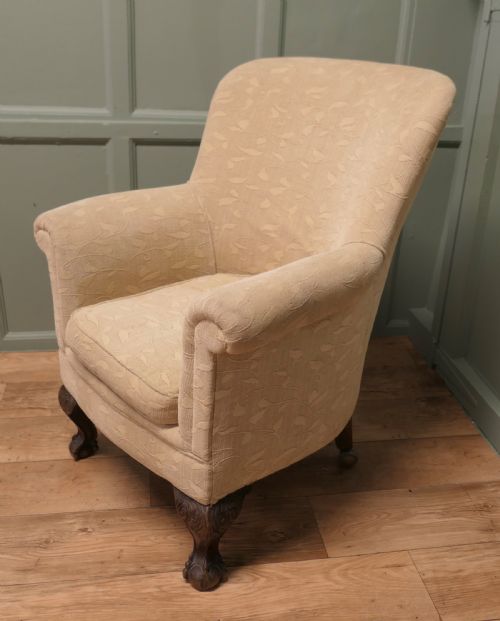
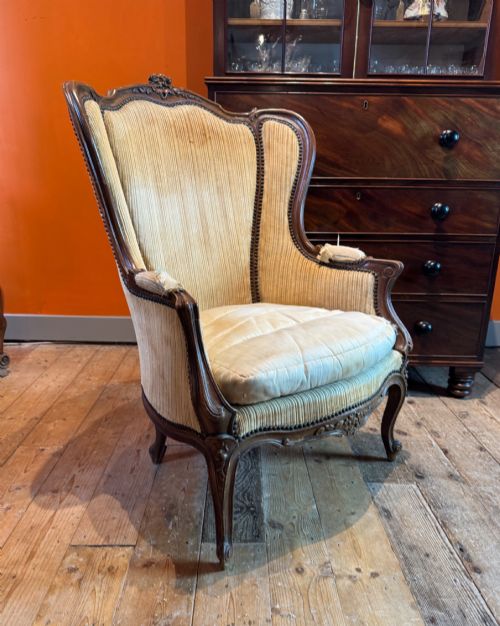
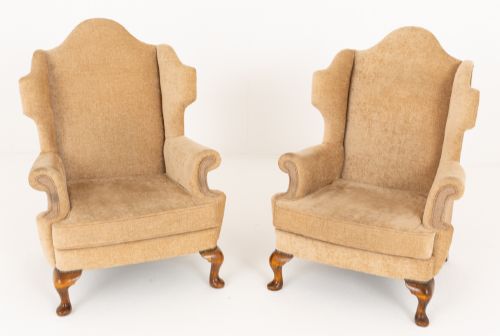
A beige wingback armchair represents a classic seating form designed to shield the sitter from draughts while retaining heat from a fireplace. The examples found here span from the 18th century through the Victorian era and into the early 20th century, capturing various historical revivals including Georgian Style, Queen Anne Style, and Chippendale Style. Buyers searching this phrase encounter substantial library chairs and fireside seats alongside occasional bedroom chairs and French bergere armchairs.
The construction of these pieces centres on high backs with characteristic side wings, deep seats, and enclosed arms intended for prolonged reading or resting. Materials such as walnut, mahogany, and hardwood form the exposed frames and legs, while upholstery finishes range from simple linen to hessian and patterned fabric. Many of these chairs have been recovered in neutral tones to suit contemporary interiors while preserving their antique proportions.
How they were made
Makers constructed the structural frames of these armchairs using dense timbers like mahogany, walnut, and assorted hardwoods. Joinery relied on traditional pinned mortise and tenon joints to withstand the outward pressure of heavy stuffing and daily use.
Traditional upholstery techniques involved layering natural materials over webbing and springs, held in place with sturdy hessian before applying the final outer fabric covering. Exposed wooden elements often featured hand-carved details on the legs, ranging from cabriole forms to straight brass-accented supports.
Generous side wings originally caught escaping fireplace heat, accidentally inventing the cosiest nap trap in British furniture history.
What varies in quality
The integrity of the underlying timber frame dictates the fundamental quality of any antique seating piece. Chairs built from dense mahogany or walnut with original structural joints intact retain their stability far better than those compromised by dry rot or altered framing.
The sophistication of the carved woodwork and the precision of the upholstery proportions distinguish standard production from finer craftsmanship. Finer examples display harmonious lines in the wings and backrest, balancing the visual weight of the timber frame with the plushness of the textile covering.
The Beige Wingback Armchair Glossary
- Wingback
- A traditional chair design featuring protective flaps or wings attached to the back arms intended to trap heat and block room draughts. This form became popular during the 18th century for fireside reading.
- Bergere
- An enclosed upholstered armchair with wooden framing exposed around the sides and back. French examples often reflect the curves of the Louis XV style.
- Cabriole leg
- A furniture leg that curves out and then tapers inward, resembling the shape of an animal's leg. This feature appears frequently on 18th-century and revival seating.
- Hessian
- A coarse woven fabric typically utilised as a strong foundation layer beneath outer upholstery. It provides internal support for the stuffing within older chairs.
Beige Wingback Armchair: Frequently Asked Questions
How do I date a wing chair?
Dating relies on examining the timber species, hand-cut joinery methods, and the specific stylistic cues of the legs and wings. Earlier pieces from the 18th century often display heavier mahogany frames and distinct structural proportions compared to later Victorian or Edwardian interpretations.
Changes in padding techniques and secondary woods also help establish whether a chair originates from the Georgian period or a later 19th-century revival.
Were these chairs used only for reading?
While frequently called library chairs or easy chairs, these seats served multiple domestic purposes in drawing rooms and parlours. The enclosed wings made them ideal for sitting close to open hearths where warmth was concentrated.
Over time, smaller variations emerged for bedrooms and occasional spaces, adapting the classic wingback silhouette for lighter daily use.
How should I care for antique upholstery?
Maintaining fabric upholstery requires regular gentle vacuuming using a soft brush attachment to remove dust without stressing the underlying textile. Keeping the chair away from direct sunlight prevents the neutral linen or fabric from fading.
Exposed mahogany or walnut woodwork benefits from occasional cleaning with appropriate furniture wax to nourish the grain without building up a heavy residue.
What is the difference between Georgian and Victorian versions?
Authentic 18th-century Georgian chairs generally feature restrained hand-carved mahogany frames and deeper, more architectural proportions. Victorian and later 19th-century iterations often employ walnut and heavier padding, sometimes incorporating reclining mechanisms or altered revival styling.
Comparing the stretchers, leg turnings, and internal webbing helps clarify whether a piece is an early original or a later nineteenth-century interpretation.