


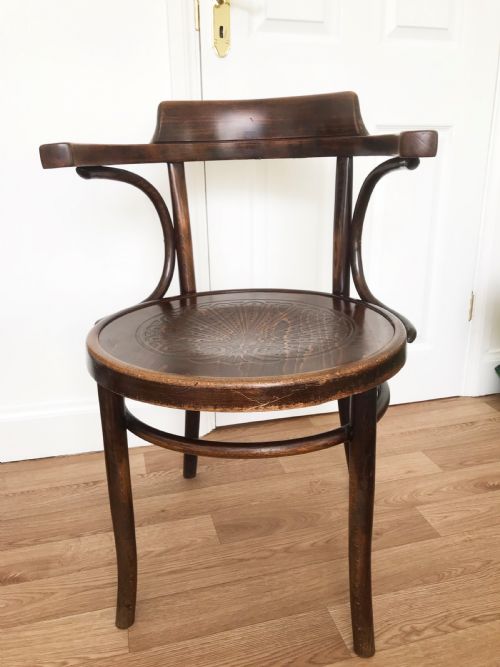


Beech Wooden Dining Chairs
These beech wooden dining chairs bring domestic utility and country craftsmanship together in seating designed for daily use across the nineteenth and twentieth centuries.
Beech Wooden Dining Chairs
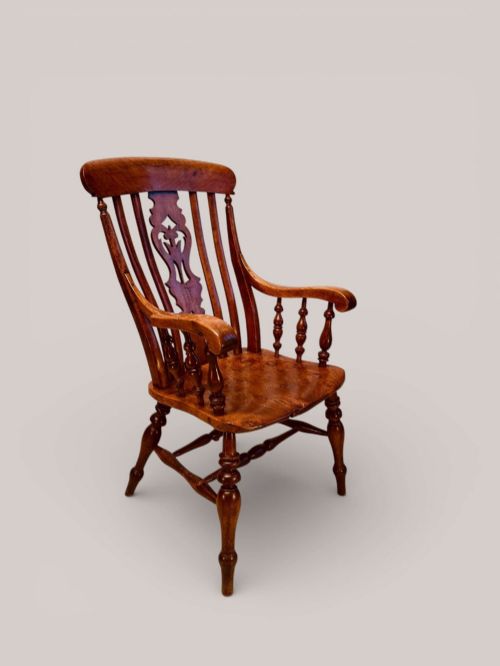
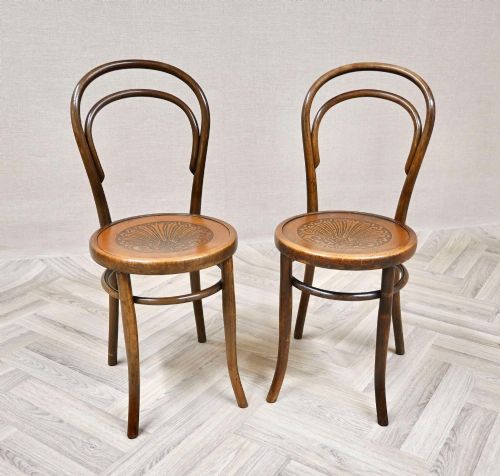
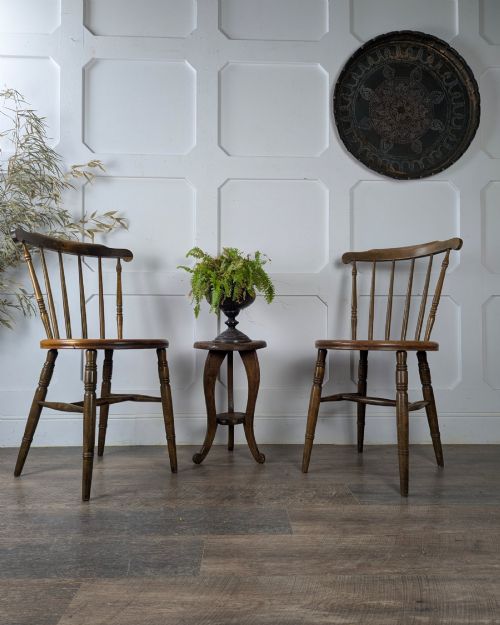
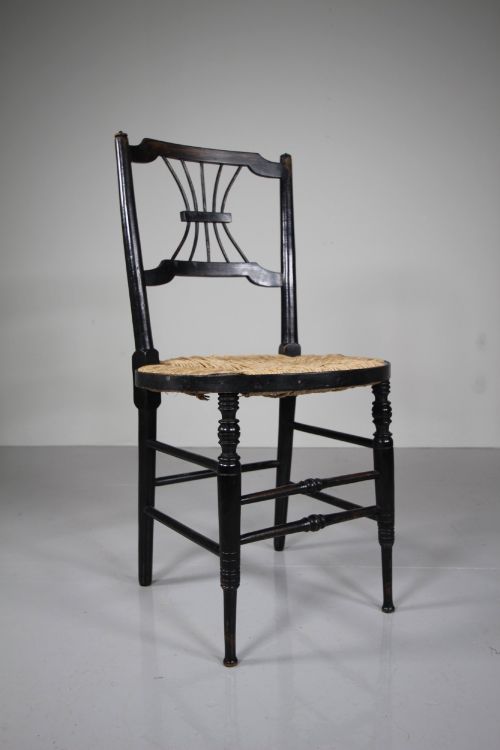
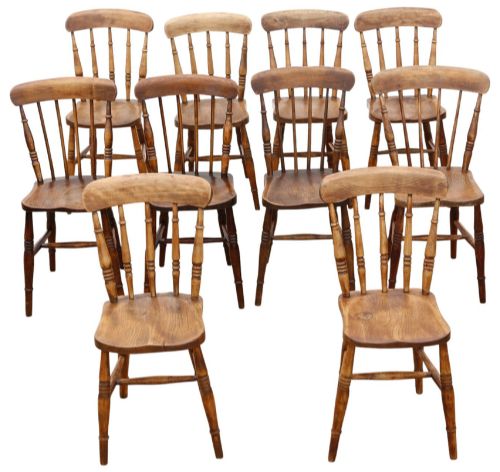
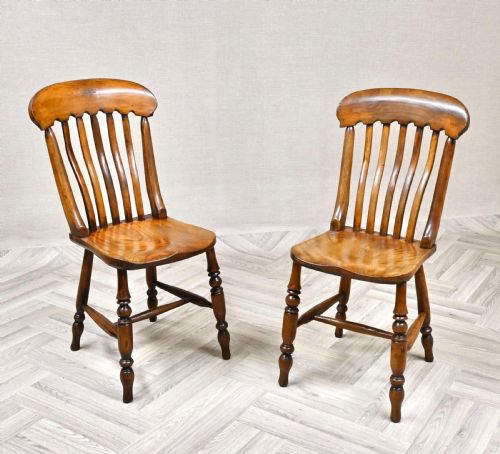
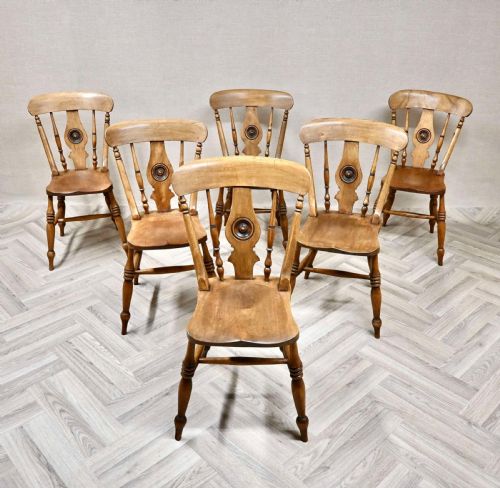
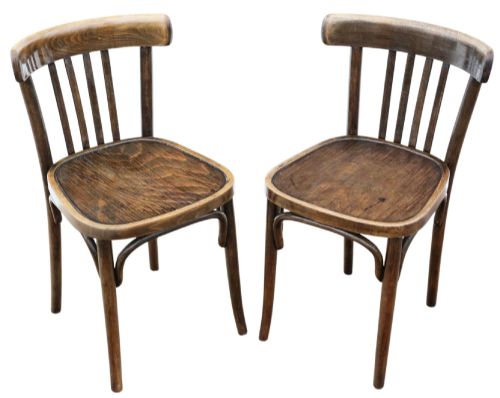
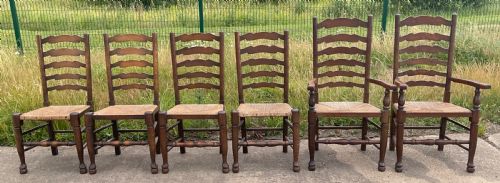
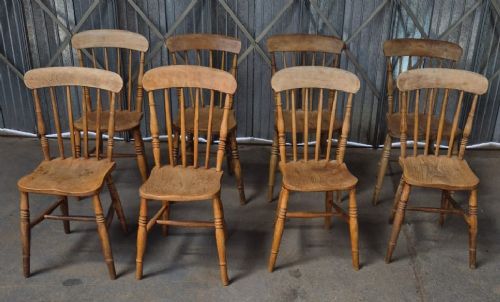
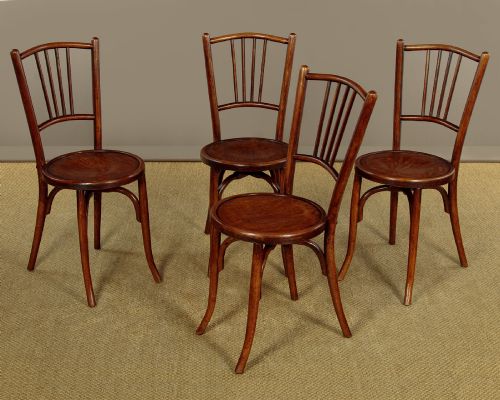
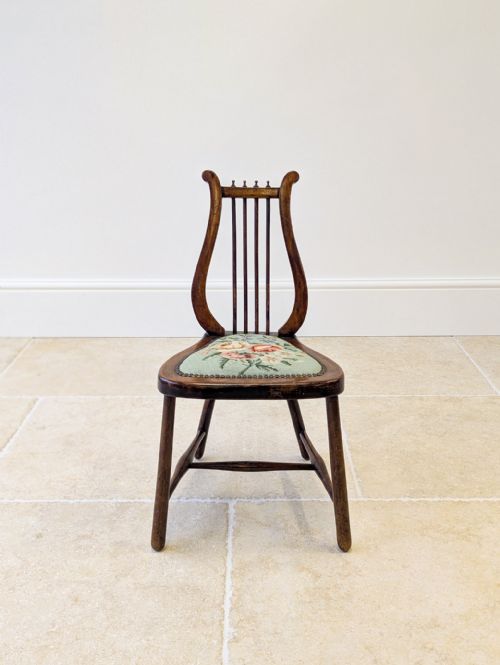
Beech wooden dining chairs span domestic forms ranging from Windsor kitchen seating to bentwood café styles and Edwardian side chairs. These pieces appear in configurations from single pairs to large sets of ten or twelve, reflecting their original purpose in everyday dining spaces.
The materials combine beech frames with contrasting seats of elm, rush, or plywood, alongside styles covering Victorian country, Arts and Crafts, and mid-century utility. Buyers most frequently encounter nineteenth-century vernacular seating alongside early twentieth-century bentwood examples.
Makers and workshops including Thonet, Codina, and J & J Kohn sit alongside unbranded farmhouse Windsor chairs and station seating. This mix provides options for both formal dining arrangements and relaxed kitchen settings.
Materials and Construction
Makers utilised solid beech for turned legs, stretchers, and curved steam-bent frames due to its strong grain and capability to hold tight joints. Elm frequently provided durable, figured timber for saddle seats on Windsor and wheelback chairs.
Steam-bent production involved heating timber until pliable, allowing manufacturers to form the flowing curves seen on bentwood bistro chairs and lath-back frames. Traditional joinery relied on turned spindles and wedge-tenon fixings to secure structural rigidity without modern adhesives.
Beech Wooden Dining Chairs Retail Price Guide 2026
Typical asking prices for beech wooden dining chairs among the pieces listed under this phrase on Sellingantiques today, from the lower quarter to the upper quarter. They describe what is for sale here now, not the wider market.
Listings feature periods spanning the Victorian era, Edwardian period, and mid-century modern design, utilising beech, elm, rush, and bentwood.
Assessing the Pieces
Quality rests in the integrity of the timber selection and the precision of the underlying joinery rather than surface finish alone. Sets that retain their original matching components and uniform patination demonstrate superior preservation compared to assembled harlequin groups.
The crispness of turned details on spindles and the resilience of steam-bent components separate everyday utility work from higher-grade production. Maker stamps and labels from workshops like Thonet or Kohn provide a definitive indicator of provenance and workshop standard.
Thonet·Codina·J & J Kohn·Dinco·William Morris
The Beech Wooden Dining Chairs Glossary
- Windsor
- A chair built with a solid wooden seat into which the legs and back spindles are separately tenoned. This construction provides robust structural support through mechanical joints.
- Bentwood
- Furniture formed by steaming strips of timber and bending them in metal jigs. This technique creates continuous curved frames with minimal joints.
- Harlequin set
- A collection of dining chairs assembled to match in general style and timber while differing in minor details. Such sets often accumulated over time in country houses.
- Lathback
- A Windsor chair variation featuring horizontal wooden slats set into the back bow. The slats replace traditional vertical spindles for back support.
- Carver
- An armchair designed with elbow rests, traditionally placed at the head of a dining table. These pieces match the simpler side chairs in a dining set.
Beech Wooden Dining Chairs: Frequently Asked Questions
How do I match mismatched dining chairs?
Gathering chairs into a harlequin set relies on shared materials such as beech and elm frames, or a consistent era like the nineteenth century. Uniform seat heights and similar back heights maintain visual balance around the dining table.
Mixing wheelback chairs with simple stick-back designs creates an eclectic arrangement that feels historically grounded. Keeping the timber tones within a similar palette ties disparate forms together.
Are bentwood chairs strong enough for daily use?
Steam-bent beech frames distribute weight efficiently through continuous curves, making them remarkably resilient despite their light appearance. Regular checking of screw fixings ensures the frame remains stable under daily pressure.
These pieces served busy nineteenth-century cafés and domestic kitchens for decades, proving their durability in practice. Proper care avoids exposing the steam-bent joints to excessive moisture.
What is the difference between an armchair and a carver?
Armchairs feature integrated elbow rests designed for general domestic seating or reception rooms. Carvers specifically denote armchairs proportioned to sit at the ends of dining tables alongside matching side chairs.
Historical listings often use both terms interchangeably for nineteenth-century seating with arms. The key lies in checking the seat height relative to standard dining tables.
How should I clean antique beech wood?
Maintenance requires a soft cloth and occasional application of traditional beeswax to nourish the dry timber. Avoid modern silicone sprays that build up and degrade the original patination.
Keeping wooden chairs away from direct heat sources prevents the beech and elm from shrinking and loosening their joints. Gentle dusting preserves the surface sheen accumulated over generations.