
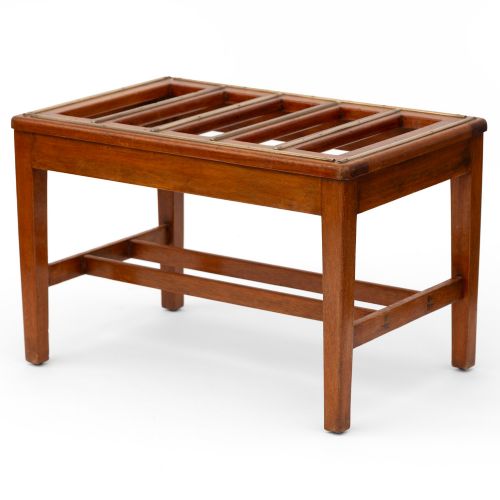
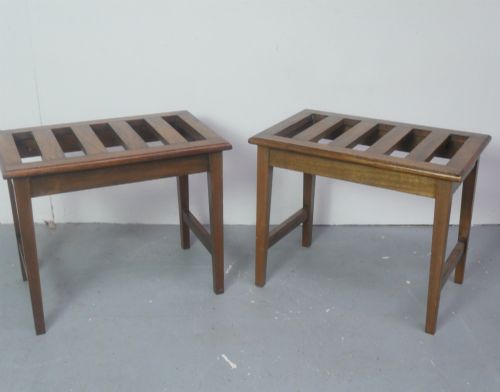
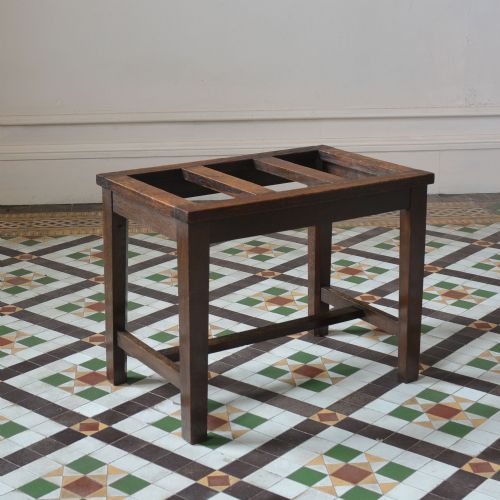
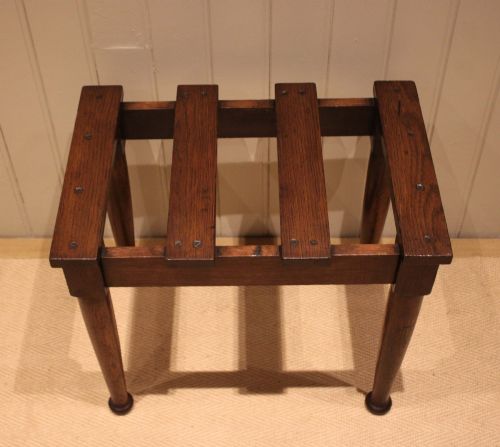



Bedroom Valet Stand
A bedroom valet stand provides a dedicated spot for overnight garments and accessories, keeping daily wear organised and ready for morning.
Bedroom Valet Stand
A bedroom valet stand appears across several forms including luggage stands, luggage racks, and traditional gentleman's valets. The pieces on this page span the Edwardian period through to the 1930s, alongside mid-century modern interpretations.
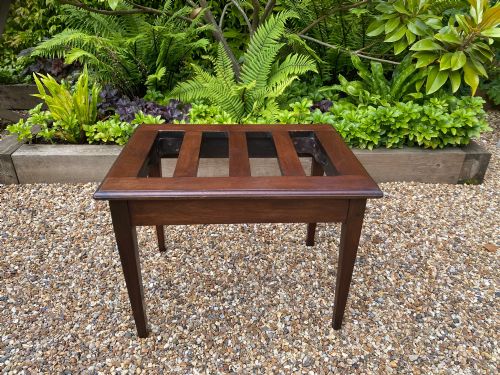
Most examples function as sturdy luggage racks or oak stands designed for hotel and domestic use. Buyers frequently encounter solid oak and walnut structures intended to support garments and cases in a domestic setting.
Origins range from English country house utility items to hotel fixtures and Italian workshop designs. These pieces reflect practical domestic habits from the early twentieth century, combining utility with straightforward carpentry.
Construction and materials
Construction relies heavily on traditional hardwoods such as oak, walnut, mahogany, beech, and teak. Selected pieces incorporate brass hardware, metal components, and fabric elements to complete the structure.
Joinery methods focus on load-bearing stability, particularly in luggage racks designed to hold heavy travel cases. Polished finishes highlight the natural grain of oak and walnut while protecting the timber from daily wear.
Listings feature oak, walnut, mahogany, beech, teak, brass, metal, and fabric across pieces dated from 1900 to the 1930s.
Assessing quality
Quality rests on the density of the timber and the rigidity of the joints under weight. Solid oak and walnut examples demonstrate superior structural integrity compared to lighter secondary woods.
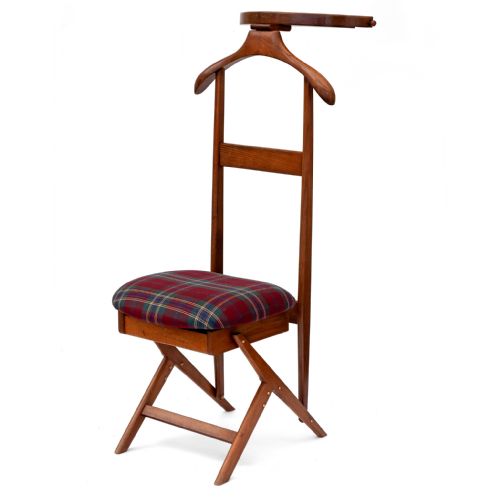
Refined detailing distinguishes standard utility items from distinguished workshop pieces like those in the manner of Fratelli Rugitti. The integration of brass fittings and polished surfaces indicates a higher tier of manufacture.
The Bedroom Valet Stand Glossary
- Edwardian
- A period spanning from 1901 to 1910 characterised by lighter, more refined furniture styles than the preceding Victorian era. Pieces from this time often utilise oak and beech.
- Luggage stand
- A low folding or fixed rack designed to hold travel cases at a convenient height for packing. These typically feature wooden slats and sturdy legs.
- Valet stand
- A freestanding piece of furniture designed to hold a suit, tie, shoes, and pocket items overnight. They often include tailored hangers and small trays for accessories.
- Mid-Century Modern
- A style prevalent from the mid-twentieth century focused on functional simplicity and clean lines. Teak and metal frequently appear in items from this design phase.
Bedroom Valet Stand: Frequently Asked Questions
What is a bedroom valet stand used for?
A bedroom valet stand holds tomorrow's outfit, keeping suits, shirts, and accessories in one place overnight. It prevents creases and ensures everything is ready to hand in the morning.
Historically, these stands served both domestic bedrooms and hotel guest rooms. They provided a designated drop-off point for garments and travel luggage.
How do I date an Edwardian valet stand?
Dating relies on timber choices, construction techniques, and stylistic markers typical of the early twentieth century. Edwardian pieces often feature polished oak or beech with simple, practical lines.
Comparing the hardware and finish against known period examples helps confirm the decade of manufacture. Maker marks or hotel provenance stamps can also narrow down the date.
Are luggage racks the same as valet stands?
Luggage racks are primarily built to support heavy travel cases at a comfortable height. Valet stands are tailored specifically for hanging garments and holding smaller personal items.
While both categories serve bedroom organisation, their physical configurations differ to accommodate either luggage or clothing. Some hybrid forms incorporate elements of both designs.
How do I care for wooden valet stands?
Regular dusting with a dry cloth keeps polished oak and walnut surfaces free from grit. Applying a quality beeswax occasionally maintains the timber's natural lustre.
Avoid placing wooden furniture in direct sunlight or near heat sources to prevent timber splitting. Checking joints periodically ensures structural stability remains sound.