
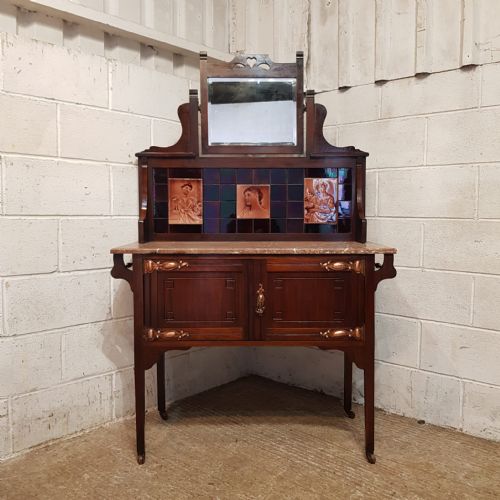


Bedroom Mirror Table Top
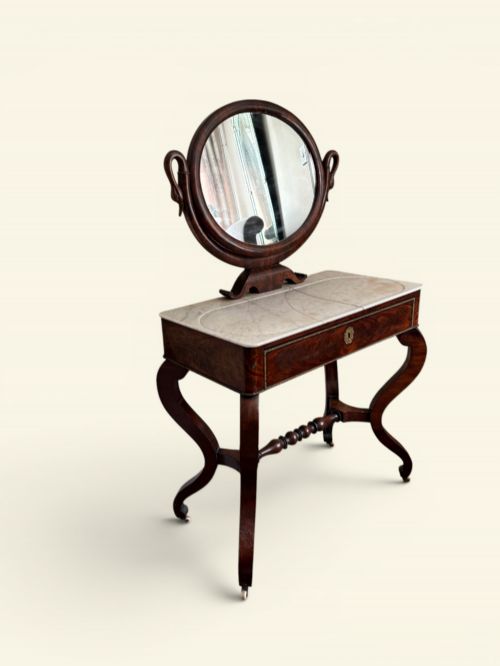
These bedroom mirror table top pieces are dressing tables and vanity chests offering surface space and glass, originating across the Georgian, Victorian, and early twentieth-century periods.
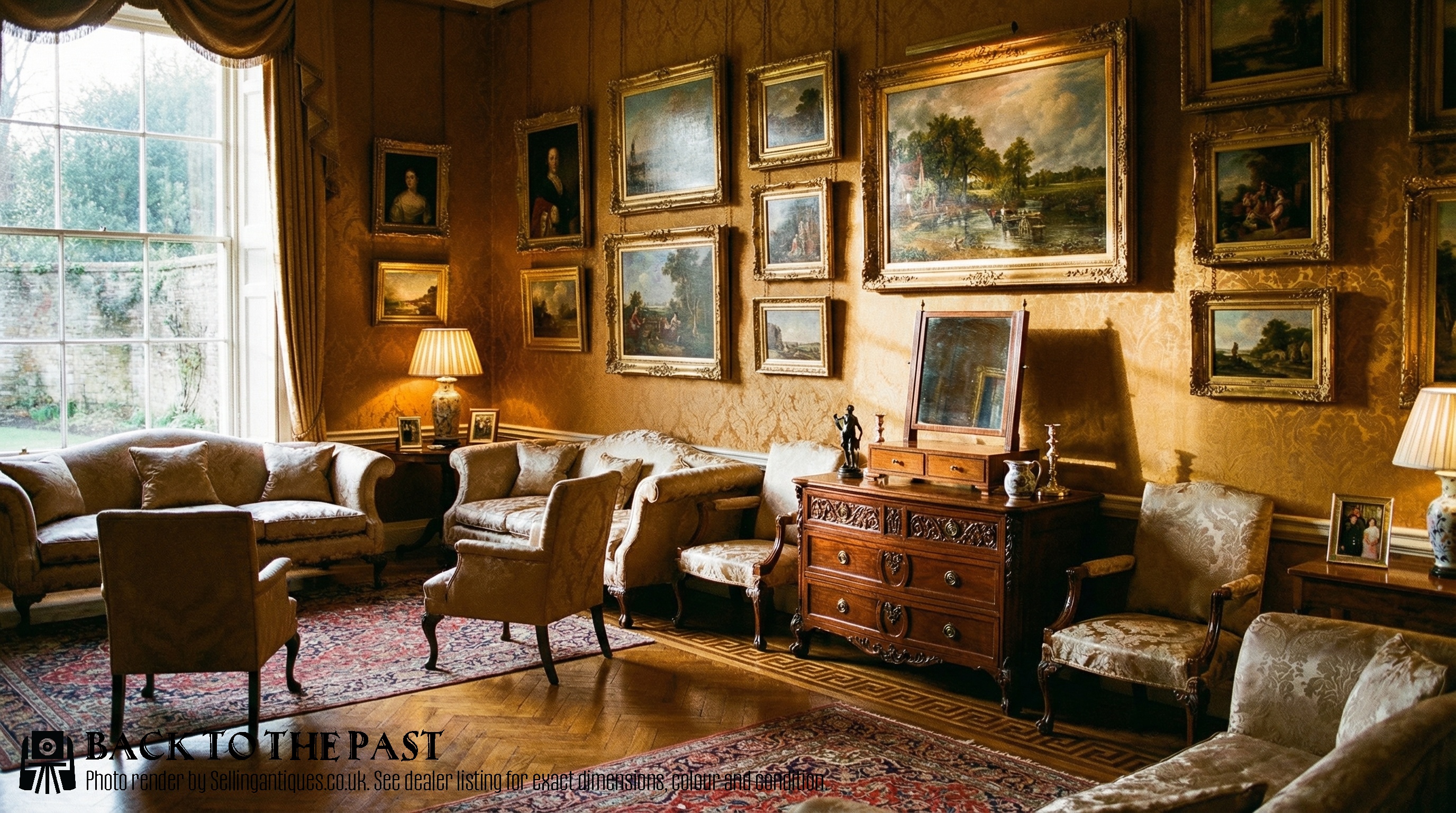
Bedroom Mirror Table Top
A bedroom mirror table top search gathers dressing tables, washstands, and chests of drawers fitted with glass mirrors. These furnishings served daily grooming routines in domestic bedchambers across multiple centuries.
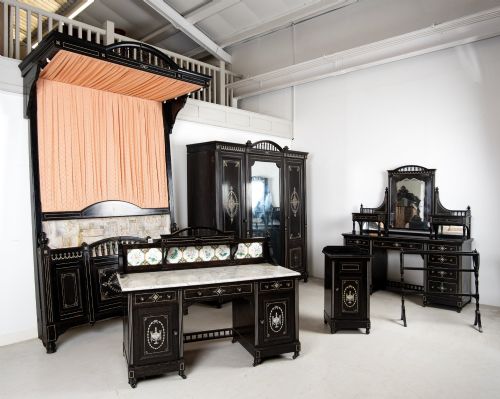
The pieces appearing here span from the Georgian era through to the 1930s. Oak, mahogany, and marble dominate the structural forms alongside rarer variations in ebonised wood and bone inlay.
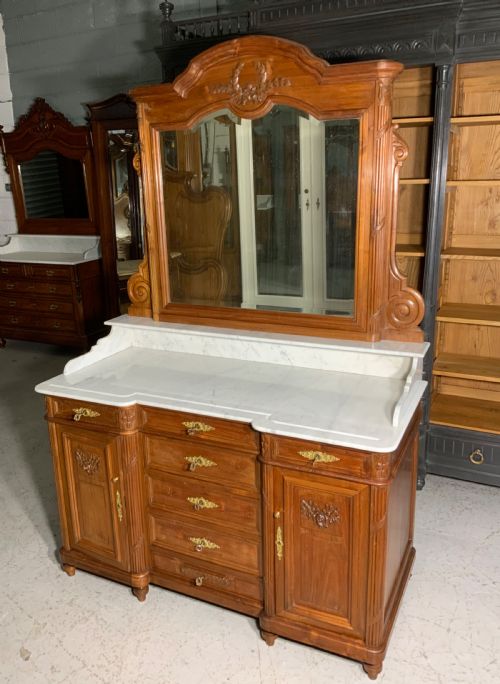
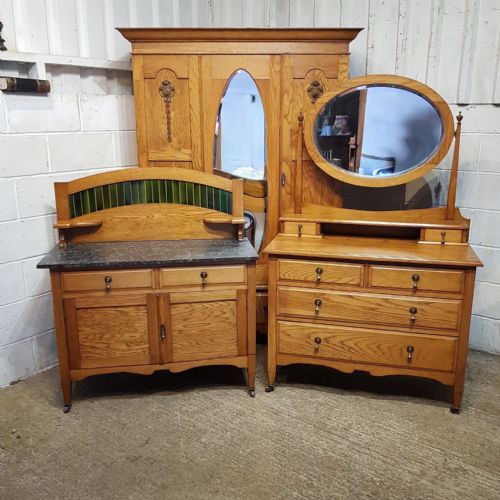
Buyers most frequently encounter large mahogany or oak dressing tables and washstands, often reflecting French Rococo Revival, Arts and Crafts, or Victorian aesthetic movements. Each item combines surface utility with a fixed or pivoting mirror.
Materials and construction methods
Makers utilised solid timbers including mahogany, oak, and rosewood, frequently pairing them with marble tops and cast brass hardware. Structural framing relied on traditional joinery methods suited to heavy daily domestic use.
Surface decoration incorporated ebonisation, bone inlay, and carved detailing, while glass mirrors were set into matching wooden frames. Selected items featured specialised finishes like faux bamboo or birds-eye maple veneer.
Listings feature mahogany, oak, marble, glass, brass, ceramic, ebonised wood, and bone inlay across multiple historical periods.
Distinguishing quality across examples
The grade of timber selection and depth of carving separate standard utility items from finer examples. Superior pieces display thoughtful grain matching and well-executed decorative brass mounts.
Construction integrity in the drawers and mirror supports indicates the standard of workshop execution. Original marble surfaces and intact glass mirrors also elevate the finished character of an item.
The Bedroom Mirror Table Top Glossary
- Washstand
- A bedroom cabinet or table designed to hold a basin and pitcher, frequently equipped with a marble top and splashback. These pieces often pre-date modern plumbing in bedchambers.
- Ebonised wood
- Timber treated with a dark stain or finish to imitate expensive ebony. This technique gained particular popularity during the Victorian Aesthetic Movement.
- Faux bamboo
- Wood turned and carved to resemble natural bamboo stalks. Makers produced this decorative style extensively during the late nineteenth century.
- Birds-eye maple
- Timber featuring small, circular markings resembling a bird's eye within the grain pattern. Cabinetmakers used this decorative veneer on select surfaces for visual contrast.
Bedroom Mirror Table Top: Frequently Asked Questions
How are these dressing tables used today?
These items function practically in modern homes as dedicated vanity spaces or hallway console surfaces.
The incorporated mirrors and drawer compartments provide useful storage while retaining their historical character.
What periods do these pieces represent?
The selection spans from the eighteenth century through the Georgian and Victorian eras up to the 1930s.
Each period introduced distinct stylistic influences ranging from French Rococo Revival to Arts and Crafts simplicity.
Are the marble tops original?
Many washstands and dressing tables retain their heavy fitted marble tops from the nineteenth and early twentieth centuries.
These stone surfaces provided durable, water-resistant areas for washing and grooming routines.
How do I identify a washstand from a dressing table?
Washstands typically feature marble surfaces and tiled or wooden splashbacks designed to withstand water splashes.
Dressing tables focus primarily on surface space and mirror integration for personal grooming.