






Bedroom Bench Seating
These bedroom bench seating options bring practical comfort and period character to the foot of a bed or a quiet corner.
Bedroom Bench Seating
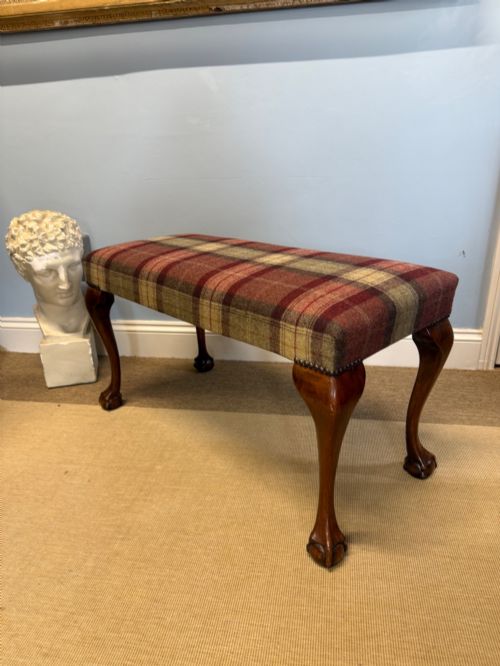
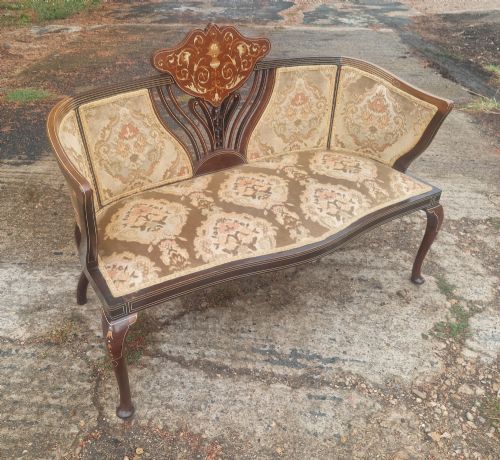
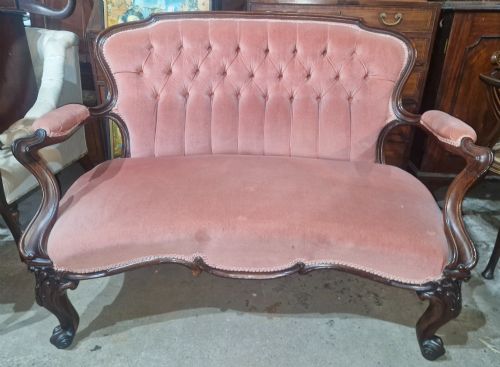
Bedroom bench seating encompasses a diverse array of forms, from compact upholstered dressing stools to long window seats and end-of-bed sofas designed for domestic repose.
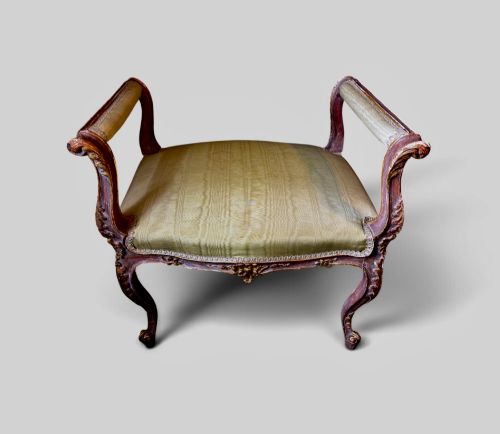
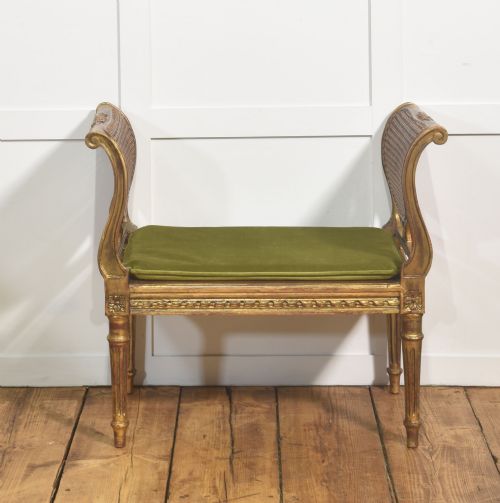
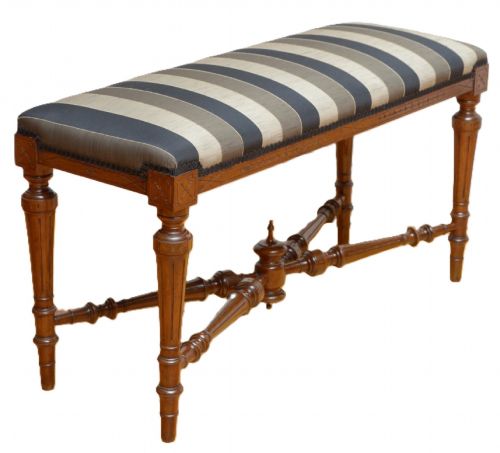
The selections span the nineteenth century through the 1930s, incorporating Edwardian inlaid mahogany frames, Victorian walnut duet stools, and French Louis XVI style giltwood window seats.
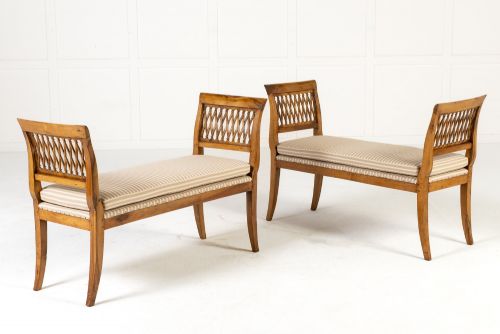
Buyers frequently encounter dual-purpose pieces like piano stools and small settees, alongside low benches created specifically to sit neatly at the foot of a bed.
Materials and Construction
Cabinetmakers constructed these frames using hardwoods such as mahogany, walnut, satinwood, and rosewood, often enhancing the timber with detailed inlay, bone marquetry, or intricate hand-carving.
Gilded finishes, white paint, and ebonised treatments appear across French and English pieces, accompanied by cane work panels and exposed structural elements like twisted rope legs and cabriole supports.
Upholstery relies on traditional techniques paired with fabric, velvet, linen, needlepoint, and fresh decorative textile covers to complete the seating surface.
Bedroom Bench Seating Retail Price Guide 2026
Typical asking prices for bedroom bench seating among the pieces listed under this phrase on Sellingantiques today, from the lower quarter to the upper quarter. They describe what is for sale here now, not the wider market.
Some dressing stools hide musical intentions, doubling as piano benches for impromptu midnight recitals.
Craftsmanship and Proportion
Quality rests in the crispness of the wood carving, the precision of the joinery, and the integrity of any inlaid decoration or gilt application.
Finer examples maintain balanced proportions and retain their original structural framing, whereas simpler versions rely on plain turned legs and standard commercial timber.
The harmony between the primary frame material and the chosen textile covering dictates the overall visual success of each piece.
Harry & Lou Epstein
The Bedroom Bench Seating Glossary
- Window seat
- A narrow upholstered bench traditionally designed to fit within the architectural recess of a window frame.
- Duet stool
- An elongated seating form originally built to accommodate two musicians side by side at a piano.
- End of bed sofa
- A compact couch or small settee proportioned to sit against the footboard of a bedroom suite.
- Giltwood
- Timber that has been coated with a thin layer of gold leaf or gilt paint for decorative effect.
- Cane work
- Woven plant material creating a porous, patterned panel used for seat bases or backrests.
Bedroom Bench Seating: Frequently Asked Questions
Where should I place a bedroom bench?
These pieces fit naturally at the foot of a bed to hold cushions or provide a place to sit while dressing.
They also suit dressing tables, hallways, or quiet window corners where space is at a premium.
Can I use a piano stool as a bedroom seat?
Duet piano stools offer a convenient length and sturdy build that translates well to domestic bedroom use.
Their elongated rectangular proportions match the standard width of many bedframes.
How do I identify a French style seat?
French pieces often display carved walnut, gilt finishes, and Neoclassical or Louis XVI styling details.
Cabriole legs and painted woodwork further distinguish continental pieces from English furniture.
What is cane work?
Cane work involves weaving processed rattan strips into an open mesh pattern for seat inserts.
This technique provides a lightweight, resilient surface seen on various early twentieth-century frames.