

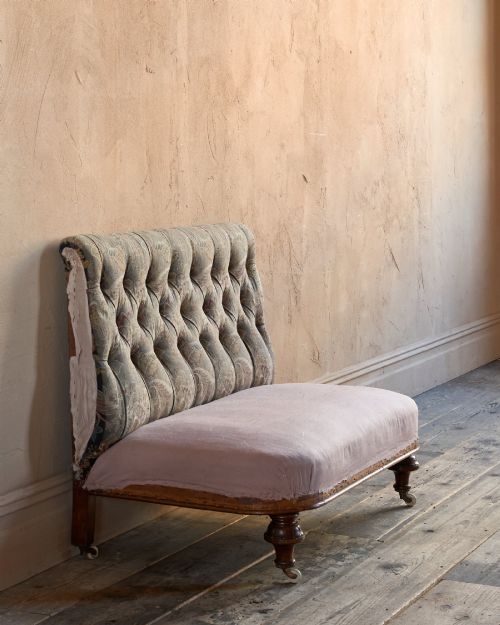
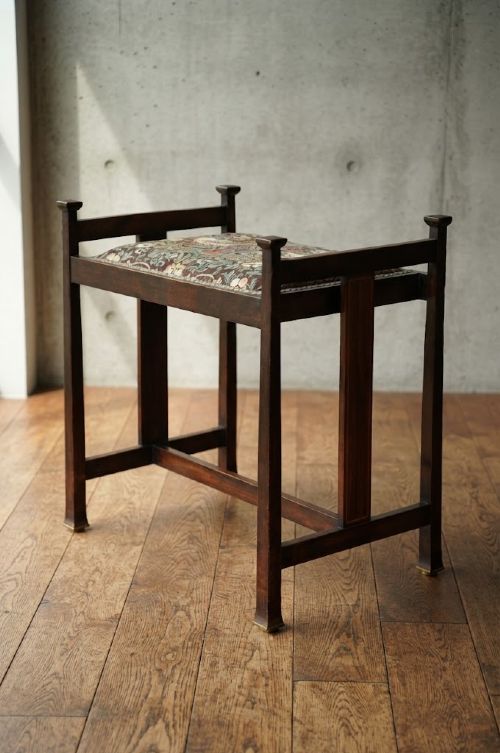
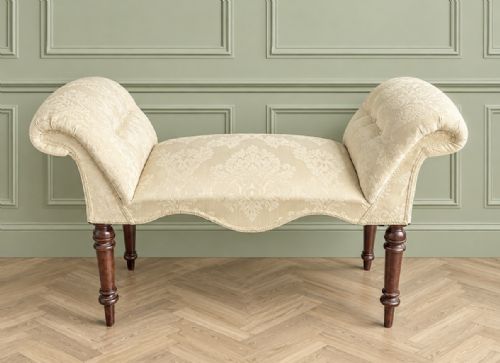
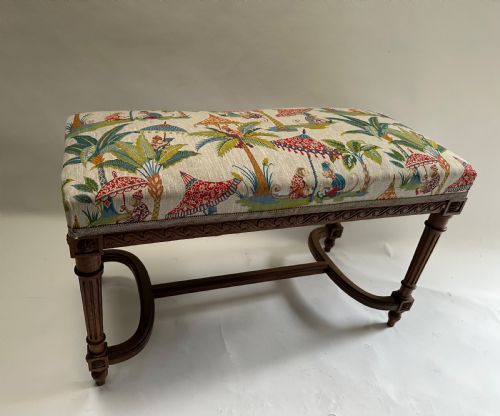
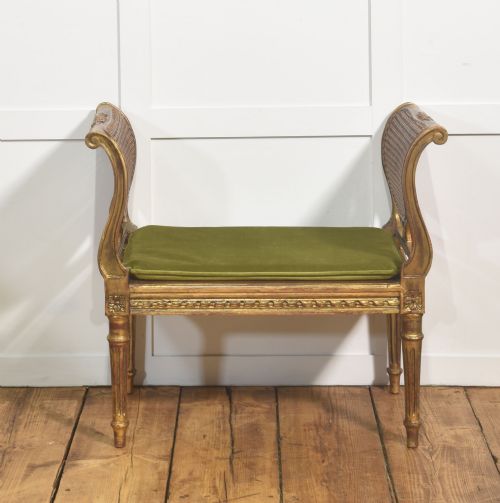


Bedroom Bench Seat
A bedroom bench seat brings practical comfort and architectural shape to the foot of a bed or a quiet corner.
Bedroom Bench Seat
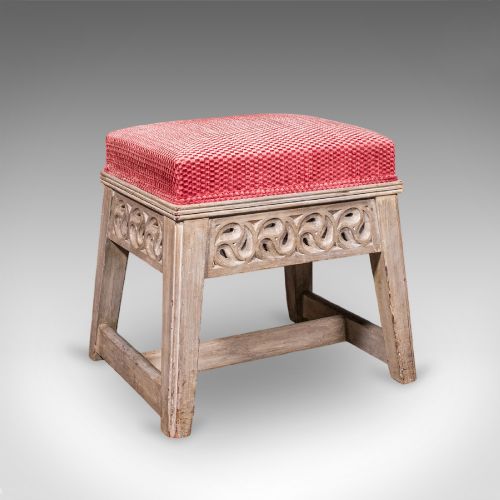
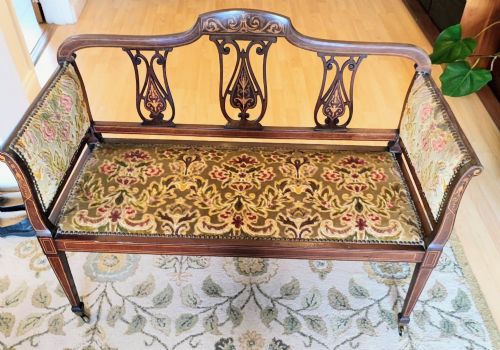
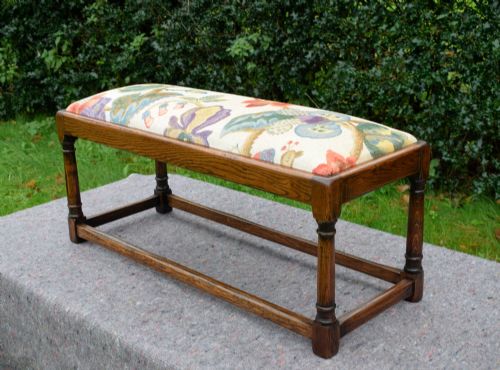
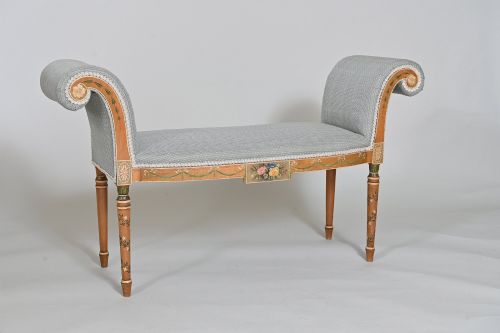
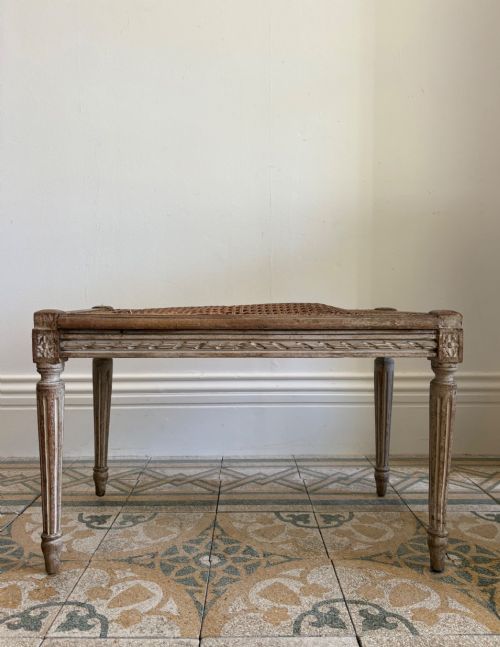
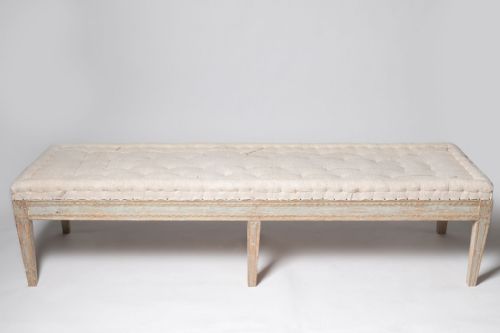
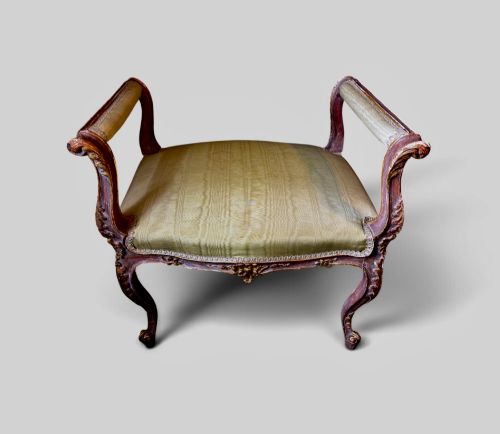
A bedroom bench seat covers a variety of low seating forms designed for resting, dressing, or placing at the foot of a bed. These include slender window seats, dressing table stools, duet piano benches, and small end-of-bed sofas spanning the nineteenth and early twentieth centuries.
The pieces appearing most frequently range from Victorian walnut window seats and Edwardian inlaid satinwood sofas to French giltwood designs influenced by Louis XVI and Régence styles. Makers and workshops from different European traditions, as well as Chinese Qing Dynasty huali wood pieces, contribute to this varied selection.
Meticulous craftsmanship appears across forms such as mahogany X-framed stools, cane-panelled window seats, and ebonised frames. Each item serves a distinct domestic function while carrying the stylistic hallmarks of its period, from simple country pieces to elaborate urban seating.
Materials and construction methods
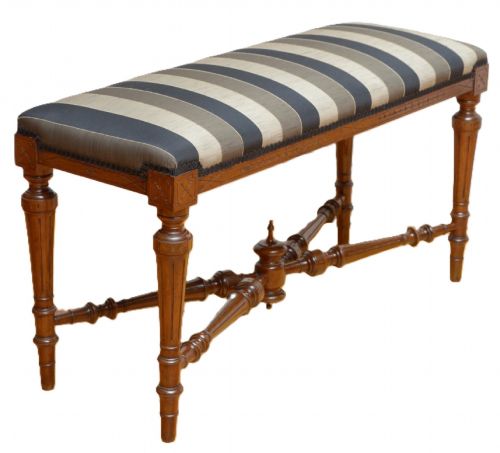
Cabinetmakers utilised dense timbers such as mahogany, walnut, satinwood, and sycamore to construct sturdy frames, frequently employing intricate inlay, cross stretchers, and fluted or twisted rope legs for stability. Giltwood and white painted finishes provide decorative surface detail on French-influenced frames.
Upholstery techniques vary from traditional needlepoint and fabric covers to cane work and modern linen or flowery top covers. Joinery methods involve secure framing to support regular use as dressing stools or window seats.
Bedroom Bench Seat Retail Price Guide 2026
Typical asking prices for bedroom bench seat among the pieces listed under this phrase on Sellingantiques today, from the lower quarter to the upper quarter. They describe what is for sale here now, not the wider market.
Some dressing stools arrive equipped with hidden cross stretchers designed solely to keep restless feet from dangling.
Judging the quality of a bedroom bench seat
Quality rests upon the crispness of carved details in walnut, mahogany, or giltwood, and the integrity of structural elements like cross stretchers and leg joints. Pieces featuring delicate inlay, bone details, or balanced proportions demonstrate higher craftsmanship.
The standard of upholstery and the preservation of original timber surfaces distinguish standard utility items from finer decorative examples. Restorations remain successful when materials match the period aesthetic without masking the underlying construction.
Harry & Lou Epstein
The Bedroom Bench Seat Glossary
- Window seat
- A long, narrow form of seating designed to fit into the recess of a window, often featuring armrests at both ends and upholstered tops.
- Duet stool
- An extended seating bench created for two people, frequently used at a piano or dressing table.
- X-framed
- A structural form utilising crossed diagonal legs that intersect beneath the seat for stability and architectural interest.
- Giltwood
- Timber treated with gold leaf or metallic gilt finish to create an opulent decorative surface.
- Cane work
- Woven plant material forming breathable panels for seats or backrests, offering a lighter visual weight.
Bedroom Bench Seat: Frequently Asked Questions
Where do you place a bedroom bench seat?
These seats sit naturally at the foot of a bed, beneath a window, or beside a dressing table for daily convenience.
Their compact proportions also suit hallways and quiet corners where long sofas prove too large.
What is the difference between a window seat and a stool?
Window seats generally incorporate end panels, arms, or backs designed for lounging by a window or at the end of a bed.
Stools provide simpler, open-sided seating primarily intended for dressing tables or piano playing.
How do I identify an Edwardian bench?
Edwardian pieces often feature light woods like satinwood, subtle bone inlay, and refined Edwardian or neoclassical revival styling.
They tend to feel lighter in scale compared to heavier Victorian walnut frames.
Can I use a duet stool at a piano?
Duet stools provide the extra length necessary for two players or offer generous surface space for bedroom use.
Many period examples retain sturdy wooden frames suited to regular sitting.