

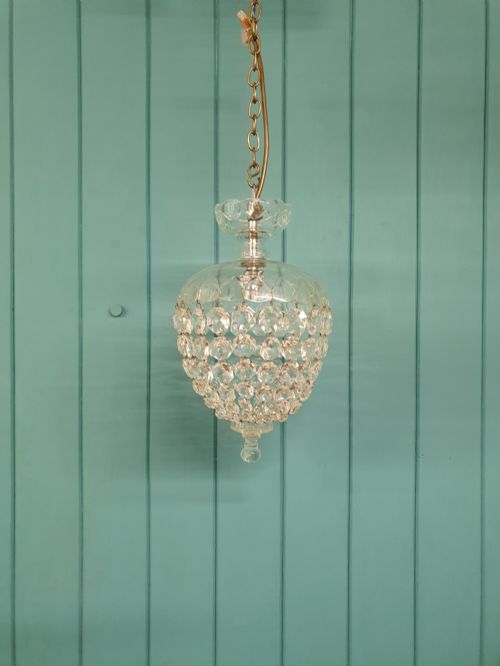


Beaded Glass Shade
A beaded glass shade brings shimmering texture and gentle diffusion to lighting fixtures across Victorian, Edwardian, and Art Deco interiors.
Beaded Glass Shade
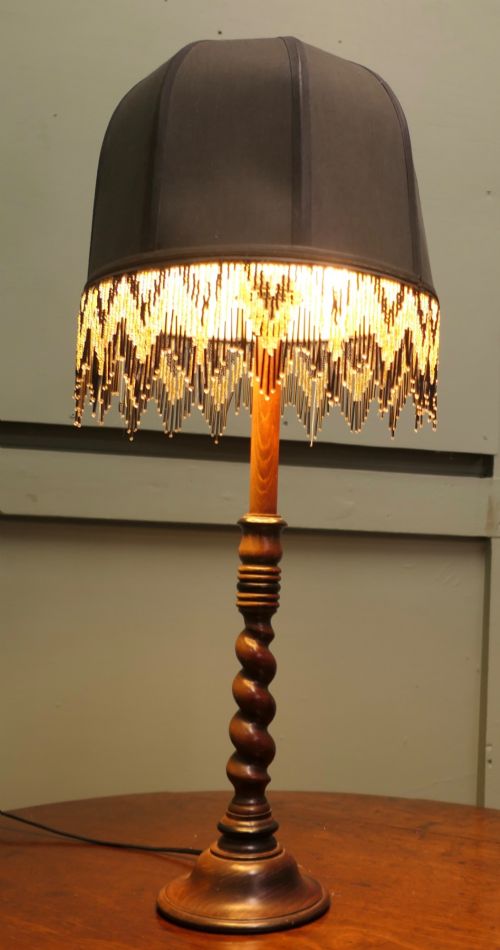
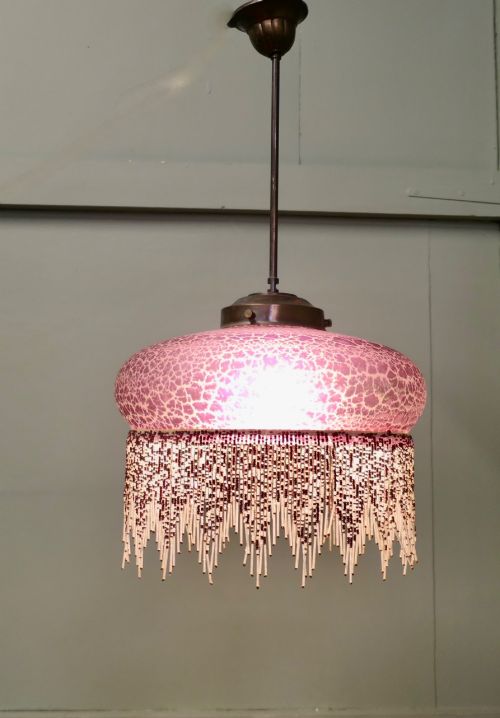
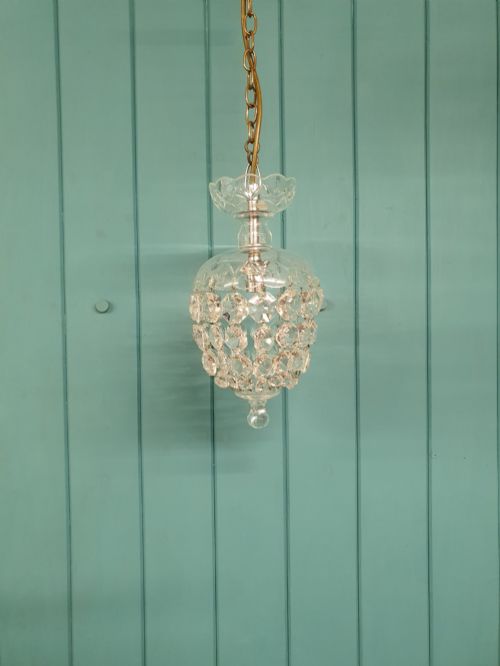
A beaded glass shade turns standard illumination into a decorative centrepiece by softening the light through dangling crystal or glass beads. When searching for a beaded glass shade, buyers encounter everything from compact dome top chandeliers and small wire light fittings to amber lampshades and wall lights.
The pieces listed here span multiple decades, drawing on Victorian, Edwardian, 1920, 1930, and 1910 periods. Styles range from Arts and Crafts and French Chateau to French Empire and Art Deco, reflecting diverse domestic lighting traditions.
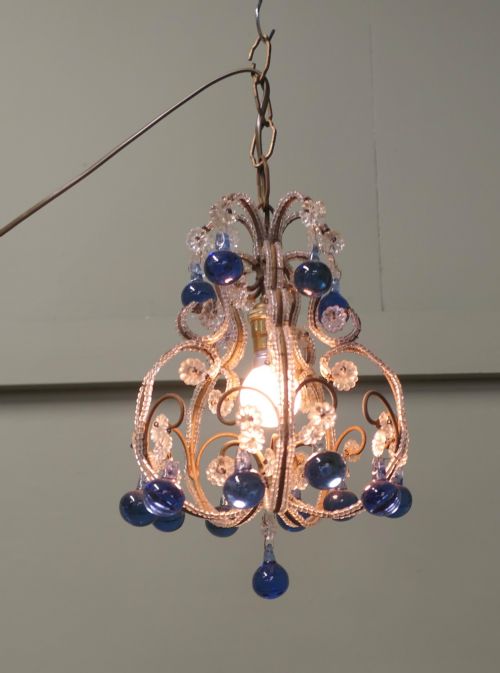
Forms include ceiling lights, pendant lights, chandeliers, and table lamps. The listings feature distinctive variations such as blue prisms, red drips, and wire structures decorated with flowers.
How they were made
Maker workshops built these light fittings using brass, bronze, and gilt brass frames to support intricate glass and crystal components. Cut glass and frosted glass elements provide the primary diffusing surfaces, paired with delicate wire frameworks.
Individual glass beads and prisms are suspended from frames to catch and refract light. Some designs incorporate fabric elements alongside the glass and metal components.
Beaded Glass Shade Retail Price Guide 2026
Typical asking prices for beaded glass shade among the pieces listed under this phrase on Sellingantiques today, from the lower quarter to the upper quarter. They describe what is for sale here now, not the wider market.
Some wire chandeliers bloom with tiny glass flowers among the beads.
What varies in quality
Quality rests in the weight and clarity of the glass or crystal components, alongside the rigidity of the supporting brass or wire framework. Denser cutting and richer colouring in the prisms distinguish finer items from simpler production.
The complexity of the assembly, such as integrated floral wirework or multi-tiered tent and waterfall configurations, marks the distinction between standard utilitarian lampshades and more ambitious decorative chandeliers.
The Beaded Glass Shade Glossary
- Bag chandelier
- A light fixture enclosed in a teardrop or bag-shaped mesh of crystals and beads. This form hangs close to the ceiling while dispersing light in multiple directions.
- Tent and waterfall
- A lighting arrangement featuring an upper conical tent of strung crystals above a cascading waterfall of hanging prisms. This style creates a dense curtain of sparkling glass.
- Cut glass
- Glass shaped and patterned by abrasive wheels to create sharp facets. These facets catch and scatter light more intensely than smooth glass.
- Frosted glass
- Glass treated to appear opaque or matte, diffusing light evenly. It reduces glare while maintaining a soft luminosity.
- Prism
- A geometric glass pendant designed to refract light into spectral colours. Prisms hang from the main frame of chandeliers and shades.
Beaded Glass Shade: Frequently Asked Questions
What periods do these shades come from?
The available pieces span the Victorian, Edwardian, 1910, 1920, and 1930 periods. Each era brought distinct stylistic touches to the glass and metalwork.
Design influences range from Arts and Crafts simplicity to opulent French Chateau and Art Deco motifs.
How were these light fixtures used?
They served as decorative illumination in domestic spaces, functioning as ceiling lights, wall sconces, and table or floor lamps. The beads softened the harsh glare of early electric or gas lighting.
Smaller dome tops and lampshades suited intimate rooms, while larger multi-light chandeliers lit grander reception spaces.
What materials make up these fittings?
Frameworks typically utilise brass, bronze, gilt brass, and wire. The shades and hanging elements combine clear glass, cut glass, crystal, and frosted glass.
Some examples also incorporate fabric components alongside the glass beadwork.
How do I identify different styles?
Victorian and Edwardian pieces often feature traditional brass frames with delicate bead fringes. Art Deco and 1930s examples lean towards geometric structures like wire bag chandeliers.
French-influenced designs utilise elaborate crystal drops, tent arrangements, and gilt metalwork.