



Beaded Basket Fixture
These beaded basket fixture designs bring sparkle and height to a room through tiers of glass droplets and brass frames.
Beaded Basket Fixture
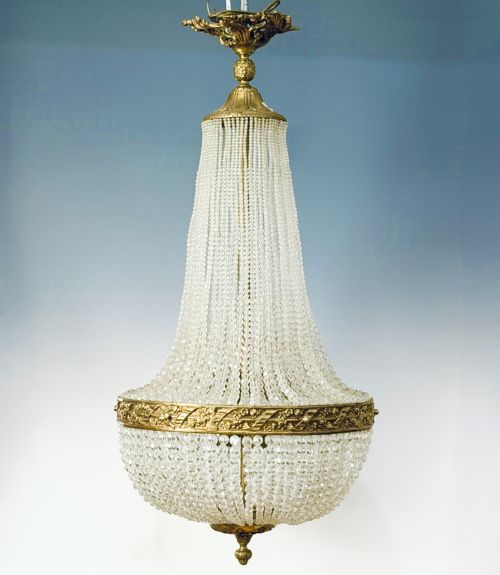
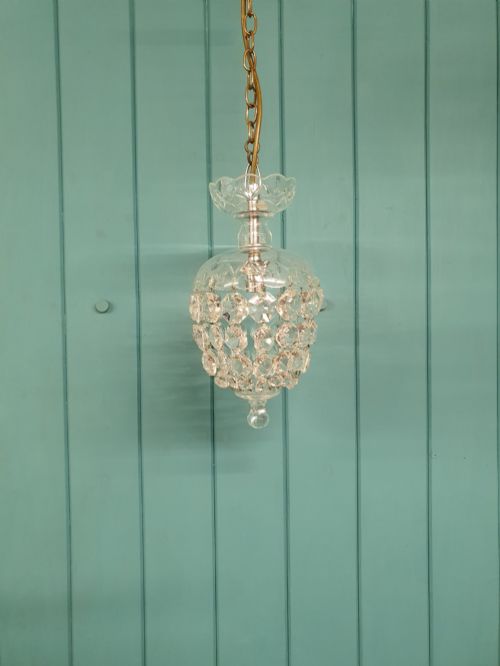
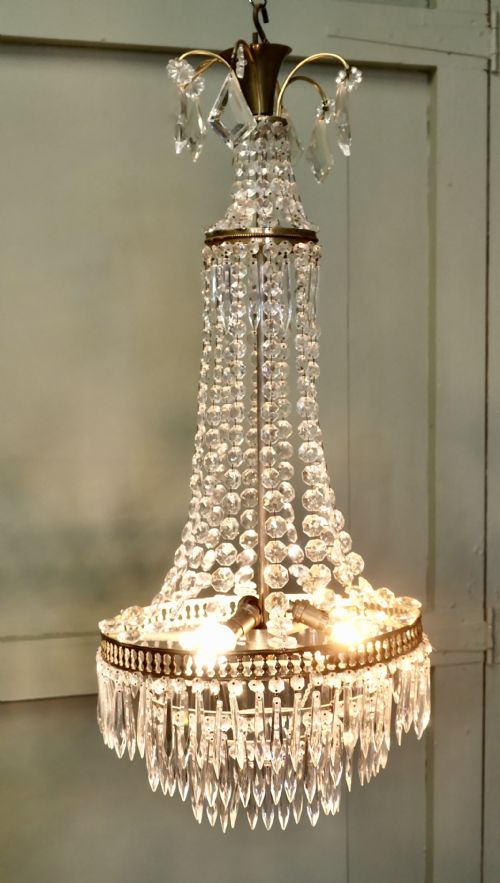
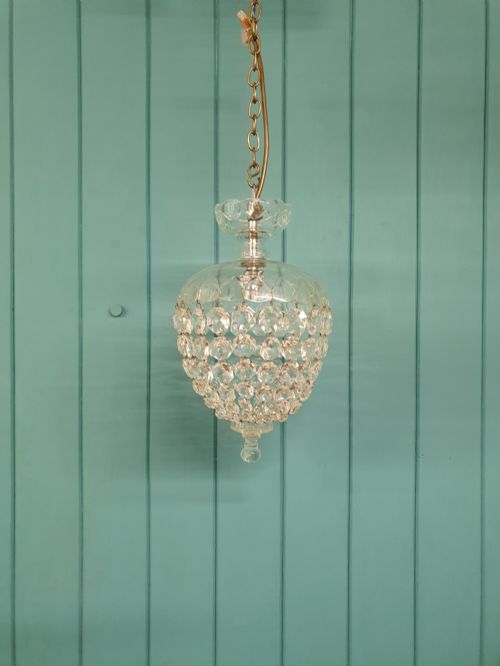
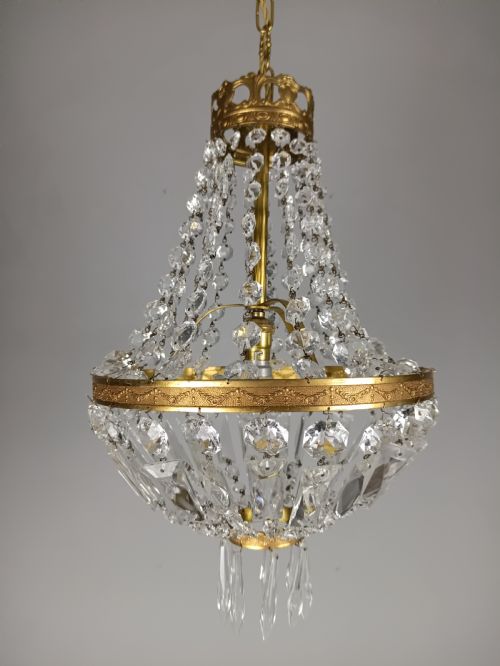
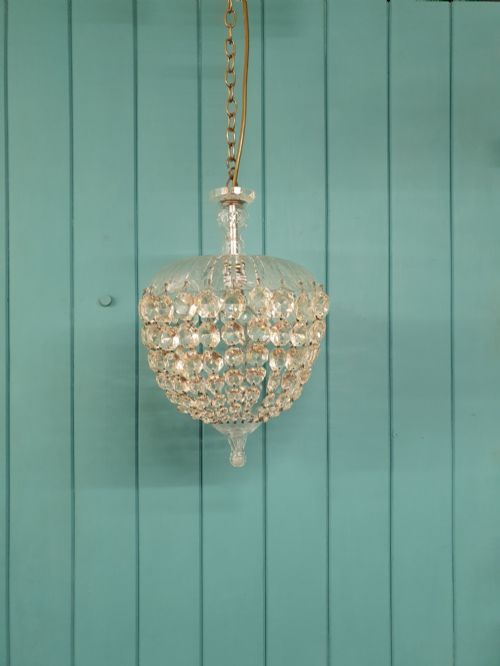
A beaded basket fixture gathers light through suspended crystal and cut glass drops arranged in basket, dome, tent, and bag shapes. You encounter Edwardian examples alongside French Empire and Art Deco pieces from the early twentieth century.
The form relies on metal frames supporting rows of beads that catch and refract the illumination. Most pieces on this page span the Edwardian era through the nineteen-thirties, taking the form of chandeliers, ceiling lights, and lampshades.
Makers shaped these hanging lights to grace high ceilings and principal rooms with reflective brilliance. The surviving items range from compact seven-inch bag chandeliers to larger multi-tier designs.
How they were made
Workshops built the structural framework using brass, gilt bronze, chrome, and standard metal. These metals provided the rigid skeleton needed to bear the weight of numerous glass elements.
Artisans wired or pinned individual glass, crystal, and cut glass beads to the metal armature. The assembly combined moulded frames with hand-cut crystals and amber glass components.
Beaded Basket Fixture Retail Price Guide 2026
Typical asking prices for beaded basket fixture among the pieces listed under this phrase on Sellingantiques today, from the lower quarter to the upper quarter. They describe what is for sale here now, not the wider market.
Some Edwardian dome top chandeliers measure just six inches across, proving that grand crystal sparkle can come in miniature parcels.
What varies in quality
The standard of cutting on the crystal and glass beads dictates much of the visual depth. Simpler moulded drops sit at one end, while sharp-faceted cut glass creates richer prismatic effects.
Frame construction and metal finishing also divide everyday examples from superior ones. Gilt bronze and heavy brass frameworks hold their alignment and lustre better than lighter plated metals.
Wedgwood
The Beaded Basket Fixture Glossary
- Bag chandelier
- A lighting fixture featuring a flattened or rounded base packed closely with beaded strands, resembling a small pouch. This shape became popular in the early twentieth century.
- Tent and waterfall
- An arrangement where upper strands form a tent shape over a ring, dropping down into a cascading waterfall of crystals below. It creates a layered silhouette.
- Gilt bronze
- Metal alloy treated with a gold-coloured finish or gold leaf layer to prevent tarnishing and add warmth. It appears on French-influenced fixtures from the nineteenth and twentieth centuries.
- Cut glass
- Glass shaped and faceted on a wheel rather than blown or moulded alone. This process sharpens the edges to catch light from every angle.
Beaded Basket Fixture: Frequently Asked Questions
What is a beaded basket fixture?
A beaded basket fixture is a hanging ceiling light built from a metal frame draped with glass or crystal beads. These pieces use tiered drops to diffuse and reflect illumination.
Most surviving examples date from the Edwardian period through the nineteen-thirties, taking shapes such as domes, bags, and tents.
How do I hang a heavy chandelier?
Hanging these fixtures requires securing the weight directly to a ceiling joist or structural noggin using a proper metal hook. The mounting must support both the metal frame and the dense glass drops.
Professional electrical installation ensures the wiring matches the age and capacity of the fitting safely.
How do I clean a crystal chandelier?
Cleaning involves wiping individual crystal drops with a mild solution while the fixture remains supported in place. Removing each bead is rarely necessary if you work carefully around the frame.
Harsh chemical cleaners can damage brass frames and strip gilt finishes, so gentle soapy water works best.
Are these lights suitable for low ceilings?
Compact bag chandeliers and flush ceiling lights work well in rooms with restricted headroom. Their shallow profiles keep the glass clear of the floor.
Larger tent and waterfall designs require higher ceilings to accommodate their extended drop and complex tiers.