




Baroque Verdure Tapestry
A baroque verdure tapestry brings the deep, leafy woodlands of the seventeenth century directly onto a room's wall.
Baroque Verdure Tapestry
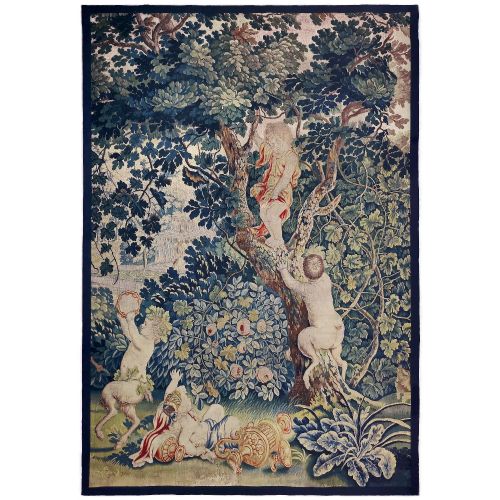
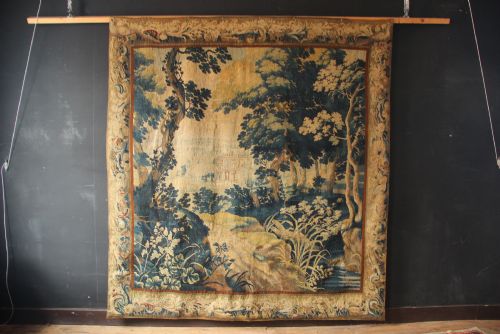
When you search for a baroque verdure tapestry, you encounter large woven wall hangings dominated by dense foliage, trees, and distant garden architectures or game parks. These textile works stem primarily from seventeenth-century Flemish and French weaving centres, capturing the ornate tastes of the baroque era.
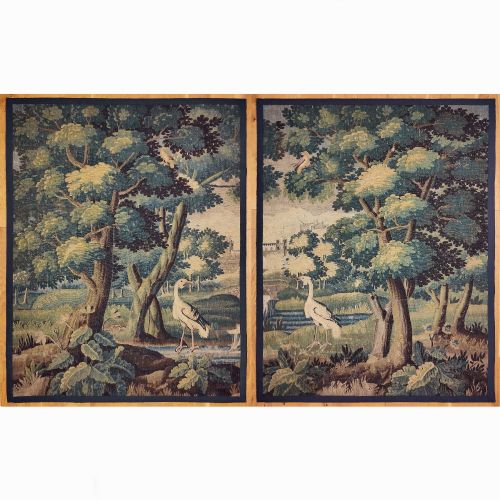
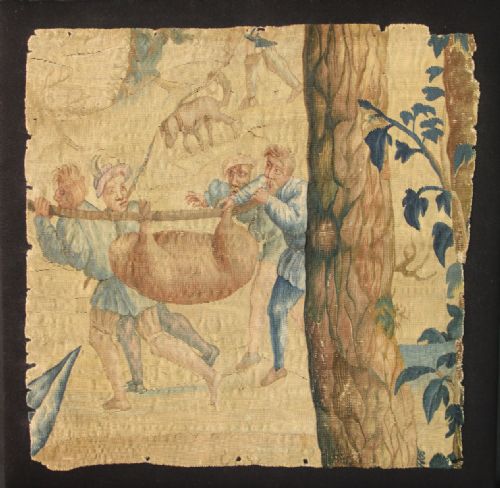
The most common formats on this page are Flemish verdure tapestries alongside French examples from Aubusson, spanning whole wall panels down to narrower frieze fragments. They frequently depict stylised trees, lush shrubbery, and occasional birds or game animals nestled deep within the woven undergrowth.
How they were made
These textiles were produced on high-warp or low-warp looms by skilled weavers who combined wool, silk, and linen yarns. Wool provided the heavy structural weight and foundational bulk for the dark greens and earthy browns, while silk threads offered highlights for foliage and light effects.
Linen often served as the warp foundation or supportive backing to sustain the immense tension of the weave. Weavers blended these dyed fibres to achieve subtle tonal shifts across the leafy canopies and distant landscapes without the use of paint.
Baroque Verdure Tapestry Retail Price Guide 2026
Typical asking prices for baroque verdure tapestry among the pieces listed under this phrase on Sellingantiques today, from the lower quarter to the upper quarter. They describe what is for sale here now, not the wider market.
The site listings feature works executed in wool, silk, and linen, originating from seventeenth-century Flemish and French traditions.
What varies in quality
Quality rests principally upon the complexity of the botanical detailing and the depth of the perspective within the landscape. Finer pieces demonstrate intricate variations in leaf shapes and subtle gradations of verdant colour that create a convincing sense of depth.
The choice of materials also dictates standing, with greater proportions of silk adding luminosity to the woven foliage and game park scenes. Well-preserved proportions and intact borders further distinguish the finer examples from simpler fragments.
The Baroque Verdure Tapestry Glossary
- Verdure tapestry
- A wall hanging featuring a landscape dominated by plants, trees, and foliage, often populated by birds or animals. These scenes are characteristic of seventeenth-century weaving traditions.
- Warp
- The vertical threads stretched tightly on a loom that form the structural foundation of the textile. Weavers pass the coloured horizontal yarns through this base.
- Aubusson
- A town in France renowned for its historical carpet and tapestry production. Pieces originating here often display distinct baroque design traits.
- Flemish Baroque
- An artistic style from the Low Countries combining dynamic movement with rich ornamentation. This aesthetic heavily influences the composition of seventeenth-century panels.
Baroque Verdure Tapestry: Frequently Asked Questions
What is a verdure tapestry?
A verdure tapestry is a woven wall hanging depicting a dense landscape of trees, plants, and foliage. They often include elements of formal gardens or game parks.
These textiles served to insulate stone walls in seventeenth-century interiors while bringing outdoor nature into the room.
Where were these tapestries made?
The pieces available originate predominantly from workshops in Flanders and France. Flemish centres and Aubusson are particularly prominent in the historical record.
Master weavers in these regions produced large-scale wall panels and narrower friezes for wealthy patrons.
What materials are used in them?
They are woven primarily from wool, silk, and linen threads. Wool provides the robust structural body for the dark leaves and earthy tones.
Silk is frequently integrated to catch the light on foliage, while linen often supports the foundation of the weave.
How do I hang a textile panel?
Wall tapestries require even weight distribution across the upper edge to prevent distortion of the weave. Conservation specialists often recommend stitching a Velcro heading or a supportive linen sleeve along the back.
Direct nailing through the textile must be avoided entirely to protect the historical fibres from permanent damage.
How do I date a seventeenth-century tapestry?
Dating relies on stylistic analysis of the border designs, the structure of the landscape, and the specific rendering of the baroque foliage. Comparative study with documented pieces from Flemish and French looms helps narrow the timeframe.
Material analysis of the surviving wool and silk dyes also offers clues to the period of manufacture.