

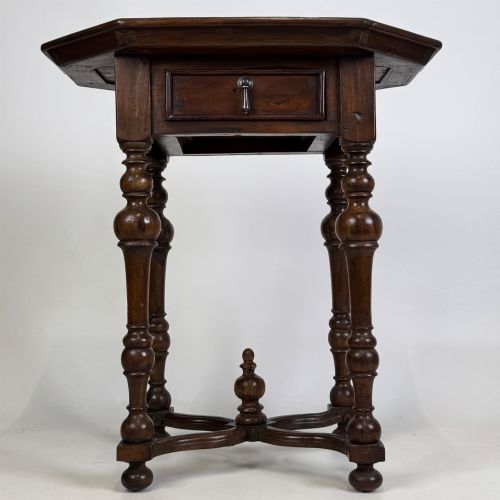
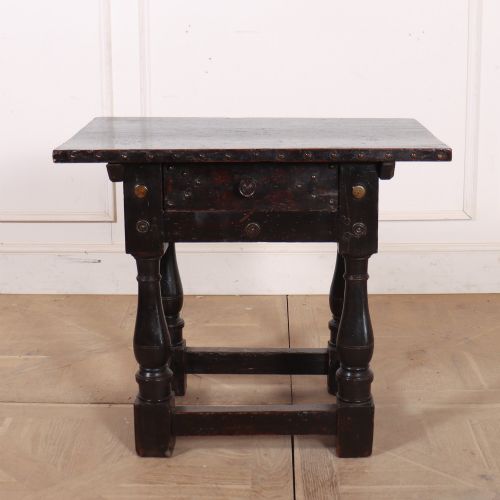
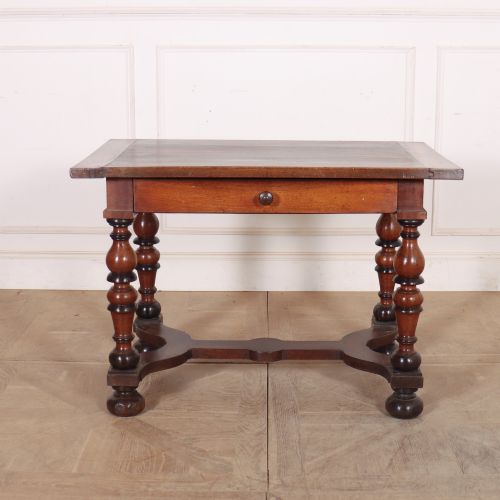


Baroque Turned Leg Table
A baroque turned leg table brings structural weight and rich timber grain to an interior, built for durability and everyday utility.
Baroque Turned Leg Table
A baroque turned leg table is a heavy, architectural form designed for domestic use as a side table, desk, dining table or centre table. When you search for this phrase, you find pieces spanning the seventeenth and eighteenth centuries, alongside later revivals such as Edwardian and nineteen-twenty examples.
The version you are most likely to meet on this page is the side table in walnut, oak or fruitwood, often featuring parquetry or carved details. Continental origins predominate, with Spanish, Italian, French and Dutch examples appearing alongside William and Mary style interpretations.
Materials and construction
Construction relies heavily on dense timbers such as walnut and oak, supplemented by yew wood and fruitwood for decorative effect. Joinery is robust, designed to support the substantial weight of the timber tops and the substantial legs below.
Surface ornamentation incorporates parquetry work and carving, while structural elements utilise wrought iron and brass fittings. The legs are turned on a lathe to create distinctive profiles that anchor the heavy tops.
Baroque Turned Leg Table Retail Price Guide 2026
Typical asking prices for baroque turned leg table among the pieces listed under this phrase on Sellingantiques today, from the lower quarter to the upper quarter. They describe what is for sale here now, not the wider market.
Several tables retain evidence of centuries of ink stains and candle wax, proving they were actually used for writing and dining rather than just decoration.
Assessing quality
Quality rests in the choice of timber and the precision of the turning and parquetry. Dense walnut and figured oak with strong grain patterns elevate a piece above simpler hardwood versions.
The integrity of the structural joinery and the subtlety of the carved or turned elements dictate the standing of the table. Period execution and regional authenticity distinguish seventeenth and eighteenth-century examples from later revivals.
The Baroque Turned Leg Table Glossary
- Parquetry
- Geometric wood inlay forming decorative patterns across the tabletop. This technique creates a tiled surface using contrasting timbers.
- Turned leg
- A wooden leg shaped by rotating it on a lathe to produce sculptural profiles. This method creates the characteristic spool or bobbin shapes seen on seventeenth-century furniture.
- Side table
- A small domestic table designed to stand against a wall. These pieces provide surface space for lamps or decorative objects.
- Centre table
- A freestanding table finished on all sides to stand in the middle of a room. These function independently of walls.
Baroque Turned Leg Table: Frequently Asked Questions
What is a baroque turned leg table?
A sturdy timber table featuring lathe-turned legs and heavy construction, originating in continental Europe and Britain.
These pieces served functional roles as writing desks, dining surfaces and side tables in grand houses.
How do I date a baroque table?
Examine the timber species, joinery methods and hardware used in the construction of the frame.
Early pieces utilise native European hardwoods and traditional hand-cut joinery, whereas revivals from the Edwardian era show different manufacturing marks.
Where were these tables made?
Examples originate from workshops across Spain, Italy, France, the Netherlands and Britain.
Regional preferences influenced timber selection, with walnut common in the south and oak favoured in northern workshops.
How do I care for antique timber?
Keep wooden surfaces away from direct heat sources and fluctuating humidity levels to prevent timber splitting.
Apply traditional beeswax occasionally to nourish the grain and protect the surface finish.