



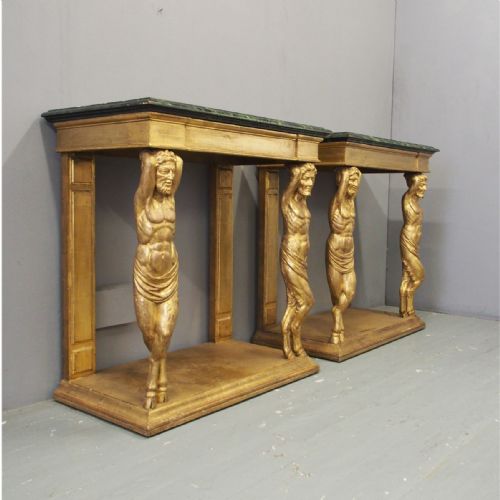


Baroque Marble Side Table
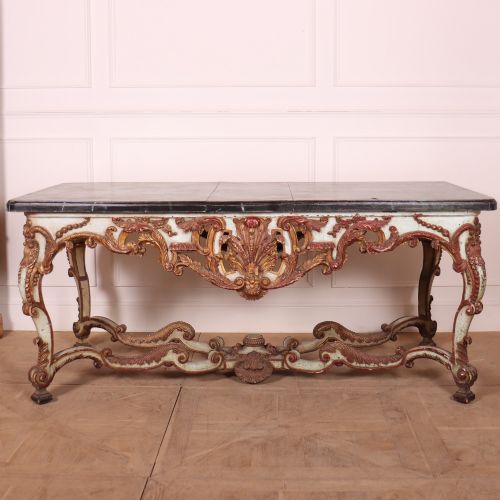
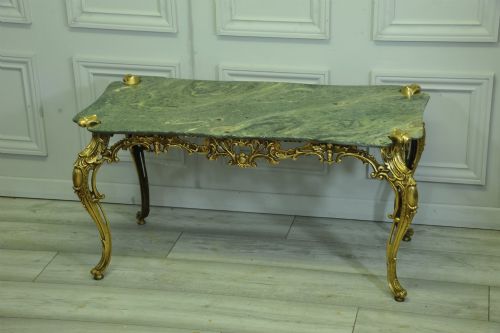
These baroque marble side table examples bring heavy carved giltwood frames and cool stone tops straight into modern rooms.
Baroque Marble Side Table
A baroque marble side table combines heavy carved wooden bases with smooth stone surfaces, designed to sit against a wall or in the middle of a room. Most pieces seen here date from the eighteenth and nineteenth centuries, spanning Italian Baroque, Rococo, and Kentian Neo-Palladian revivals.
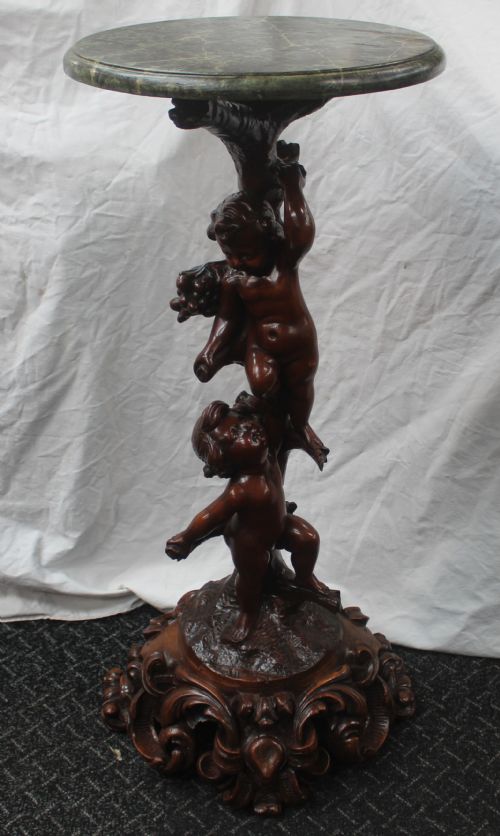
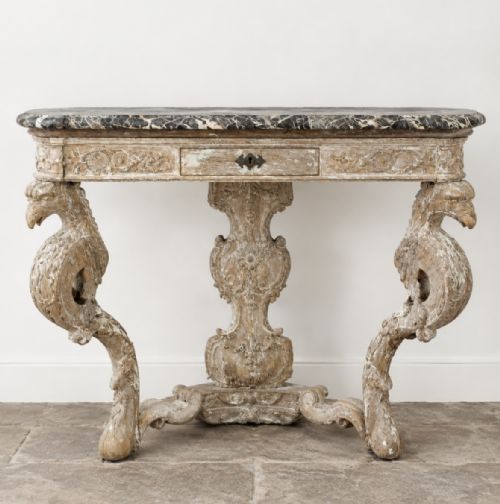
Forms include console tables, centre tables, and side tables fitted with marble tops such as Pink Salome or Breccia. Carved details frequently incorporate giltwood, walnut, limewood, gesso, and gold leaf alongside figural supports like lions' paws, rams, maidens, putti, centaurs, and eagles.
How they were made
Carvers shaped woods including European walnut, limewood, and oak using hand chisels to create deep relief motifs and figural supports. Giltwood surfaces received layers of gesso before being finished with gold leaf, creating a bright metallic sheen.
Stonemasons cut and polished marble slabs to fit the contours of each wooden base, producing durable tops designed to handle daily use.
Baroque Marble Side Table Retail Price Guide 2026
Typical asking prices for baroque marble side table among the pieces listed under this phrase on Sellingantiques today, from the lower quarter to the upper quarter. They describe what is for sale here now, not the wider market.
Ram heads, maidens, centaurs, and carved wooden eagles peer out from beneath the stone tops to hold up the furniture.
What varies in quality
The depth and animation of the wood carving dictate much of the visual weight, distinguishing sharply rendered figures like eagles and putti from simpler linear decoration. The choice of timber also matters, with finely figured walnut and limewood sitting above standard commercial softwoods.
Gilding technique separates standard pieces from exceptional ones, where burnished gold leaf reflects light differently than flat metallic paint. The quality, thickness, and natural figuring of the marble top further influence the stature of the piece.
The Baroque Marble Side Table Glossary
- Giltwood
- Wood that has been coated with thin gold leaf over a prepared gesso ground. This finish provides a reflective surface that catches natural light in a room.
- Console table
- A table supported by wall brackets or decorative legs, designed to stand flat against a vertical surface. These tables often feature elaborate front friezes.
- Breccia marble
- A composite stone made of broken rock fragments embedded in a fine-grained matrix. It presents a variegated surface pattern of mixed tones.
- Putto
- A plump naked child figure, frequently carved into the supports of classical and revival furniture. Such motifs draw directly from Renaissance and Baroque sculpture.
- Gesso
- A plaster mix applied to wooden furniture frames as a smooth base before gilding or painting. It allows carvers to crisp up fine details before the gold leaf goes on.
Baroque Marble Side Table: Frequently Asked Questions
Where should I place a console table?
These pieces traditionally anchor hallways, living rooms, and dining spaces where they sit flat against a wall beneath a mirror or painting.
Because many examples feature finished backs or serve as freestanding centre tables, they also work well positioned in the middle of a large room.
How do I clean a marble top?
Wipe the stone surface gently using a soft damp cloth and mild neutral soap to remove dust and daily grime. Avoid acidic cleaners, vinegar, or citrus solutions which etch and dull polished marble over time.
Are these tables sturdy enough for daily use?
Most frames rely on solid timber construction reinforced by heavy stone tops, making them stable for holding lamps, books, or decorative objects. Care should still be taken not to lean heavy weight directly onto the cantilevered edges of wall-mounted consoles.
How do I tell an 18th century piece from a later revival?
Earlier pieces display hand-cut tool marks, shrinkage cracks in the timber, and traditional joinery methods hidden beneath the gesso and gilding. Later nineteenth-century revival items often feature heavier machine-sawn framing components and brighter, more uniform surface finishes.