





Baroque Giltwood Crest
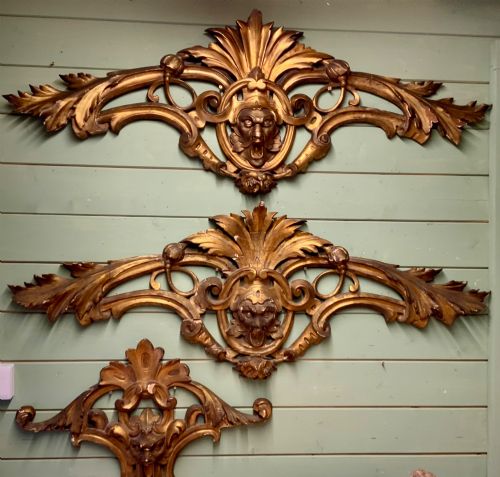
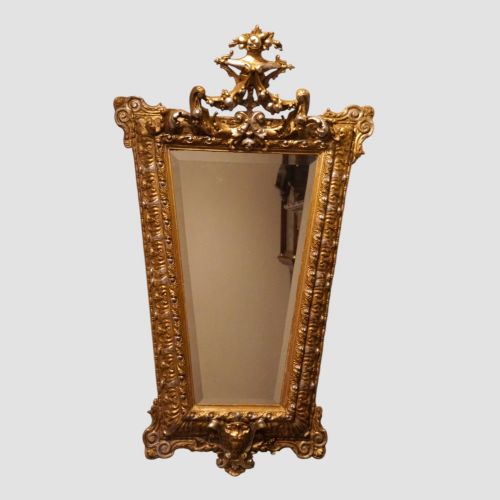
These baroque giltwood crest examples bring undeniable presence to a room, offering grand carved detail and gleaming leaf surfaces that anchor a classical interior.
Baroque Giltwood Crest
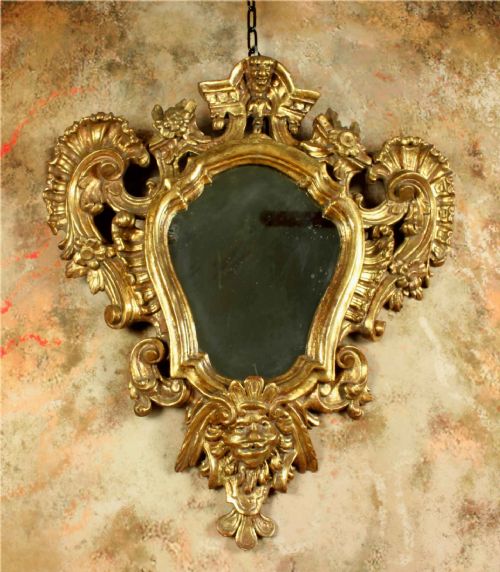
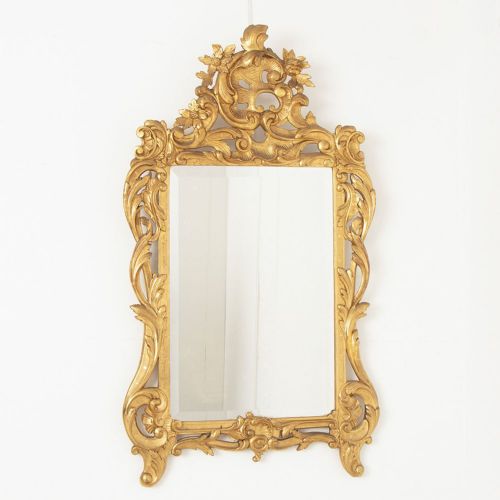
When you search for baroque giltwood crest, you are looking at decorative wall carvings, architectural fragments, and framed mirrors originating from the eighteenth and nineteenth centuries. These items embody ornate historical styles including Baroque Revival, Rococo, and Italian Baroque Revival.
You are most likely to encounter wall mirrors and architectural fragments shaped by French and Italian design traditions. The selection spans eighteenth-century wall carvings alongside nineteenth-century pieces decorated with motifs like lions' heads and decorative masks.
How they were made
Artisans built these pieces using timber and wood as a foundational base, applying gesso to create smooth surfaces for detailed relief work. Craftsmen then layered gold leaf and silver leaf over the gesso to achieve a reflective, metallic finish.
Carvers shaped the wood into complex scrolls and crests associated with Baroque and Rococo aesthetics. The application of leaf metal required steady hands and precise timing to adhere to the prepared wooden substrates.
Baroque Giltwood Crest Retail Price Guide 2026
Typical asking prices for baroque giltwood crest among the pieces listed under this phrase on Sellingantiques today, from the lower quarter to the upper quarter. They describe what is for sale here now, not the wider market.
What varies in quality
The sophistication of the hand-carving separates standard items from exceptional examples. Crisp execution of motifs like lions' heads and sculptural masks demonstrates superior artisan skill.
The preservation of the original gold and silver leaf layers influences the character of each piece. Surface wear and the integrity of the underlying gesso reveal the history of the object without diminishing its decorative impact.
The Baroque Giltwood Crest Glossary
- Giltwood
- Timber that has been coated with gold leaf or a gold-coloured finish. This material defines the bright, reflective appearance characteristic of these decorative items.
- Gesso
- A plaster-like mixture applied to wood to create a smooth surface for carving and gilding. It allows artisans to achieve fine relief details before applying leaf.
- Cushion mirror
- A looking glass featuring a convex frame profile that slopes away from the central glass plate. This style creates a distinct volumetric presence on the wall.
- Architectural fragment
- A surviving portion of a larger building element or interior woodwork. These pieces are repurposed as standalone wall decorations.
Baroque Giltwood Crest: Frequently Asked Questions
What is a giltwood crest?
A giltwood crest is an ornate, gold-leafed wooden carving typically positioned at the top of a mirror frame or architectural panel.
These elements were designed to draw the eye upward and add sculptural grandeur to formal interiors.
How do I hang a heavy mirror?
Heavy mirrors require secure wall anchors fastened directly into structural studs or masonry.
Utilise professional hanging hardware rated to support the specific weight of the timber and glass assembly.
Can these pieces go in bathrooms?
High moisture environments can damage traditional gesso and gold leaf surfaces over time.
Keep these items in dry living areas or hallways to protect the historic materials from humidity.