



Baroque Gilt Chair
A baroque gilt chair brings grand presence into a room, offering striking carved forms and gilded surfaces designed to catch the light.
Baroque Gilt Chair
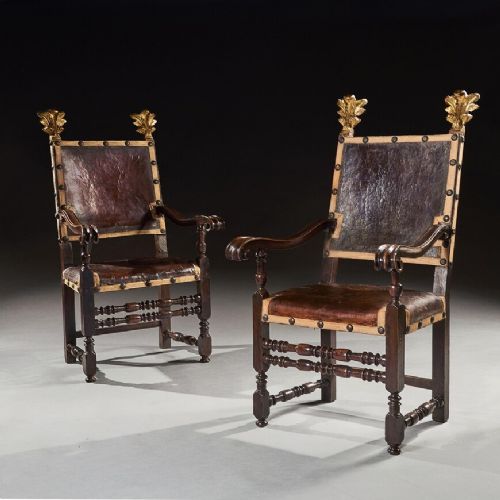
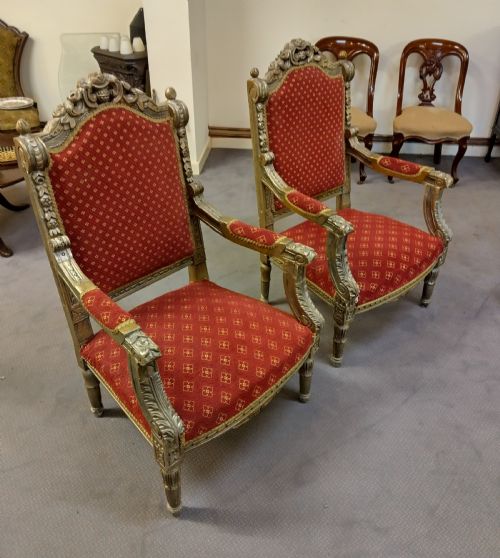
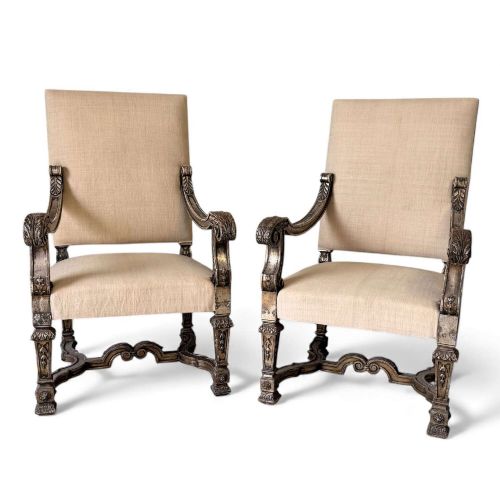
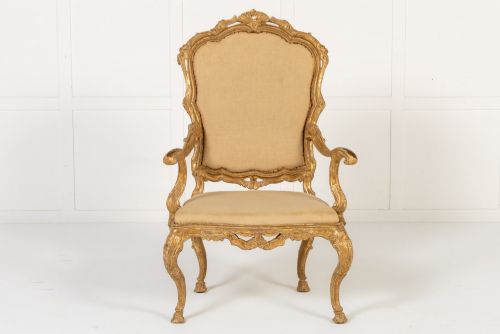
A baroque gilt chair stands as a statement piece of seating furniture, originating from periods spanning the seventeenth century through to the Edwardian era. These items predominantly take the form of armchairs, throne armchairs, and hall chairs designed with elaborate silhouettes.
Buyers encountering this selection will most frequently find nineteenth century continental interpretations alongside authentic seventeenth and eighteenth century Italian pieces. Materials vary from solid walnut and timber frames to those finished with gold leaf, silver gilt, and giltwood.
Stylistic influences range from Italian baroque and French baroque revival to Italian rococo and Queen Anne style. The forms utilise upholstery in leather, velvet, linen, and brass detailing to complete their decorative impact.
Materials and construction
Makers built the foundational frames of these seats using solid timber and walnut, which provided the structural strength required for heavy carving. Woodworkers shaped these sturdy carcasses to support elaborate elbow rests and high backs.
Surfaces received applied gold leaf, silver gilt, or liquid gilt finishes to mimic solid precious metal. Skilled artisans then carved intricate details directly into the wood before applying the final metallic layers.
Upholstery completed the construction, utilising materials such as supple leather, rich velvet, and woven linen secured with brass elements.
Baroque Gilt Chair Retail Price Guide 2026
Typical asking prices for baroque gilt chair among the pieces listed under this phrase on Sellingantiques today, from the lower quarter to the upper quarter. They describe what is for sale here now, not the wider market.
Current listings feature materials including giltwood, gold leaf, walnut, leather, brass, linen, timber, and velvet across multiple centuries.
Assessing quality and craftsmanship
The finesse of the hand-carved ornamentation separates superior examples from simpler production. Deeply undercut carvings and well-defined floral or scroll motifs indicate a higher level of artisan skill than flat or shallow surface decoration.
The integrity of the underlying timber and the preservation of the original gold leaf or gilt finish determine the structural and visual pedigree. Pieces retaining their early walnut frames and authentic gilding hold greater historical weight.
The Baroque Gilt Chair Glossary
- Giltwood
- Timber that has been coated with gold leaf or a gold-coloured finish. This technique gives the appearance of solid gold while maintaining a lighter wooden core.
- Parcel-gilt
- A decorating method where only specific portions of an object are highlighted with gold leaf. The remaining areas display the natural wood grain, such as walnut.
- Throne armchair
- An imposing, high-backed seat designed to project authority and status. These pieces feature prominent armrests and substantial carved framing.
- Savonarola chair
- A type of folding chair constructed from multiple intersecting wooden slats. It forms an X-shaped profile when viewed from the front.
Baroque Gilt Chair: Frequently Asked Questions
Where should I place a baroque gilt chair?
These commanding pieces work best in spaces where they can act as a visual anchor, such as a formal drawing room, a grand hallway, or a study. Their ornate carvings and reflective surfaces draw the eye instantly.
Avoid placing them in cramped corridors or areas prone to heavy, rough daily use. Pairing one with simpler modern furniture creates a striking contrast that highlights the historic craftsmanship.
What is the difference between an armchair and a hall chair?
Armchairs feature supportive armrests and comfortable upholstered seats covered in leather, velvet, or linen. They were built for relaxation and status in primary living spaces.
Hall chairs generally omit upholstered arms and feature rigid wooden backs designed for transient seating in entryways or grand corridors.
How can I tell the age of the chair?
Examine the construction joints, tool marks, and the wear patterns on the wooden frame and upholstery. Seventeenth and eighteenth century pieces often display hand-cut joinery and aged patination on the walnut timber.
Later nineteenth century revival pieces and Edwardian interpretations utilise machine assistance and stylistic flourishes drawn heavily from earlier baroque eras.