






Baroque Dining Chairs
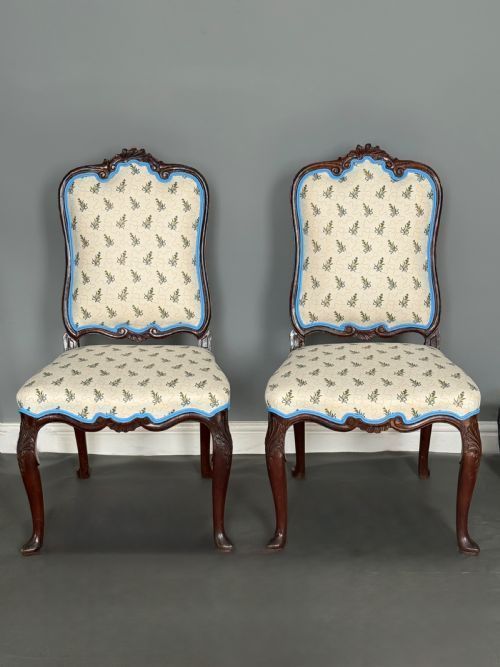
Baroque dining chairs bring grand seventeenth and eighteenth-century presence to a room, offering robust frames and carved walnut construction.
Baroque Dining Chairs
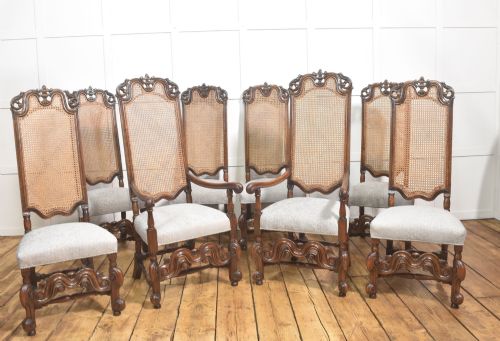
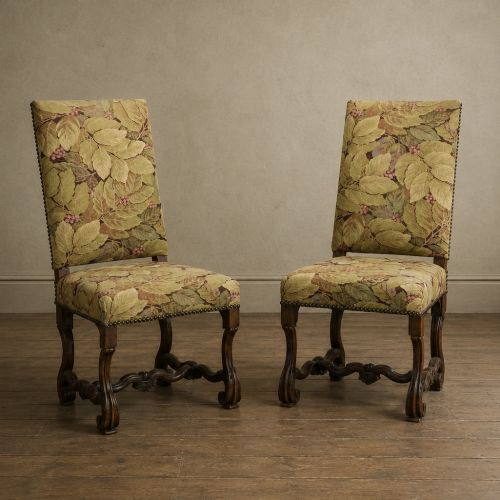
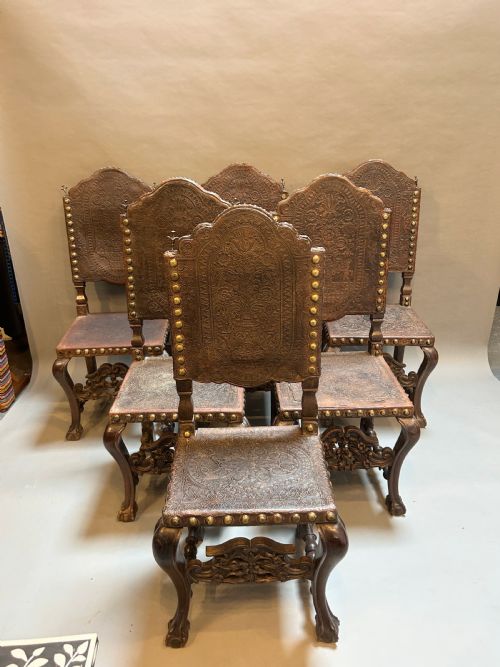
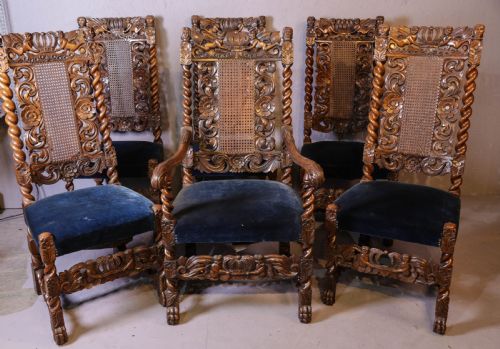
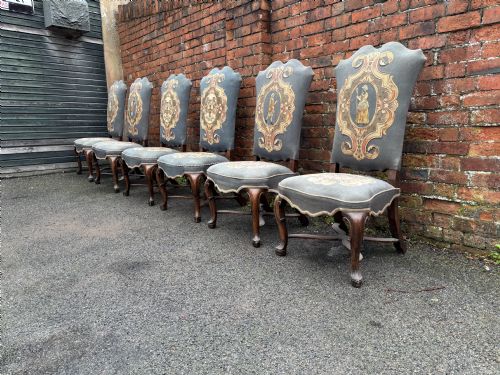
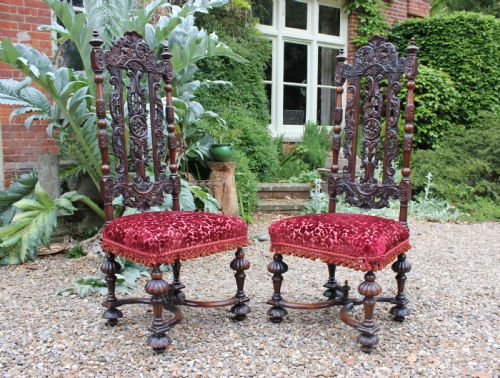
Most pieces you meet here are constructed from walnut, oak, or mahogany, often featuring high backs and intricate carved details. You will find forms ranging from simple rush or cane seats to elaborate upholstered examples in velvet, leather, and fabric.
The styles represented include Carolean, Louis XIV Revival, and Spanish Revival, showing the widespread reach of baroque design across Europe. Sets vary from pairs to larger dining gatherings, suited for traditional interiors.
How they were made
Cabinetmakers built these frames primarily using solid walnut, oak, or exotic hardwoods like mahogany and rosewood, joined with traditional mortise and tenon techniques. Skilled artisans executed deep hand-carvings directly into the timber, creating bold scrolls, foliage, and crest rails.
Seating surfaces often utilised woven cane panels or drop-in pads upholstered in heavy textiles, velvet, or leather, secured with brass tacks. Some specialised pieces incorporated intricate bone inlay or parcel gilding to enhance the decorative impact.
Baroque Dining Chairs Retail Price Guide 2026
Typical asking prices for baroque dining chairs among the pieces listed under this phrase on Sellingantiques today, from the lower quarter to the upper quarter. They describe what is for sale here now, not the wider market.
Listings feature walnut as the dominant timber, accompanied by cane, velvet, oak, leather, and brass.
What varies in quality
Structural integrity depends on the original joinery and the survival of natural materials like cane and bone inlay over centuries of use. Matching sets that retain their original frames and uniform patination hold significantly more architectural and historical weight than assembled groups.
The Baroque Dining Chairs Glossary
- Carolean
- A style spanning the mid to late seventeenth century, characterised by rich walnut frames, crown and scroll crestings, and cane seating. This aesthetic forms the backbone of many English and continental baroque designs.
- Cane
- Woven rattan split into strips used for seat panels and tall backs, providing lightweight strength and flexibility. Caning requires careful restoration when historical examples experience breakage.
- Parcel Gilt
- A technique where selective areas of a wooden frame are coated in thin gold leaf while the underlying wood remains visible. It accentuates carved details on high-status chairs.
- High-Back
- A chair proportioned with an elevated vertical backrest, designed to project status and support formal dining postures. These dominate seventeenth and eighteenth-century formal seating.
- Side Chair
- An upright chair built without arms, designed specifically for use around a dining table or placed against a wall. They appear frequently in matched pairs or larger sets.
Baroque Dining Chairs: Frequently Asked Questions
How do I clean baroque dining chairs?
Maintain wooden surfaces by dusting with a dry cloth and occasionally applying traditional beeswax to nourish the timber.
Avoid modern chemical polishes and keep upholstered or caned elements away from direct heat sources to prevent cracking.
Can I use these chairs daily?
Many seventeenth and nineteenth-century revival chairs remain structurally sound for regular dining use if joints are secure.
Heavily carved antique seating benefits from mindful handling and professional weight distribution checks.
What defines the baroque style?
Baroque design relies on theatrical forms, dynamic movement, and exuberant carving involving scrolls, putti, and floral motifs.
Craftsmen used these dramatic elements to project wealth, power, and prestige in European dining rooms.
How do I identify a revival piece?
Revival chairs from the Victorian or Edwardian eras often display nineteenth-century machine-assisted joinery alongside hand-carved elements.
Examine the wood species, wear patterns, and internal construction methods to distinguish eighteenth-century originals from later copies.