



Baroque Cushion Mirror
A baroque cushion mirror brings remarkable depth to a room through its sloping, curved frame.
Baroque Cushion Mirror
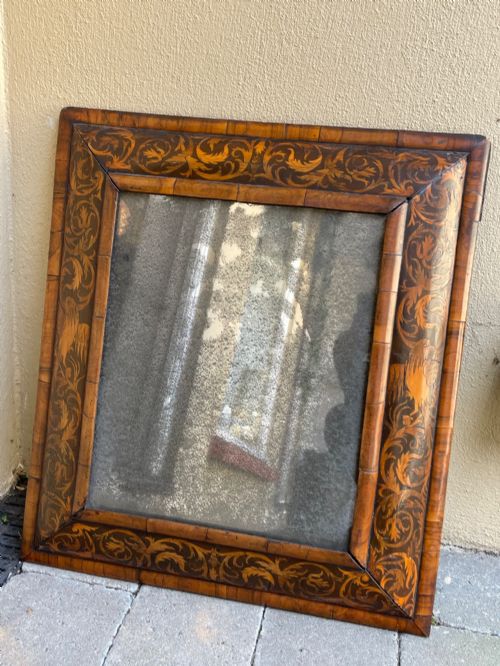
The pieces on this page draw from several distinct stylistic revivals and original eras, including William and Mary, Regency, and Flemish Renaissance Revival. Walnut and giltwood form the primary visual vocabulary of these wall mirrors, often enriched by intricate marquetry or deep relief work.
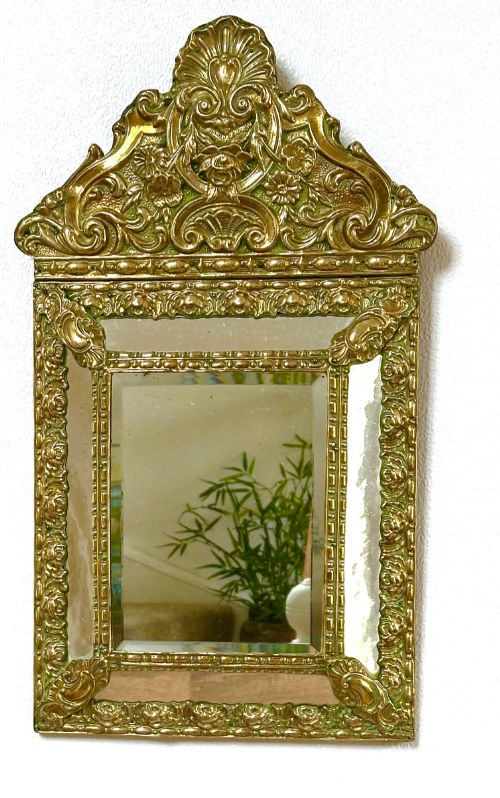
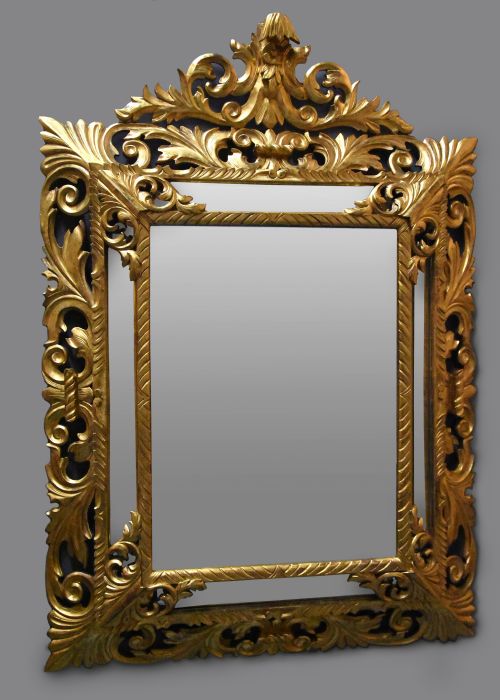
Makers across Italy, France, England, and the Netherlands interpreted the form with local materials, producing variations from Dutch repousse brass to Florentine carved giltwood. The central glass plate is frequently bevelled and set within stepped or cushion-moulded wooden surrounds.
Construction and materials
Carpenters built the carcasses of these frames from dense timbers such as walnut or general wood, applying boxwood stringing and complex marquetry inlays for decorative contrast. Giltwood examples relied on layers of gesso applied over a wooden base before receiving fine applications of gold leaf.
Metalwork versions utilised repousse brass beaten into high-relief designs, pinned directly to a wooden backing board to support the mirror plate. Glass plates from earlier periods were hand-blown or cast before being silvered and fitted into the rebated frames.
Baroque Cushion Mirror Retail Price Guide 2026
Typical asking prices for baroque cushion mirror among the pieces listed under this phrase on Sellingantiques today, from the lower quarter to the upper quarter. They describe what is for sale here now, not the wider market.
Makers occasionally hid tiny secret floral motifs within the corners of the marquetry to test apprentice skills.
Judging quality and execution
The distinction between ordinary and exceptional work lies in the depth and sharpness of the carving or the precision of the marquetry inlay. Deeply undercut floral and botanical motifs on Italian giltwood display a sculptural confidence absent in shallower, mechanical reproductions.
The integrity of the frame construction, the quality of the original gilding or polish, and the survival of early or original mirror plates dictate the standing of an individual piece. Subtle details such as the handling of corner mitres and the weight of the brass repousse separate standard production from master craftsmanship.
The Baroque Cushion Mirror Glossary
- Cushion mirror
- A wall mirror featuring a broad, rounded, or bolection-moulded frame that swells outward. This profile creates a strong three-dimensional effect on the wall.
- Giltwood
- Wood that has been coated with gold leaf or gold paint over a prepared gesso ground. It provides a luminous surface that catches candlelight and natural daylight.
- Marquetry
- Decorative inlay work where thin veneers of various woods are fitted together to form geometric or floral patterns. It requires immense precision from the cabinetmaker.
- Repousse
- Metalwork technique where the design is hammered into relief from the reverse side. This creates textured, tactile surfaces across brass mirror frames.
Baroque Cushion Mirror: Frequently Asked Questions
What is a cushion mirror?
A cushion mirror is a wall hanging defined by its outward-sloping, rounded frame resembling a soft cushion. This distinctive moulding projects forward from the wall before descending to the glass plate.
The style originated in the seventeenth century and saw several revivals during the nineteenth and early twentieth centuries, incorporating materials like walnut, giltwood, and repousse brass.
How do I date a cushion mirror?
Dating relies on examining the underlying timbers, the construction of the backboards, and the techniques used for the gilding or marquetry. Seventeenth-century examples often feature elaborate floral marquetry in walnut and boxwood, while nineteenth-century revivals typically display machine-cut elements or different secondary woods.
The character of the glass plate and the composition of the gesso underneath the gold leaf also offer clear chronological clues for the experienced eye.
Where should I hang a cushion mirror?
These mirrors suit spaces where their sculptural frames can catch light, such as above a fireplace mantel or along a principal hallway. Their pronounced projection demands a wall with sufficient clearance to let the three-dimensional profile stand clear.
Pairing one with traditional furniture highlights the rich grain of the walnut or the reflective warmth of the giltwood and brass surfaces.