

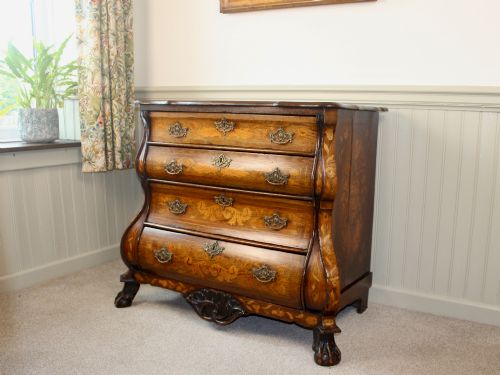


Baroque Commode
A baroque commode brings heavyweight timber presence and serpentine drawer fronts into a room.
Baroque Commode
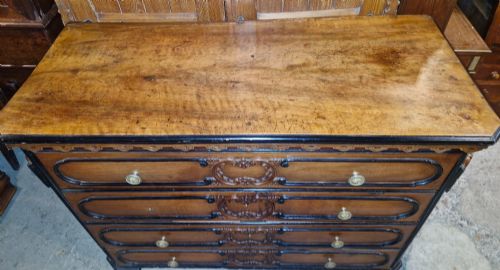
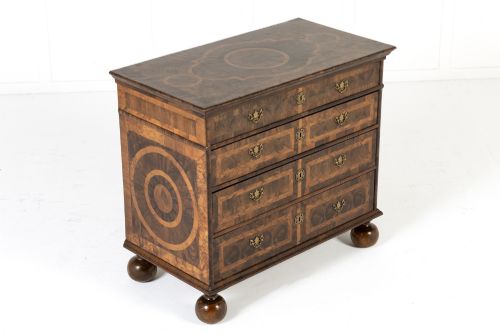
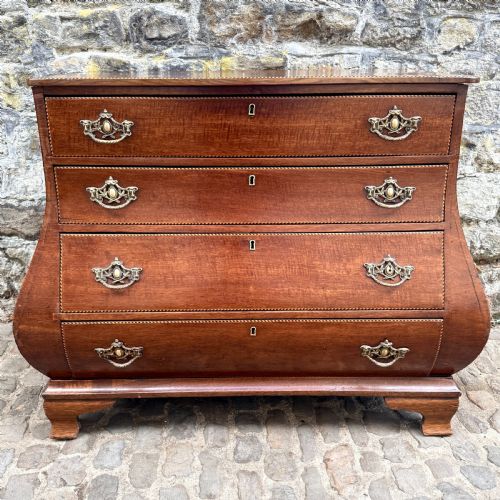
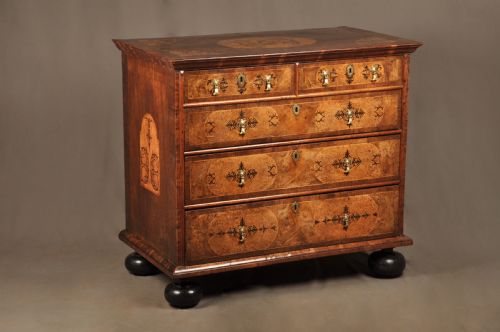
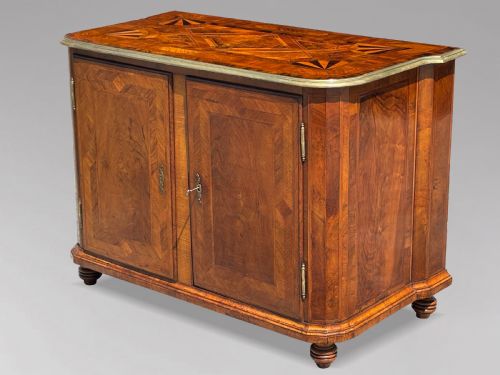
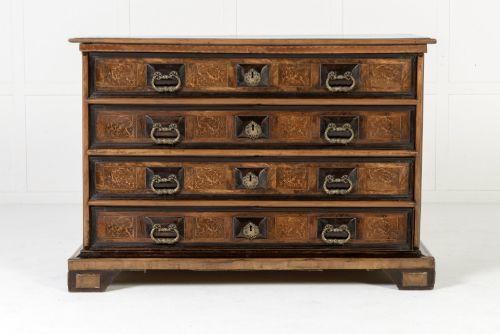
A baroque commode sits as a substantial storage piece, taking the form of a chest of drawers, side cabinet, or bombe silhouette. The pieces gathered here stem largely from the seventeenth, eighteenth, and nineteenth centuries, spanning regional European schools.
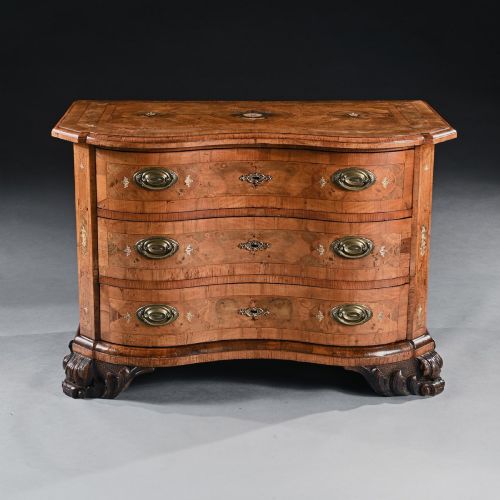
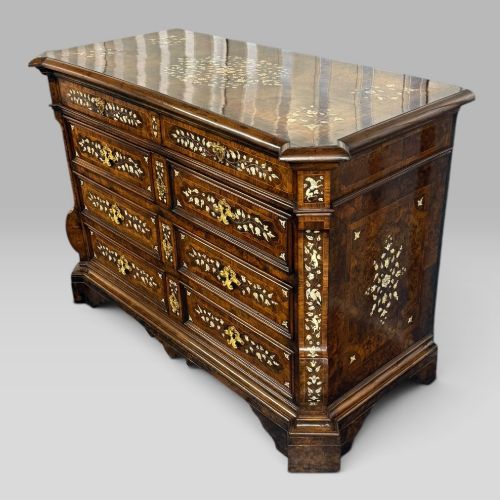
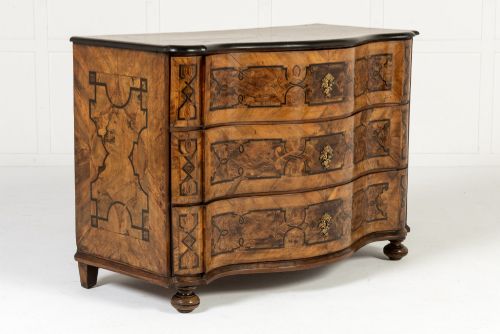
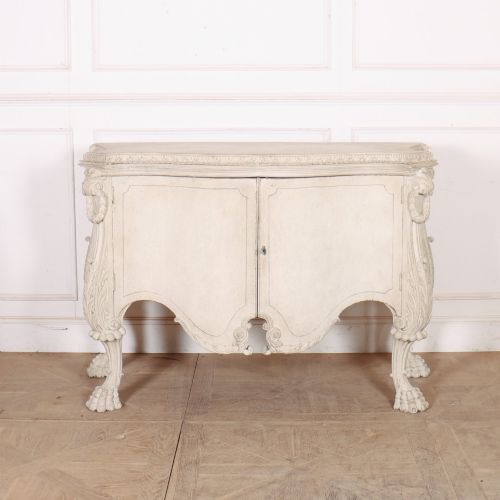
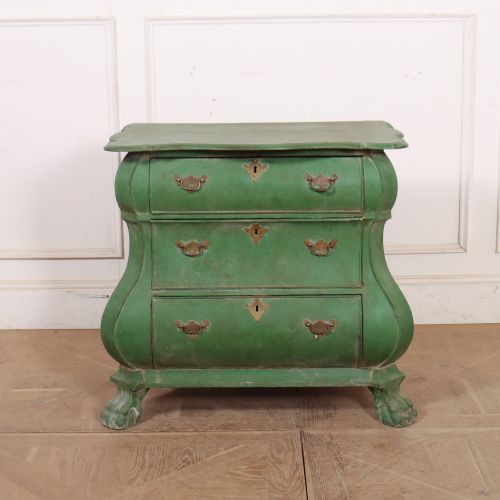
Italian, German, and Dutch examples dominate the selection, often presenting serpentine or bombe profiles supported by claw feet. Buyers encounter walnut timber and painted wood surfaces alongside display cabinets and bedside chests.
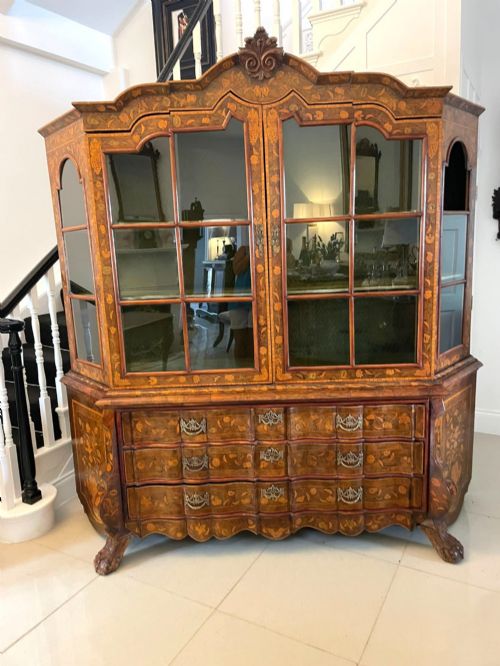
Regional variations shape the appearance, from floral marquetry in Dutch pieces to starker painted oak surfaces in Scandinavian or Spanish forms. These items function primarily as statement storage units within traditional interiors.
Factors determining quality
The precision of the marquetry inlay work separates standard joinery from exceptional craftsmanship. Complex floral or arabesque patterns executed in pewter and ivory demand high skill.
The integrity of the timber veneer and the complexity of the serpentine or bombe shaping dictate the stature of the piece. Smooth curvature across multiple drawer tiers requires superior timber manipulation.
Original hardware, untouched painted finishes, and intact structural feet preserve the historical value. Pieces retaining their initial brass mounts and stable foundational timbers command greater interest.
Baroque Commode Retail Price Guide 2026
Typical asking prices for baroque commode among the pieces listed under this phrase on Sellingantiques today, from the lower quarter to the upper quarter. They describe what is for sale here now, not the wider market.
The inventory records multiple regional interpretations, uniting Spanish oak, Scandinavian painted pine, and German serpentine forms under the broader baroque banner.
The Baroque Commode Glossary
- Bombe
- A swollen or bulging convex front and side profile typical of continental storage furniture. This shape requires advanced timber bending techniques.
- Marquetry
- Decorative veneer patterns inlaid into the structural surface using various woods or metals. Artisans cut these elements to form pictorial or geometric designs.
- Serpentine
- A front edge or drawer configuration shaped with a central convex curve flanked by concave sweeps. This contour defines many continental eighteenth century designs.
- Escutcheon
- A protective plate surrounding a keyhole, usually cast in brass or iron. These items often feature decorative chasing.
- Burr walnut
- Timber taken from a tree growth or burl, yielding swirling grain patterns. Cabinet makers prized this wood for high status decorative panels.
Baroque Commode: Frequently Asked Questions
Where did baroque commodes originate?
These storage pieces emerged across various European workshops during the seventeenth and eighteenth centuries, with distinct regional styles developing in Italy, Germany, and the Netherlands. Each region adapted the heavy stylistic traits to local timber availability.
Craftsmen in different countries utilised local woods like oak, walnut, or fruitwood, applying specific decorative techniques such as floral marquetry or painted finishes to distinguish their regional output.
How do I clean a wooden commode?
Dust the exterior surfaces regularly with a soft, dry cloth to prevent particulate accumulation in the timber grain. Avoid modern chemical sprays or silicone polishes that can degrade historical finishes.
Maintain stable indoor humidity levels to protect walnut veneer and marquetry inlay work from splitting or lifting away from the oak or fruitwood carcass.
How can I tell the period?
Dating relies on examining the timber species, construction joinery, and decorative motifs such as arabesque marquetry or painted surfaces. Seventeenth century examples often show simpler rectilinear or early walnut forms.
Later eighteenth century pieces introduce complex serpentine curves, elaborate floral marquetry, and specialised hardware mounts that reflect evolving continental tastes.