






Barley Twist Leg Chair
A barley twist leg chair brings sculptural timber turning and tactile presence into a room, offering immediate warmth through its distinct spiral profile.
Barley Twist Leg Chair
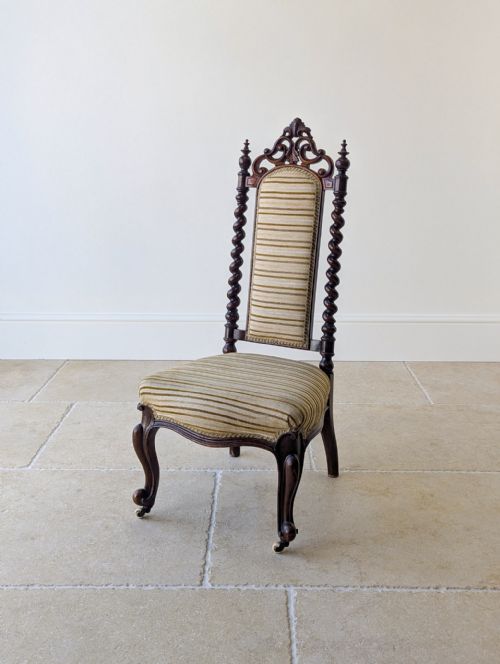
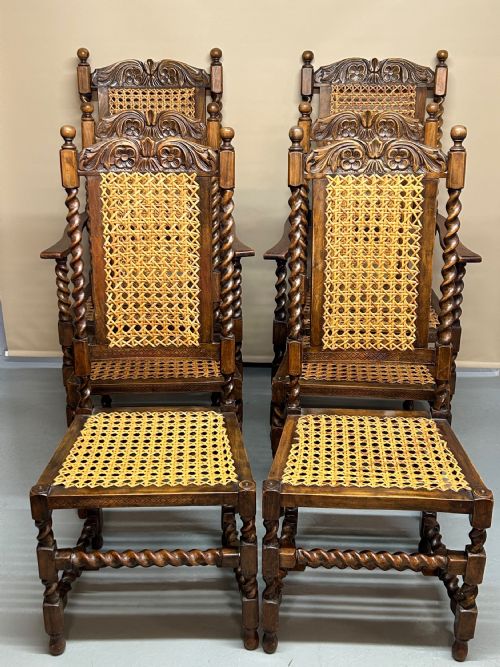
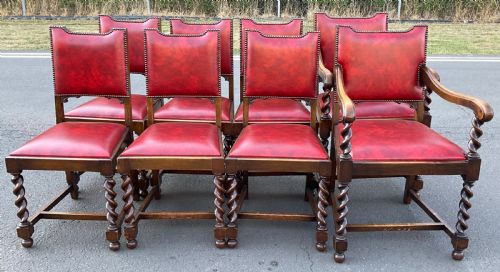
A barley twist leg chair draws the eye with its spiral-turned supports, appearing across dining chairs, armchairs, and stools spanning from the seventeenth century through the Victorian era and into the early twentieth century. These seating pieces emerge in varied regional and revival forms, including Jacobean Revival dining sets, Arts and Crafts oak designs, and Victorian parlour seating.
The versions most commonly met on this page range from solid oak dining sets dated around nineteen-twenty to nineteenth-century walnut parlour chairs and mahogany-framed armchairs. Makers utilised sturdy native timbers like oak, walnut, ash, and laburnum, often pairing the spiral legs with cane seats, leather, or upholstered textiles such as velvet and silk cotton.
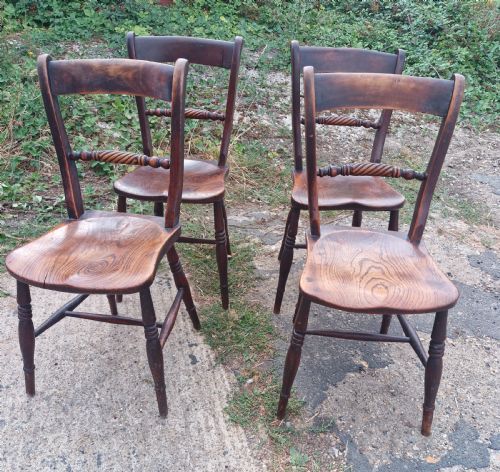
Buyers encounter distinct object types designed for specific domestic spaces, from tall high-back chairs intended for formal rooms to sturdy Windsor farmhouse kitchen dining chairs. The underlying structure relies upon the characteristic helical turning, which unites seventeenth-century Carolean aesthetics with later revival movements.
Construction and materials
Craftsmen shaped the characteristic spiral supports by hand or with lathes, cutting timber from dense hardwoods such as oak, walnut, and ash to ensure structural integrity under weight. The legs and stretchers were then joined using traditional methods like mortise and tenon joinery to withstand daily use in dining rooms and libraries.
Listings feature oak, walnut, ash, and laburnum timbers across periods from the seventeenth century to the nineteen-twenties.
Evaluating quality and execution
The distinction between standard production and superior craftsmanship lies in the crispness and depth of the timber turning, where hand-carved spirals display fluid precision rather than mechanical flatness. Timber selection equally dictates merit, separating heavily figured walnut and early oak frames from simpler utilitarian ash structures.
Originality of components and upholstery treatment define the standing of each piece, with period frames retaining integrated cane work or traditional stuffing holding greater integrity. The harmony of proportions between the turned uprights, stretchers, and backrests determines the visual balance of the finished seating.
Liberty and Co
The Barley Twist Leg Chair Glossary
- Barley twist
- A spiral turning resembling the shape of a twisted barley stalk, popular in furniture supports during the seventeenth century and later revival periods. This decorative form provides strong vertical emphasis to chair legs and stretchers.
- Bergere
- An enclosed upholstered armchair featuring cane work woven into the wooden frame sides and back. This French-inspired form gained favour during various revival phases for library and drawing-room seating.
- Jacobean Revival
- A nineteenth and twentieth-century design movement that emulates the sturdy forms, dark oak timbers, and geometric ornamentation of seventeenth-century English interiors. It frequently incorporates the spiral turnings seen on these chairs.
- Stretcher
- A horizontal timber connecting the legs of a chair to provide structural stability and rigidity. On these pieces, stretchers are often turned to match the spiral profile of the main legs.
- Parlour chair
- A smaller, decorative seat designed for formal reception rooms rather than heavy daily dining use. These examples often utilise finer timbers like walnut and detailed upholstery.
Barley Twist Leg Chair: Frequently Asked Questions
What periods do these chairs come from?
The pieces span multiple centuries, originating from seventeenth-century workshops through the mid-nineteenth century and into the Edwardian era. Revival movements brought the spiral turning back into fashion repeatedly.
Buyers will find Victorian interpretations alongside earlier seventeenth-century survivals and nineteen-twenties dining sets.
How were barley twist legs made?
Cabinetmakers shaped the spiral timber by hand or using specialised lathe turning techniques to achieve the helical form. Dense hardwoods like oak, walnut, and ash provided the necessary strength.
Skilled joiners integrated these turned components into the chair frame using traditional pegged joints for lasting durability.
What materials are used for the seats?
Seating surfaces vary according to the style and intended function of the chair, ranging from woven cane panels to solid timber boards. Upholstered options feature traditional padding covered in fabric, leather, silk cotton, or velvet.
Some examples also include restorations with new covers to preserve the usability of the antique frame.
Are these chairs suitable for daily dining?
Many of the listed pieces include sets of dining chairs specifically constructed for daily use around a table. Sturdy oak and ash frames from the Victorian and Edwardian periods offer robust support.
Buyers should examine the specific construction and joinery of each set to ensure it meets their domestic requirements.