




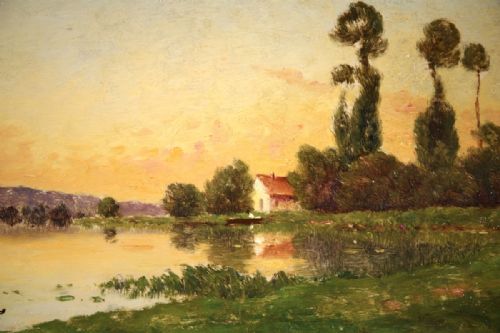


Barbizon School Painting
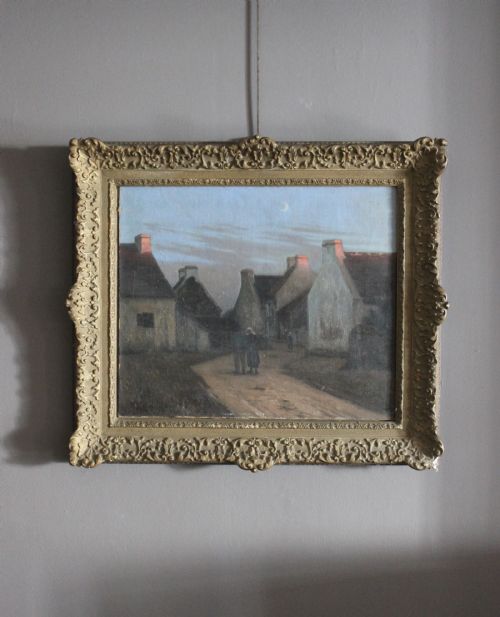
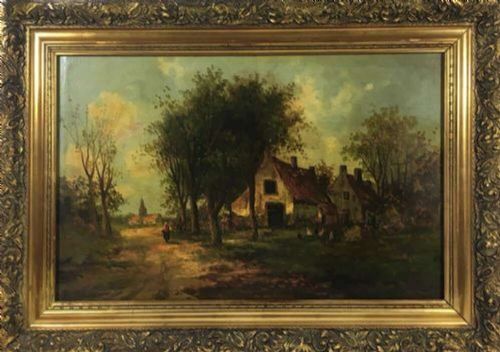
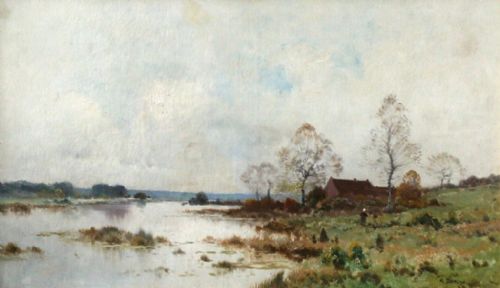
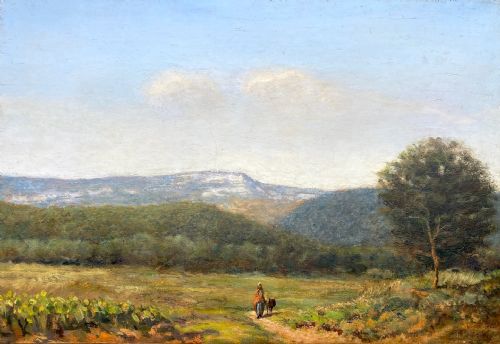
These barbizon school painting examples capture the quiet observation of nineteenth-century rural France, offering collectors a direct link to plein air landscape tradition.
Barbizon School Painting
A barbizon school painting represents the shift toward naturalistic landscape art created in nineteenth-century France, often focusing on pastoral scenes, forests, and riverbanks. Buyers seek these works to bring contemplative nineteenth century atmosphere and pastoral realism into an interior.
The pieces appearing on this page span from the nineteenth century into later Victorian periods, showcasing French and British interpretations of the style. Most examples concentrate on landscapes, farmyards, and woodland paths executed in oil or watercolour.
Assessing Quality
Quality rests in the handling of light, brushwork confidence, and the subtlety of tonal transition across the canvas or panel. Superior examples display a confident grasp of atmosphere, depth, and compositional balance within the landscape.
The integration of the original frame, often giltwood or gilded plaster, contributes significantly to the overall integrity of the piece.
Barbizon School Painting Retail Price Guide 2026
Typical asking prices for barbizon school painting among the pieces listed under this phrase on Sellingantiques today, from the lower quarter to the upper quarter. They describe what is for sale here now, not the wider market.
Watch for curious details like hidden poultry, stray cattle, and solitary fishermen tucked into the corners of otherwise moody French forest scenes.
Paul Désiré Trouillebert·Henri Jaques Delpy·Henri Joseph Harpinies·Alphonse Robert·Pierre Emmanuel Eugene Damoye·Jules-Louis Dusaussay
The Barbizon School Painting Glossary
- Plein air
- Painting outdoors directly from nature to capture transient light and weather conditions. This practice defined much of the nineteenth-century landscape movement.
- Chiaroscuro
- The strong contrast between light and dark to give a sense of volume to figures and trees. It is frequently employed in woodland and forest compositions.
- Giltwood
- Wood carved and covered with a thin layer of gold leaf or gold paint. These frames are typical of nineteenth-century presentation.
- Pastoral
- A genre of art depicting the rural lives of shepherds, farmers, and farmyard animals. These scenes emphasise a peaceful connection to the French countryside.
Barbizon School Painting: Frequently Asked Questions
What is a barbizon school painting?
A barbizon school painting is a nineteenth-century landscape work rooted in the French naturalistic tradition, focusing on forests, rivers, and rural life. These pieces emphasise direct observation of nature over idealized classical scenery.
Collectors prize them for their atmospheric tonal qualities and their role in bridging traditional landscape art with later impressionist movements.
How do I date a landscape painting?
Dating relies on examining the canvas material, stretcher construction, framing style, and any artist signatures or inscriptions. Nineteenth-century works often utilise specific preparation grounds and period framing techniques.
Comparing brushwork and subject matter with documented examples from the same period helps narrow down the decade of creation.
Where were these paintings created?
Many works originated in rural France, particularly around the forest of Fontainebleau where artists gathered to paint outdoors. British and French provincial landscapes also heavily influenced the regional variations found in this grouping.
Artists worked directly from the landscape, translating local farmyards, rivers, and woodland paths onto canvas or panel.
How should I frame an antique painting?
Antique paintings are best housed in period-appropriate frames such as moulded giltwood or gilded plaster matching the nineteenth-century aesthetic. Original frames preserve the historic context and visual balance of the artwork.
When replacing a frame, select a profile and finish that complements the era of the canvas without overpowering the composition.