



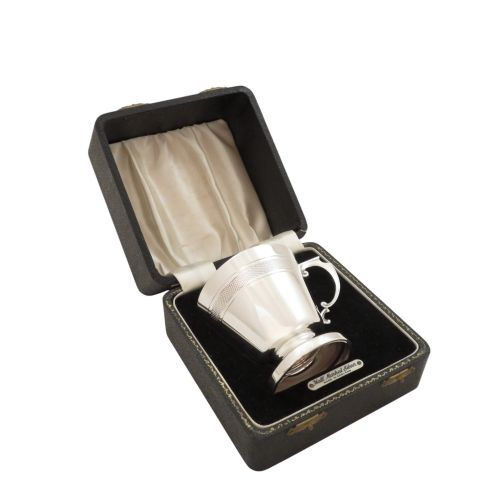

Baptism Gift Cup
A baptism gift cup marks a lifelong milestone, taking the form of a small silver vessel meant to be treasured for generations.
Baptism Gift Cup
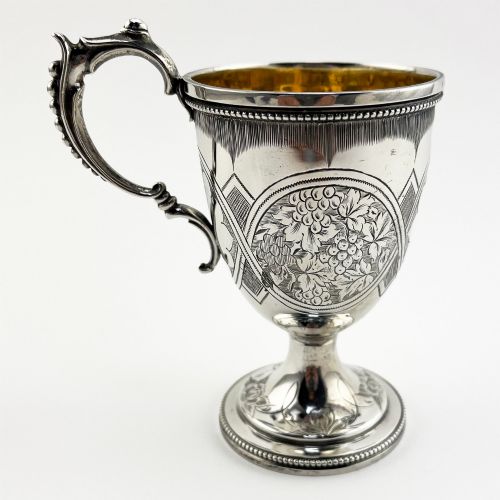
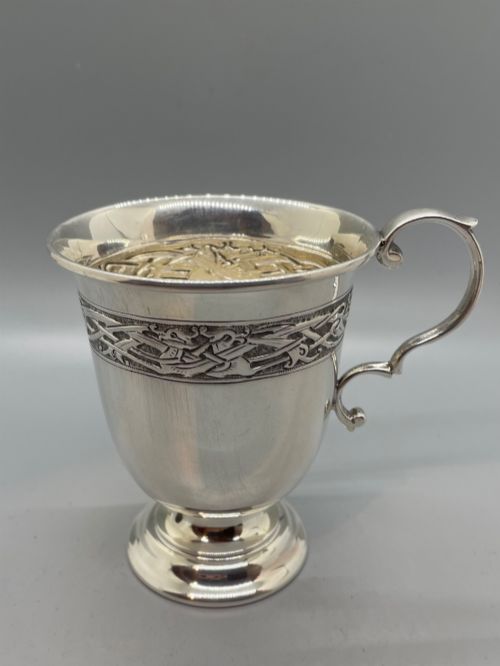
A baptism gift cup encompasses traditional christening mugs, tankards, and porringers designed to celebrate a child's naming ceremony. These pieces appear most frequently in sterling silver, spanning Victorian, Edwardian, and mid-century eras.
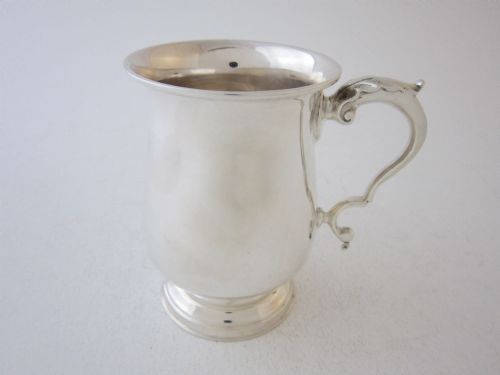
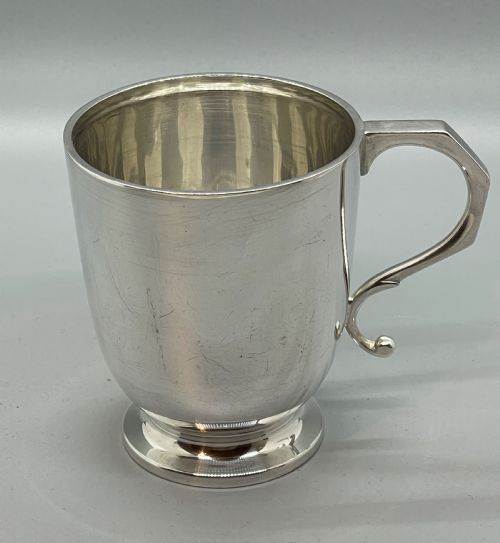
Mugs and tankards dominate the selection, often featuring baluster forms or plain cylindrical shapes suited for engraving a child's initials or birth date. Porringers and boxed christening sets also arise, offering alternative vessels for this enduring tradition.
Examples stretch from the mid-nineteenth century through the Edwardian period and into the mid-twentieth century, showcasing stylistic shifts from ornate Victorian scrollwork to cleaner modern lines.
Materials and construction
Makers shaped these vessels primarily from sterling silver and solid silver, occasionally applying silver gilt or gold gilt to the interior surfaces for a rich contrast. Some pieces arrive housed in fitted cases lined with velvet, silk, or leather.
Silversmiths utilised traditional techniques such as raising and casting to form handles like Rococo scrolls, attaching them securely to the main body of the mug or tankard.
Baptism Gift Cup Retail Price Guide 2026
Typical asking prices for baptism gift cup among the pieces listed under this phrase on Sellingantiques today, from the lower quarter to the upper quarter. They describe what is for sale here now, not the wider market.
Listings span from the eighteen-fifties through the mid-nineteenth and twentieth centuries, predominantly utilising sterling silver alongside silk, velvet, and leather cases.
Distinctions in quality
The weight and gauge of the silver distinguish simpler vessels from substantial ones, with heavier pieces offering a more satisfying balance in the hand. The crispness of hallmarks and the finesse of any applied handle, such as a cast Rococo scroll, separate standard production from superior work.
Design execution also plays a role, where plain surfaces display meticulous polishing and proportion, while decorated examples rely on the precision of their ornamentation rather than mere abundance of detail.
R E Stone
The Baptism Gift Cup Glossary
- Sterling silver
- An alloy containing ninety-two point five percent silver by mass, forming the primary material for these vessels.
- Porringer
- A shallow, two-handled bowl used traditionally for porridge or broth, sometimes presented as a christening gift.
- Baluster form
- A shape characterised by a swelling lower portion tapering toward the top, commonly seen on antique mugs.
- Hallmark
- An official stamp applied by an assay office to indicate the purity of the metal, the maker, and the year of testing.
- Tankard
- A tall drinking vessel with a single handle, frequently produced in silver for ceremonial or commemorative use.
Baptism Gift Cup: Frequently Asked Questions
What is a baptism gift cup used for?
These vessels were traditionally given to mark a child's christening or baptism, serving as a keepsake rather than an everyday drinking vessel.
Over time, many families kept them on display or stored them securely in fitted presentation cases as family heirlooms.
How can I tell the age of a silver cup?
The official hallmarks stamped into the metal provide the most reliable guide to a piece's age, indicating the specific assay office and date letter.
Stylistic elements like Rococo scrolls or plain mid-century silhouettes also help narrow down the period of manufacture.
Are these cups meant for daily use?
While fashioned from durable sterling silver, most examples of this age are treated as decorative items or commemorative keepsakes.
Using them requires gentle hand washing to preserve the delicate metal surfaces and any historical engraving.
What styles are common in these silver cups?
Victorian and Edwardian pieces frequently showcase ornate embossing or rococo revival scrolls, reflecting the tastes of the nineteenth and early twentieth centuries.
Later mid-century examples lean toward plain, smooth cylindrical forms with minimal decoration.