





Bank of Multi Drawers
A bank of multi drawers is a heavy utility cabinet built for systematic sorting, offering serious storage capacity and a rugged industrial aesthetic.
Bank of Multi Drawers
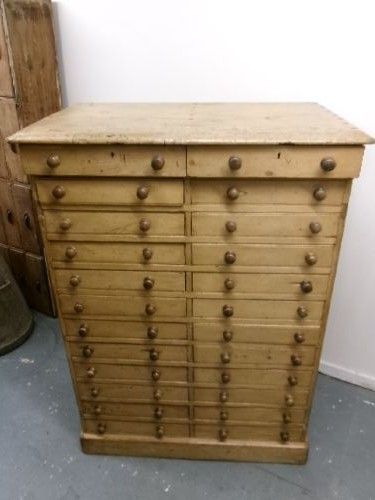
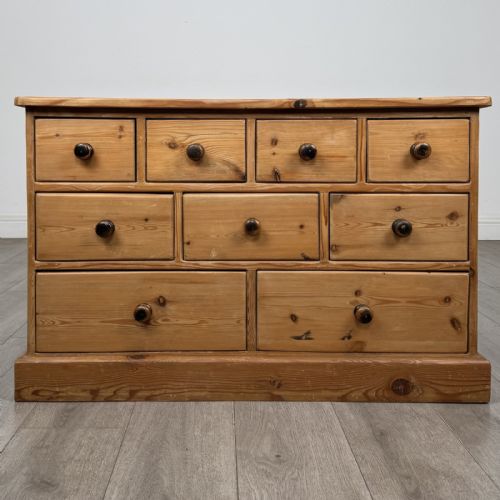
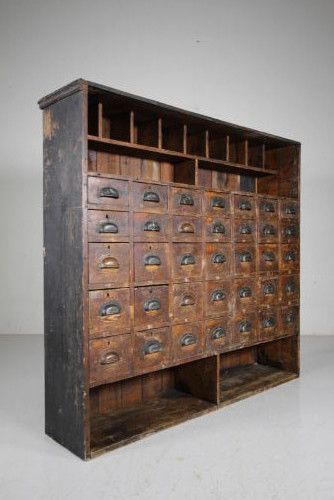
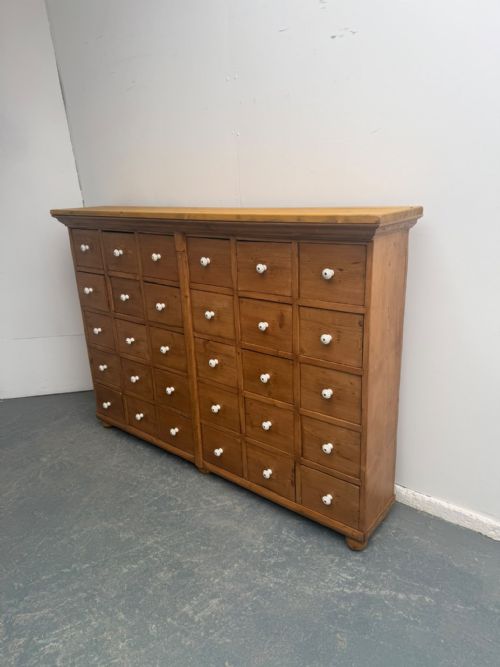
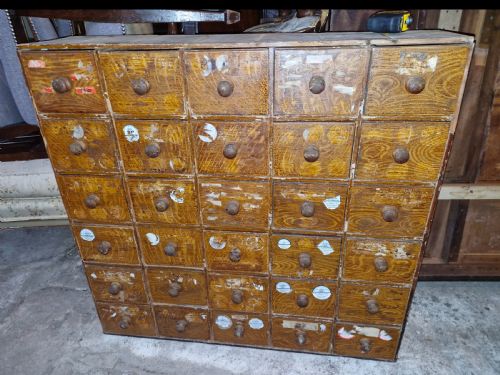
A bank of multi drawers groups numerous small compartments into a single tall carcass, originally designed for workshops, offices and retail shops. These practical storage units appear in formats ranging from narrow twelve-drawer counts up to extensive fifty-drawer shop fittings.
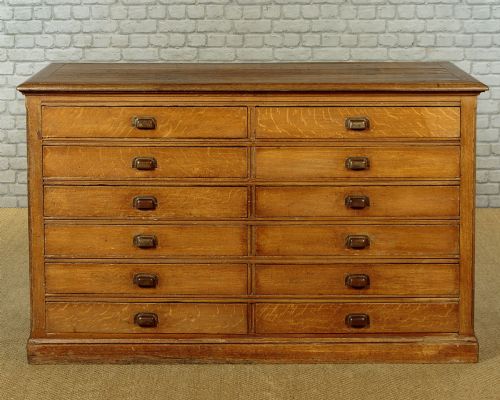
Originating largely from the Victorian period through to the 1930s, these pieces reflect the administrative and commercial expansion of their eras. Examples include apothecary cabinets, haberdashery counters, office filing cabinets and modular shop fittings.
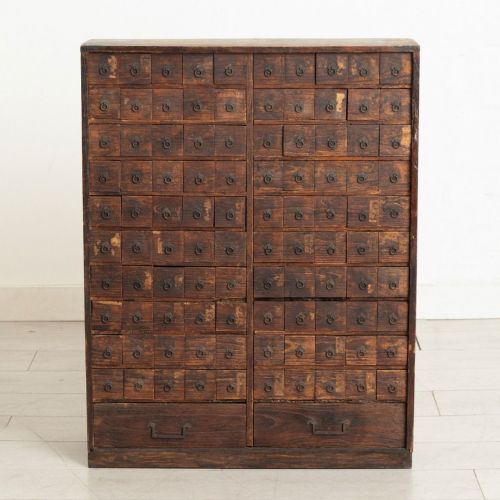
Materials span native timbers like pine, oak and mahogany alongside utilitarian iron, steel and brass hardware. Certain items originate from regional British workshops while others demonstrate French industrial or Japanese apothecary origins.
How they were made
Carpenters constructed the main carcasses predominantly from solid pine, oak, and mahogany, often utilising robust dovetail joints for the drawer boxes to withstand heavy daily use. Painted finishes appear on Hungarian shop fittings and English bases, while other pieces expose the natural grain.
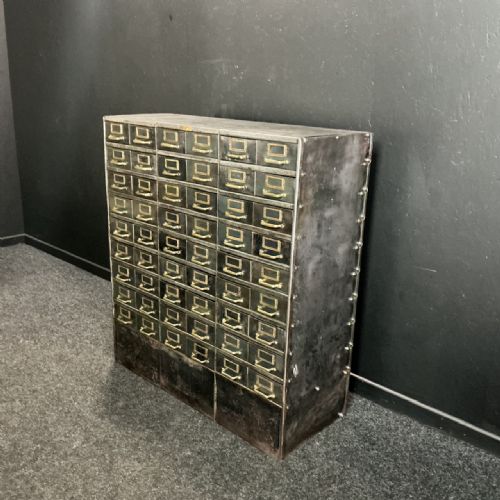
Functionality dictated the hardware, incorporating cast iron handles, brass label holders and patent letter filing mechanisms. Manufacturers built these cabinets to endure the rigorous demands of ironmongers, drapers and offices.
Bank of Multi Drawers Retail Price Guide 2026
Typical asking prices for bank of multi drawers among the pieces listed under this phrase on Sellingantiques today, from the lower quarter to the upper quarter. They describe what is for sale here now, not the wider market.
Listings feature multi-drawer cabinets spanning the Georgian period, the Victorian era, and the early twentieth century up to the 1930s.
What varies in quality
The scale of the piece and the integrity of the original hardware significantly influence its standing, particularly where brass label holders and iron pulls remain intact. Uniformity across large banks containing dozens of matching drawers demands careful joinery.
Original painted surfaces and untouched factory patination distinguish regional shop fittings from later domestic alterations. The choice of timber, from dense mahogany to utilitarian pine, alters the overall weight and visual presence of the cabinet.
Luxmore's of Ilfracombe
The Bank of Multi Drawers Glossary
- Haberdashery cabinet
- A glass-fronted or multi-drawer storage unit designed for displaying and sorting small drapery goods. These items typically feature numerous shallow compartments.
- Apothecary cabinet
- A specialist multi-drawer chest utilised by pharmacists for organising dried herbs, powders and medicinal ingredients. They often display neat rows of small drawers.
- Filing cabinet
- An office storage piece engineered for vertical or horizontal paper organisation, often incorporating patent locking mechanisms. Edwardian and later examples frequently utilise oak or steel.
- Shop fitting
- A commercial fixture constructed for retail environments, such as counters or massive drawer units built to line shop walls. These pieces are designed for heavy public usage.
- Dovetail joint
- A traditional interlocking woodworking joint prized for its tensile strength, commonly found at the corners of drawer boxes. It secures the sides without relying solely on metal fasteners.
Bank of Multi Drawers: Frequently Asked Questions
How were banks of drawers used originally?
These multi-compartment units served commerce and administration, functioning as shop counters for drapers, storage for ironmongers, and apothecary chests for medicines. Businesses relied upon them to keep large inventories of small goods orderly and accessible.
Office environments also utilised them for sorting correspondence and documents before modern filing systems took over. Their sturdy construction allowed staff to open and close heavy drawers repeatedly throughout the working day.
How do I fit a large cabinet into a modern home?
A tall bank of multi drawers provides exceptional vertical storage without consuming excessive floor space in a hallway, kitchen or living room. Their neutral timber tones and industrial metal pulls complement both contemporary and traditional interiors.
Because these units are heavy and tall, securing them firmly to a wall is essential for stability. This ensures safety while making full use of the numerous sliding drawers.
How do I tell a Victorian piece apart from a 1930s one?
Victorian examples frequently showcase heavy pine or mahogany construction with hand-cut joinery and traditional brass or iron hardware. Painted Hungarian shop fittings and apothecary cabinets are often rooted in this 19th-century tradition.
Cabinets from the 1920s and 1930s lean further into industrial materials, sometimes incorporating steel, patent filing mechanisms or black and gold finishes. The overall aesthetic shifts from domestic workshop crafting towards streamlined commercial utility.
Are all these cabinets made of solid wood?
The majority of the listed pieces utilise solid timbers such as pine, oak and mahogany for their carcasses and drawer construction. This heavy timber framing accounts for the substantial weight typical of these storage units.
Some industrial examples incorporate iron and steel framing or components alongside the wooden drawers. This mixed-material approach reflects their utilitarian origins in factories and offices.