






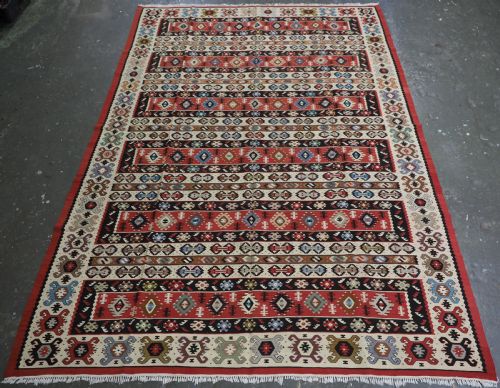


Banded Design Rug
These banded design rug examples bring together tribal and folk weaving traditions from Central Asia, the Caucasus, and the Balkans.
Banded Design Rug
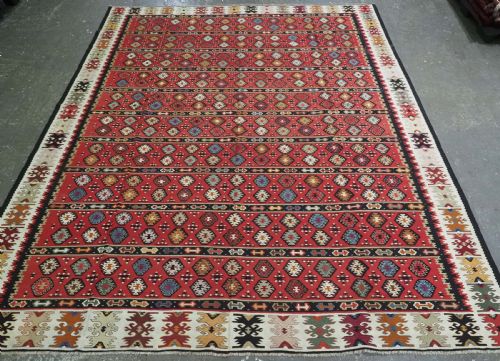
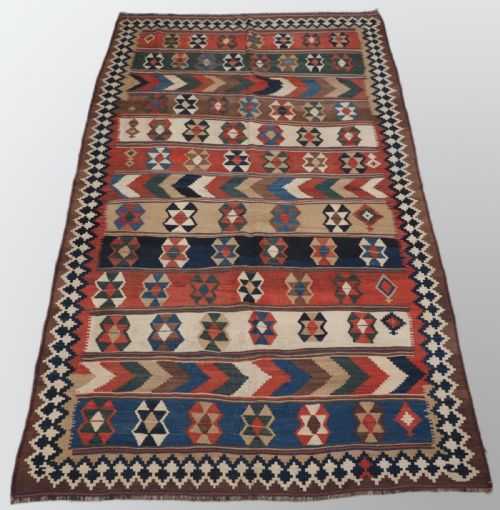
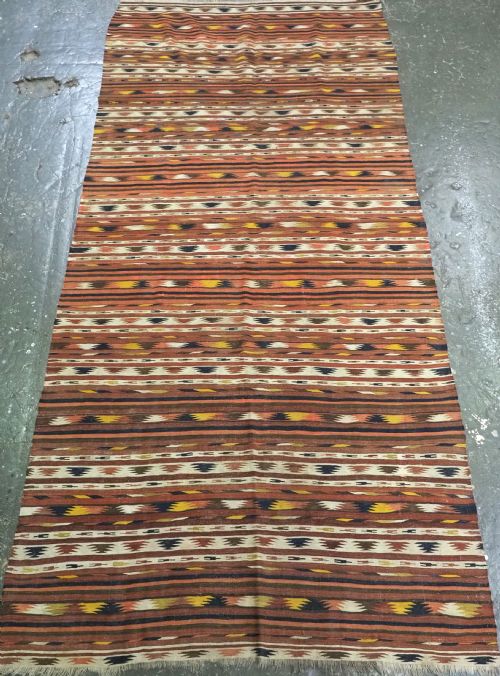
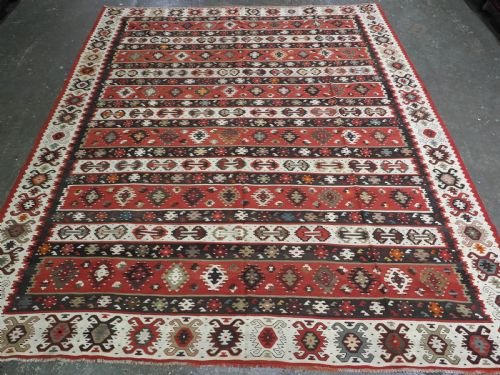
A banded design rug typically takes the form of a tribal storage bag face, saddlebag, or flatweave kilim created by nomadic and village weavers. These pieces span the late nineteenth century into the early decades of the twentieth century, originating from regions such as Central Asia, the Caucasus, and the Balkans.
The layout relies on horizontal bands of geometric motifs, chevrons, and weft work patterns running across the field. Yomut Turkmen, Baluch, Uzbek, and Pirot or Sarkoy origins dominate the selection, showing how different tribal groups utilised linear repetition to structure their textiles.
How They Were Made
Weavers constructed these textiles using hand-spun wool and cotton, employing flatweave techniques and traditional weft work. Natural dyes provided the palette, yielding soft colours across various storage bags, kilims, and larger carpet formats.
The structure relies on tight tension and precise colour placement within the horizontal bands. Surviving examples often retain original backs or finish as complete bag faces intended for nomadic daily utility.
Banded Design Rug Retail Price Guide 2026
Typical asking prices for banded design rug among the pieces listed under this phrase on Sellingantiques today, from the lower quarter to the upper quarter. They describe what is for sale here now, not the wider market.
Nomadic weavers packed spare blankets and tent poles inside these very bands, trusting wool and geometry to survive the journey.
What Varies in Quality
Quality rests upon the fineness of the weave and the clarity of the banded design across the textile. Pieces with very fine weave and well-preserved soft natural colours stand apart from standard village work.
The handling of the wool and the integrity of the original edges or backs also influence the character of each piece. Surviving storage bags retaining their original structure show greater completeness than isolated fragments.
The Banded Design Rug Glossary
- Kilim
- A flatwoven carpet or rug produced without a pile, common in Balkan and tribal Central Asian weaving traditions.
- Mafrash
- A large tribal storage bag or bedding sack, usually featuring horizontal bands and geometric motifs.
- Torba
- A smaller storage bag used within nomadic tents, often displaying detailed weft work design.
- Weft work
- Textile construction where the horizontal threads form the pattern directly as they pass through the warp.
Banded Design Rug: Frequently Asked Questions
What is a banded design rug?
A banded design rug is a flatweave textile or storage bag face organised with horizontal stripes of geometric motifs and tribal patterns.
These pieces originate from nineteenth and early twentieth-century nomadic and village traditions in Central Asia, the Caucasus, and the Balkans.
How were these rugs used?
Many of these textiles functioned as storage bags, saddlebag faces, or bedding sacks within nomadic households before surviving as collector items.
Smaller formats served practical purposes inside tents, while larger kilims covered floors or provided insulation.
How do you date a banded rug?
Dating relies on material analysis, including the presence of hand-spun wool and traditional natural dye palettes typical of the late nineteenth and early twentieth centuries.
Stylistic markers specific to Yomut, Baluch, Pirot, and Caucasian weaving groups also help place pieces within specific decades.
How do you care for an antique kilim?
Care involves gentle vacuuming without a rotating brush and keeping the textile away from direct sunlight to protect the natural dyes.
Using a quality underlay prevents slipping and reduces friction on wool fibres during daily use.