




Bamboo Stick Rack
A bamboo stick rack brings organic warmth and practical utility to an entryway, offering a sturdy yet lightweight place for walking canes, umbrellas and coats.
Bamboo Stick Rack
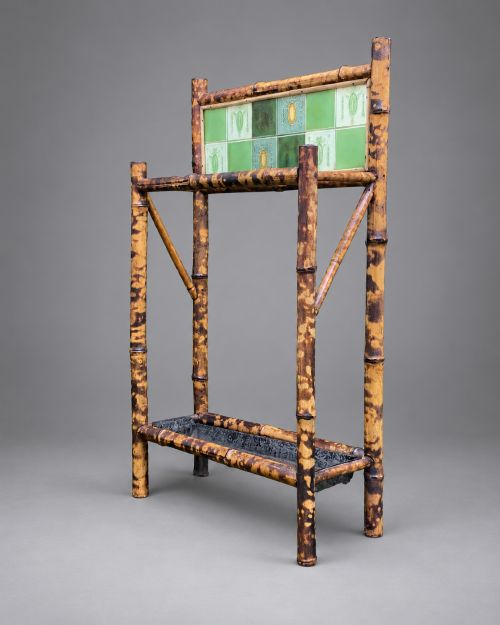
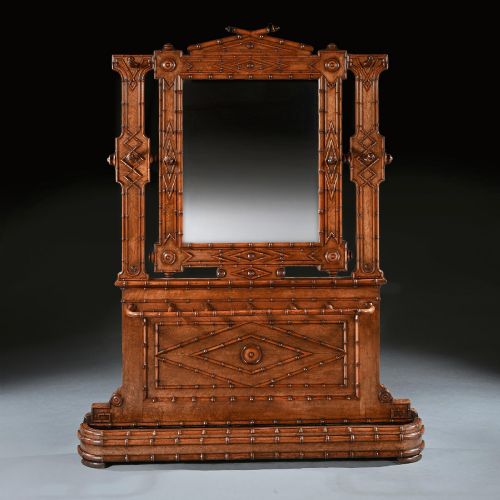
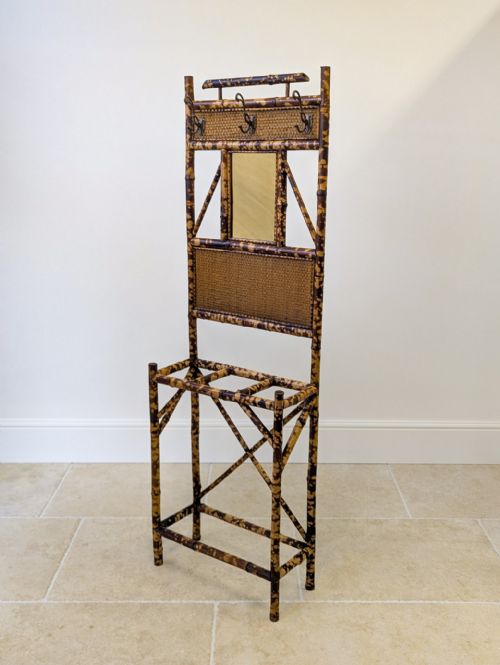
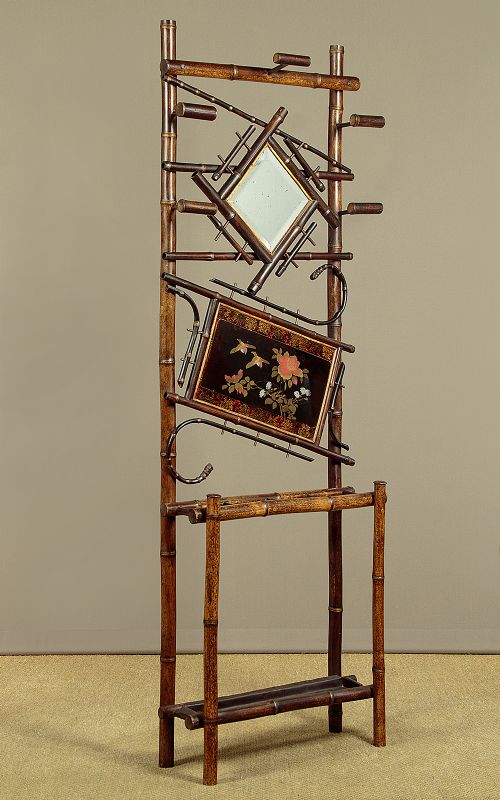
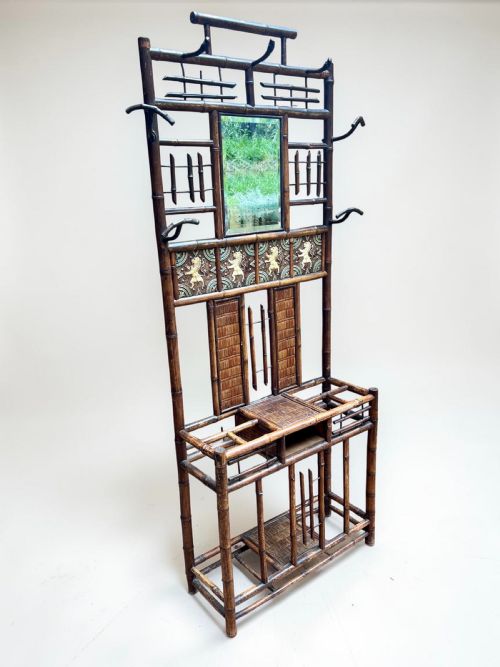
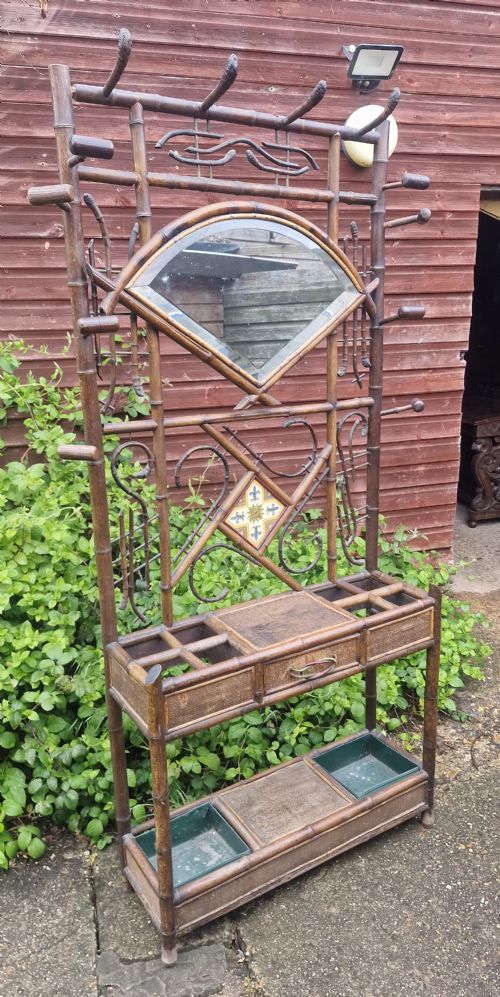
A bamboo stick rack is a functional hallway furnishing designed to hold umbrellas, walking sticks and coats, frequently combining multiple uses in a single compact footprint. When exploring bamboo stick racks, you will encounter diverse forms ranging from dedicated umbrella and stick stands to larger hall stands equipped with mirrors, coat hooks and lacquered panels.
The pieces available span from the mid-nineteenth century into the early twentieth century, with strong representation from the Victorian and Edwardian eras. These furnishings often reflect design influences such as the Aesthetic Movement, Art Nouveau, Japonisme and chinoiserie.
How they were made
Makers utilised natural bamboo stems alongside cherry wood carved to imitate bamboo poles, creating convincing faux bamboo structures. These frames were frequently joined with metal hardware and combined with cast iron components to provide necessary weight and stability at the base.
Designers incorporated decorative elements such as lacquered panels, ceramic tiles, mirror glass and clear glass to enhance the visual appeal of the hallway stands. Surface finishes were often left natural or given subtle varnishes to highlight the distinct jointed texture of the cane.
Bamboo Stick Rack Retail Price Guide 2026
Typical asking prices for bamboo stick rack among the pieces listed under this phrase on Sellingantiques today, from the lower quarter to the upper quarter. They describe what is for sale here now, not the wider market.
What varies in quality
Quality in these furnishings is determined by the complexity of the design and the integration of auxiliary materials like mirrors and lacquered panels. Simpler umbrella stands consist of straightforward bamboo frameworks, whereas superior examples include fitted drip pans, bevelled mirror glass and detailed chinoiserie decoration.
The structural integrity of the cane and the precision of the joinery separate standard production items from finer artistic pieces of the Aesthetic Movement. Well-preserved surfaces retain their original finish without excessive splitting in the natural bamboo or wear on the decorative panels.
The Bamboo Stick Rack Glossary
- Aesthetic Movement
- A late nineteenth-century design philosophy prioritising visual beauty over narrative subject matter. It heavily influenced the use of exotic motifs and Japanese-inspired forms in domestic furniture.
- Faux bamboo
- Simulated bamboo carving executed in harder timbers such as cherry wood. This technique provided the exotic look of cane with increased durability for load-bearing furniture.
- Chinoiserie
- European interpretation of traditional Chinese artistic styles and motifs. This decorative approach appears on lacquered panels and surface ornamentation within period hall stands.
- Japonisme
- The nineteenth-century Western fascination with Japanese art and culture. It shaped the asymmetric compositions and botanical themes found on many Victorian hallway furnishings.
- Faux bois
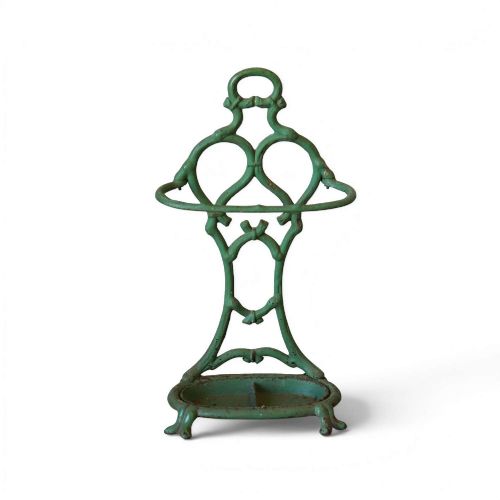
- Simulated wood grain or organic texture rendered in metal or plaster. In umbrella stands, this technique frequently replicates knotted bamboo stems in cast iron.
Bamboo Stick Rack: Frequently Asked Questions
What is a bamboo stick rack?
A bamboo stick rack is a hallway furnishing designed to hold walking canes, umbrellas and occasionally coats or hats.
They combine natural plant materials or faux bamboo framing with practical storage compartments for everyday use.
How were they used in period homes?
These pieces stood in entrance halls and vestibules to receive wet umbrellas and walking sticks upon entering the house.
Larger versions with integrated mirrors allowed residents to check their appearance before heading out.
How do I live with one today?
They serve effectively in modern hallways and boot rooms as lightweight storage for umbrellas, walking poles and daily accessories.
Placing a suitable liner inside the base protects the natural bamboo or wood from lingering moisture.
How do I date these pieces?
Dating relies on stylistic clues such as Aesthetic Movement motifs, Art Nouveau curves and the presence of specific materials like cast iron bases or bevelled mirror glass.
Victorian and Edwardian examples often feature construction methods typical of the late nineteenth and early twentieth centuries.