



Bamboo Side Chair
These bamboo side chair examples bring lightness and historic character to a room, offering clever design that translates across centuries.
Bamboo Side Chair
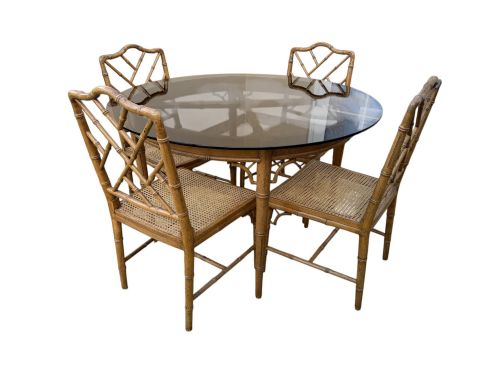
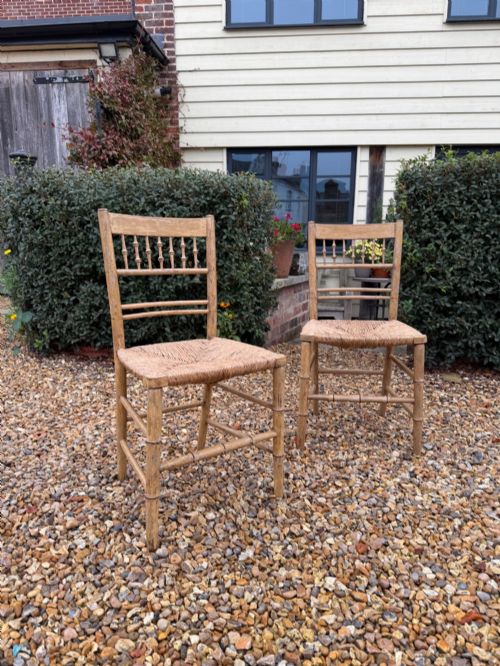
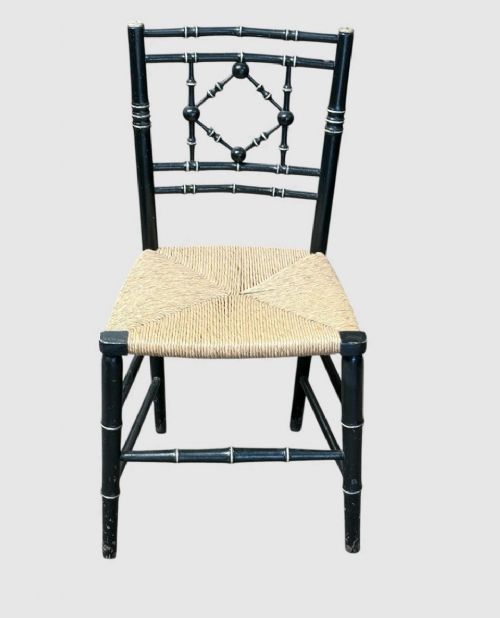
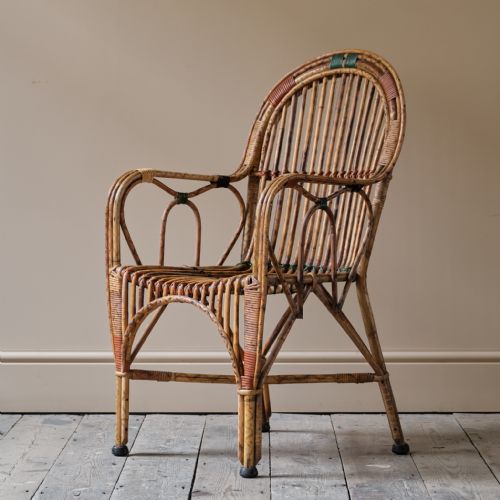
A bamboo side chair is a light seating form defined by its use of natural bamboo or wood turned and carved to imitate the material. These pieces appear frequently from the Regency period and the nineteenth century, often arriving as pairs or small sets.
The aesthetic bridges formal Regency elegance and later Victorian chinoiserie or Aesthetic Movement tastes. Buyers most commonly encounter painted surfaces, simulated bamboo framing, and woven rush or cane seats across these listings.
How they were made
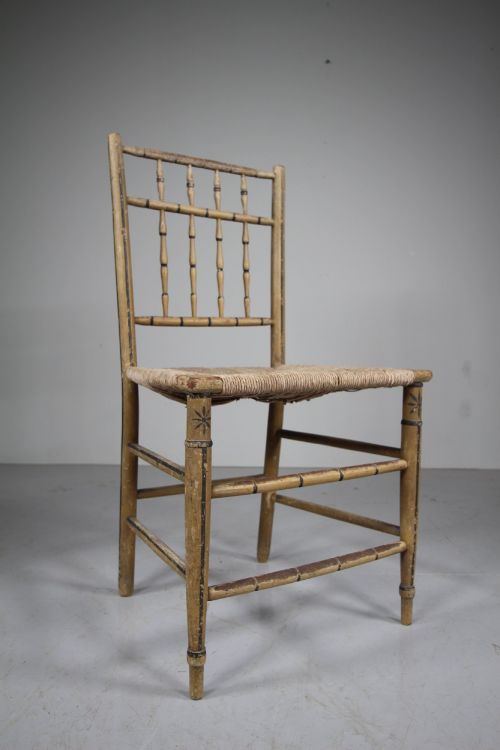
Craftsmen shaped natural bamboo or turned beech and other hardwoods to mimic segmented bamboo stems. These frames were frequently painted, ebonised, or decorated to enhance the exotic look.
Seats utilised woven rush or cane inserts, occasionally updated with fabric or retained in their original paint finishes.
Bamboo Side Chair Retail Price Guide 2026
Typical asking prices for bamboo side chair among the pieces listed under this phrase on Sellingantiques today, from the lower quarter to the upper quarter. They describe what is for sale here now, not the wider market.
Some nineteenth-century makers went to extraordinary lengths, carving wooden knots so convincingly that guests routinely tried to peel the bark.
What varies in quality
Quality rests on the crispness of the turning on simulated frames and the survival of original paint surfaces. Pieces with intact early paintwork and sturdy cane or rush seats stand higher in the range than later repainted examples.
Proportion and structural integrity dictate value, alongside the presence of matching pairs or sets rather than isolated singles.
The Bamboo Side Chair Glossary
- Faux bamboo
- Wood that has been turned, carved, and painted to imitate the joints and texture of real bamboo. This technique was especially popular during the Regency and nineteenth century.
- Rush seat
- A seating surface woven from dried marsh grasses or rushes. It provides a traditional, textured finish often found on country and Regency chairs.
- Ebonised wood
- Timber treated with a dark stain or finish to simulate expensive ebony. It creates a striking contrast against gilded or painted highlights.
- Aesthetic Movement
- A late nineteenth-century design style focusing on art for art's sake and drawing inspiration from Japanese and other non-Western decorative arts.
- Chinoiserie
- European artistic interpretation of Chinese and East Asian motifs. It appears on painted furniture with whimsical landscapes and decorative details.
Bamboo Side Chair: Frequently Asked Questions
Are these chairs comfortable for daily use?
These chairs function well for occasional seating around a desk or dining table. Their lightweight construction makes them easy to move between rooms.
While sturdy when well maintained, their antique frames benefit from careful daily use rather than heavy lounging.
How do I spot original paint?
Original paint shows natural wear, craquelure, and a consistent patination that matches the age of the wood beneath. Modern touch-ups often sit heavily on top of the surface.
Examine the joins and undersides where accumulated layers reveal historical decorative campaigns.
Can I use them as dining chairs?
They serve well as dining seats, particularly when acquired as pairs or larger sets. Their compact footprint allows several to fit comfortably around a table.
Check the seat height and stability of the rush or cane before committing them to regular dining room service.
What is the difference between real and simulated bamboo?
Real bamboo uses actual botanical canes joined together, offering a lightweight and flexible structure. Simulated bamboo carves solid hardwoods like beech to replicate those joints.
Turned wood examples generally provide greater weight and durability while keeping the exotic visual appeal.