





Bamboo Plant Table
A bamboo plant table brings light structural framing and botanical display together, offering an elevated surface for greenery.
Bamboo Plant Table
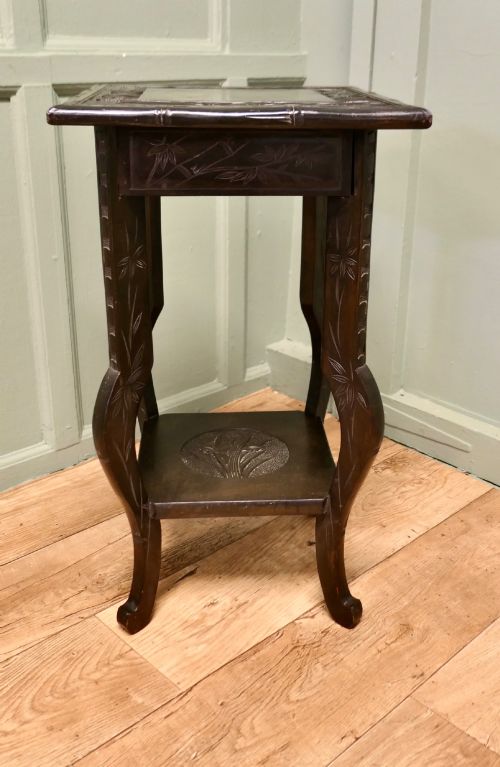
A bamboo plant table serves as a purposeful pedestal for holding foliage and decorative vessels within a room. When searching for a bamboo plant table, buyers encounter nineteenth-century pieces alongside early twentieth-century examples shaped by Victorian and Chinoiserie tastes.
The selections span simple occasional tables and multi-tiered etageres to specialised stands designed specifically for display. These pieces frequently draw upon Aesthetic Movement ideals or Chinese Qing Dynasty traditions.
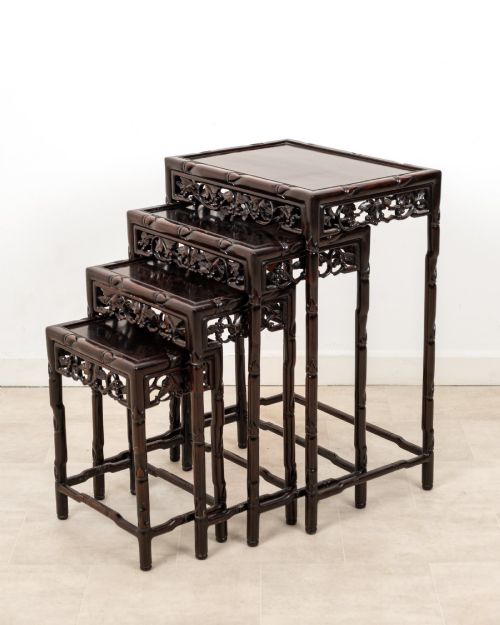
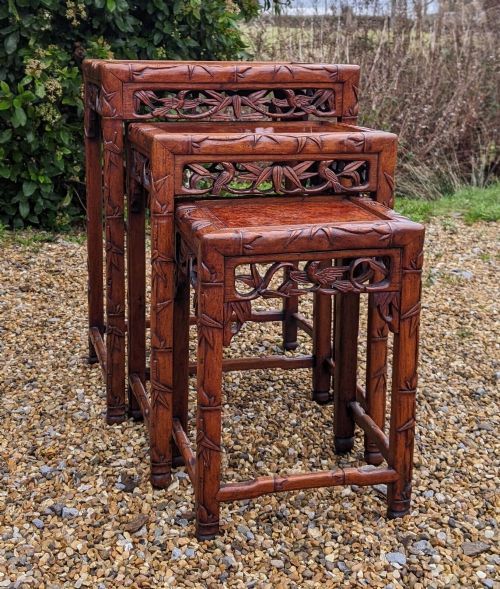
Origins vary between English workshops producing lacquered bamboo frames and imported hardwoods such as hongmu or huanghuali. Each variant provides a distinct surface, whether formed from split cane, inset marble, or decorated panels.
Materials and construction methods
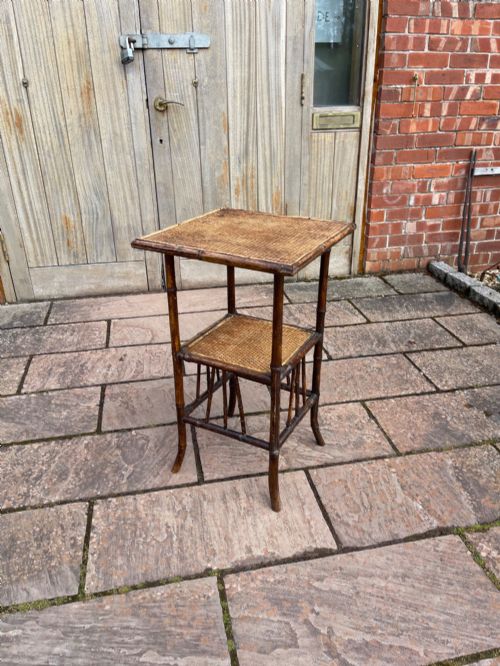
Construction relies upon the natural flexibility and strength of bamboo stems, often paired with wooden internal supports and joints bound securely. Makers shaped the plant table frames to hold significant weight while maintaining a slender profile.
Surfaces frequently incorporate decorative lacquer, leather, or decoupage applied to timber panels, alongside inset marble slabs fitted into carved hardwood frames. These varied finishes protected the underlying material while adding visual depth to the plant table design.
Bamboo Plant Table Retail Price Guide 2026
Typical asking prices for bamboo plant table among the pieces listed under this phrase on Sellingantiques today, from the lower quarter to the upper quarter. They describe what is for sale here now, not the wider market.
Some nineteenth-century makers combined sturdy bamboo frames with unexpected decorative surfaces like decoupage and stamped leather.
Distinctions in quality
Quality rests upon the structural integrity of the bamboo framing and the precision of the joinery connecting each tier. Superior examples maintain rigidity without looseness in the cane stems.
The refinement of surface decoration, such as hand-applied lacquer, fitted marble inserts, or carved hardwood details, separates standard utility items from more ambitious decorative works.
Liberty & Co.
The Bamboo Plant Table Glossary
- Bamboo
- A woody grass utilised for structural framing and legs, known for its hollow cylindrical strength. It forms the primary framework of many Victorian and Aesthetic Movement tables.
- Hongmu
- A traditional Chinese dense hardwood used in Qing Dynasty furniture production. This heavy timber provides a dark, durable surface for stands and tables.
- Etagere
- A piece of furniture consisting of open shelves for displaying small objects or plants. These tiered structures maximise vertical display space in a room.
- Lacquer
- A durable resin finish applied in multiple layers to wood or bamboo surfaces. It creates a smooth, protective sheen often decorated with Chinoiserie motifs.
Bamboo Plant Table: Frequently Asked Questions
Where should I place a bamboo plant table?
These tables suit bright corners, window spaces, or hallways where natural light supports potted greenery.
Keep them away from direct heat sources to protect the natural cane and lacquer finishes over time.
How do I care for antique bamboo furniture?
Dust the frame regularly with a dry cloth and avoid excessive moisture or chemical cleaners.
Maintaining a stable indoor humidity prevents the natural bamboo and wood components from drying out or splitting.
What is the difference between bamboo and hardwood stands?
Bamboo stands offer a lighter, more flexible frame associated with Victorian and Aesthetic Movement designs.
Hardwood stands, such as those from the Qing Dynasty, provide heavier weight and carved stone inserts.
Are these tables sturdy enough for heavy plants?
Most pieces are built to support standard potted plants and decorative ceramics safely.
Larger etageres and multi-tiered versions distribute weight across several upright supports for added stability.