





Baguette Sapphire Ring
A baguette sapphire ring combines step-cut stones with geometric settings, offering clean lines that collectors choose for distinct period character.
Baguette Sapphire Ring
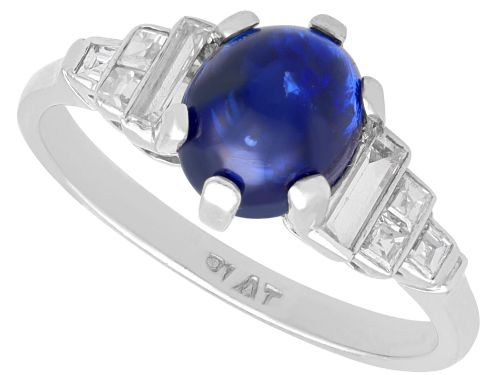
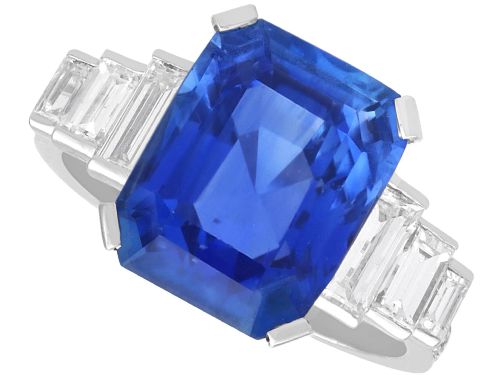
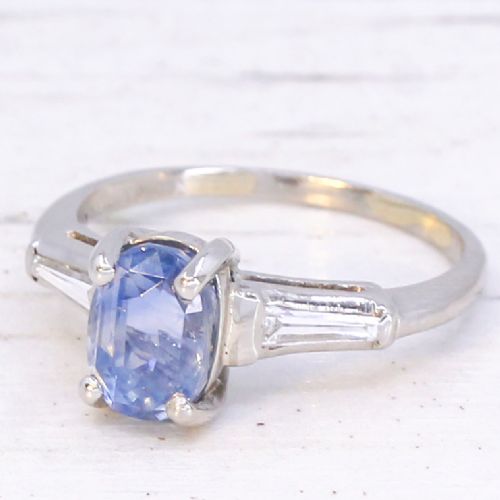
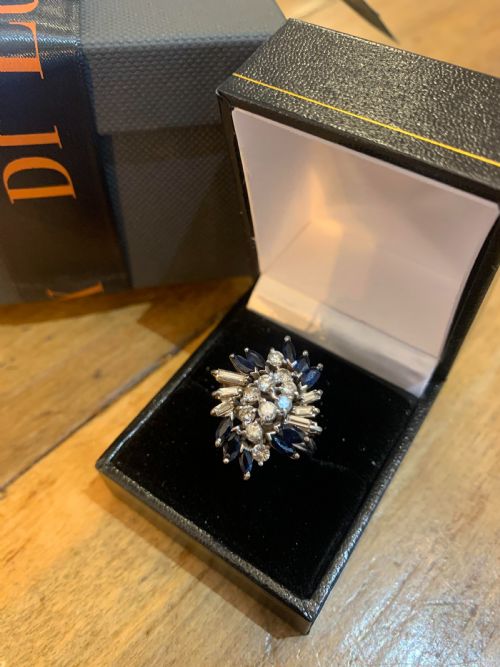
A baguette sapphire ring centres on rectangular step-cut sapphires, frequently paired alongside diamonds in cluster, panel, or trilogy arrangements. These pieces emerge across several periods, with Art Deco examples showing particularly strong geometric discipline.
The most common version met on this page is the platinum Art Deco ring from the nineteen-twenties and thirties, where elongated sapphires frame central diamonds or form the main cluster border. Mid-century crossover styles and Victorian boat rings also appear among the selections.
Origin details often specify stones from Ceylon, Burma, or Kashmir, giving buyers specific geographical context alongside carat weights. Settings range from streamlined platinum mountings to eighteen-carat white and yellow gold configurations.
Materials and construction
Platinum serves as the predominant metal for pieces from the interwar years, providing the strength required for delicate claw and channel settings holding step-cut stones. Eighteen-carat white and yellow gold also appear across Victorian and later mid-century examples.
Sapphires are matched with diamonds, utilising old-cut, brilliant, and baguette cuts to contrast with the linear sapphire facets. Gemstones are secured in platinum or gold mountings designed to emphasise the geometry of the central stones.
Baguette Sapphire Ring Retail Price Guide 2026
Typical asking prices for baguette sapphire ring among the pieces listed under this phrase on Sellingantiques today, from the lower quarter to the upper quarter. They describe what is for sale here now, not the wider market.
Listings feature platinum and eighteen-carat gold across Art Deco, mid-century, and Victorian periods.
Variations in quality
The quality of a baguette sapphire ring rests upon the saturation and clarity of the sapphire itself, alongside the precision of the step-cut facets. Stones with deep, even coloration and minimal inclusions command greater interest.
Setting execution dictates the integrity of the piece, with flush channel work and secure platinum claws marking superior craftsmanship. The proportion between the central stone and flanking baguette sapphires determines the visual balance of the mounting.
The Baguette Sapphire Ring Glossary
- Baguette
- A narrow, rectangular gemstone cut with step facets. This cut emphasises linear clarity over brilliant sparkle.
- Cluster ring
- A ring design featuring a central stone surrounded by a border of smaller gems. This layout maximises visual impact on the finger.
- Step-cut
- A gemstone cutting style featuring parallel facets. This technique highlights stone colour and internal purity.
- Trilogy ring
- A three-stone ring symbolising past, present, and future. The central stone is typically flanked by two matching gems.
- Crossover ring
- A band design where the shanks sweep and cross over the finger. This style gains popularity during the mid-century period.
Baguette Sapphire Ring: Frequently Asked Questions
How do I care for my ring?
Clean platinum and gold settings using warm soapy water and a soft brush, avoiding harsh chemical dips that damage delicate stones.
Store the piece separately in a fabric-lined box to prevent scratching softer gemstones alongside harder diamonds.
Can these rings be resized?
Most platinum and gold bands allow for resizing by a skilled jeweller, depending on the shoulder decoration and stone settings.
Intricate channel-set baguettes around the band require careful adjustment to avoid disturbing the stone alignment.
What periods do these rings represent?
The selection spans Victorian designs through Art Deco, mid-century modern, and late twentieth-century periods.
Art Deco pieces from the nineteen-twenties and thirties dominate the listings with geometric platinum work.
How are sapphires certified?
Many listings note specific geographical origins such as Ceylon or Burma, alongside treatments like unheated stones.
Documentation often accompanies higher carat weight sapphires to verify natural formation and origin.