



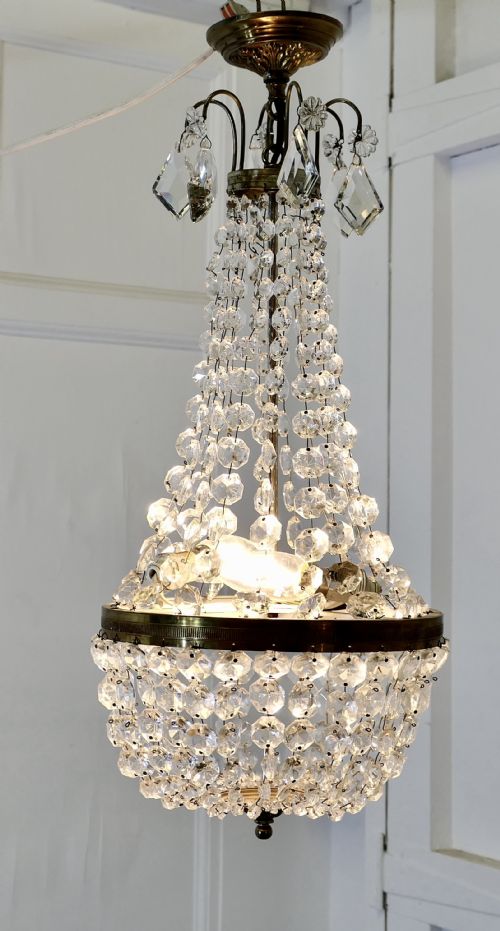


Bag Style Ceiling Fitting
These bag style ceiling fitting designs bring sparkling illumination and period character to lower-ceilinged rooms.
Bag Style Ceiling Fitting
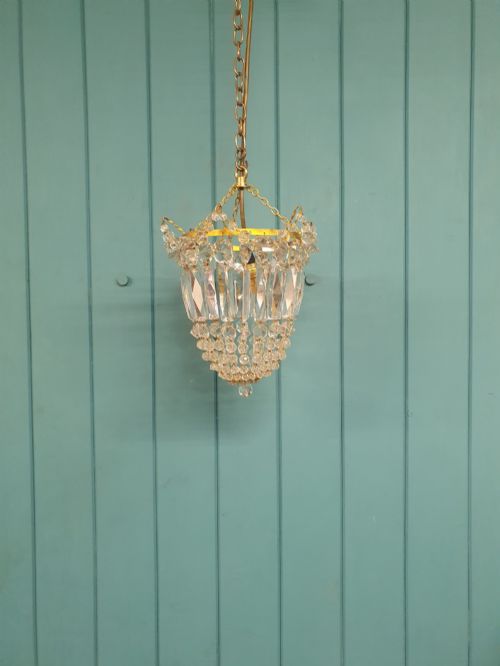
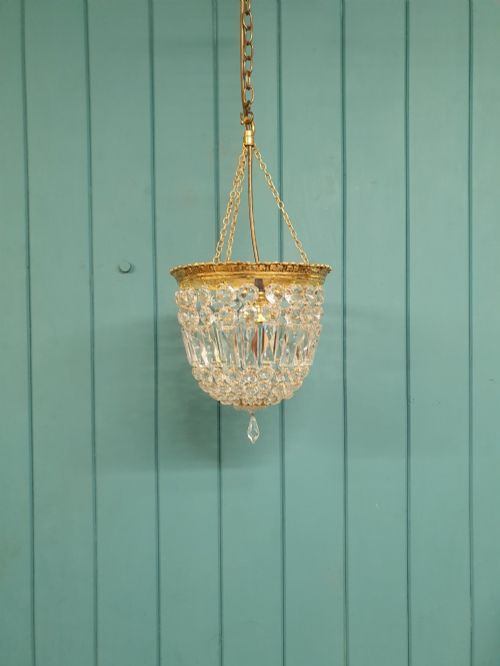
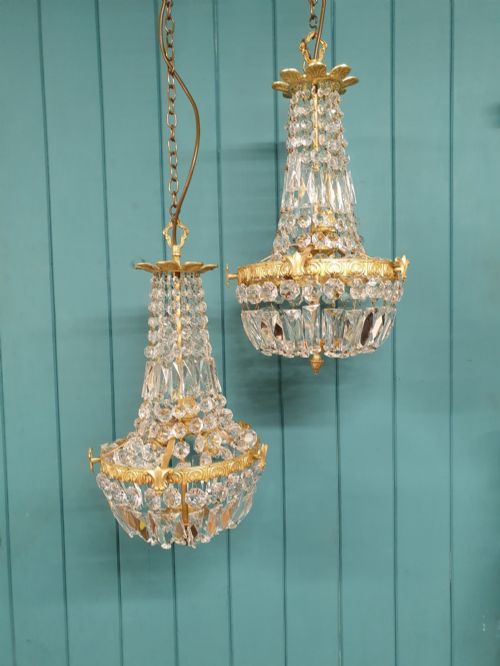
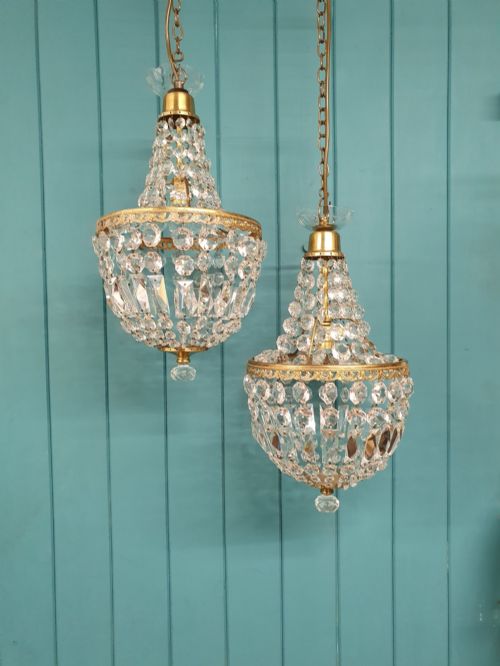
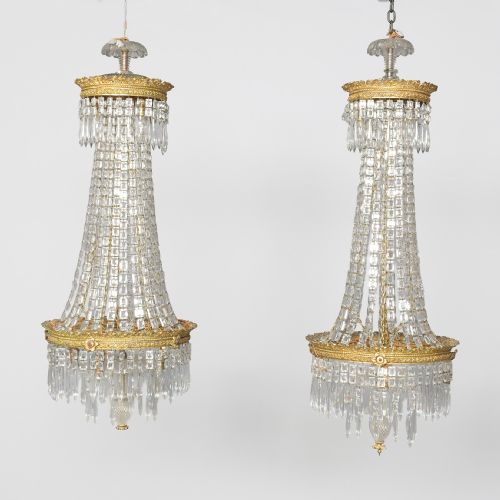
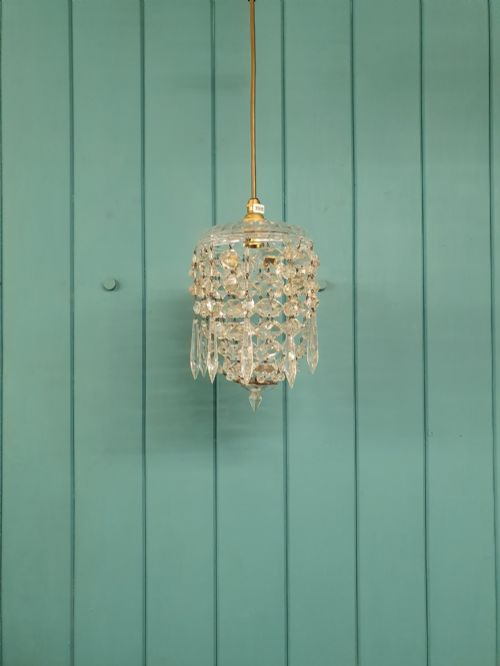
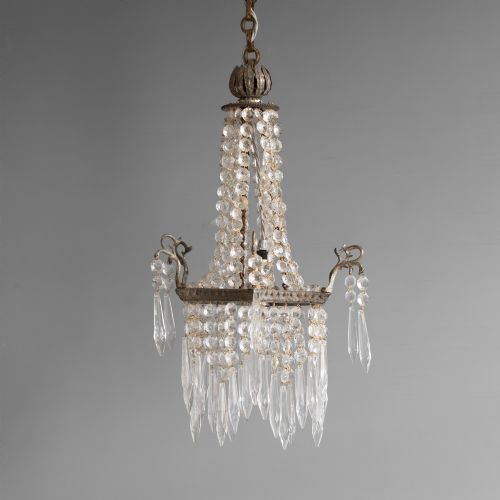
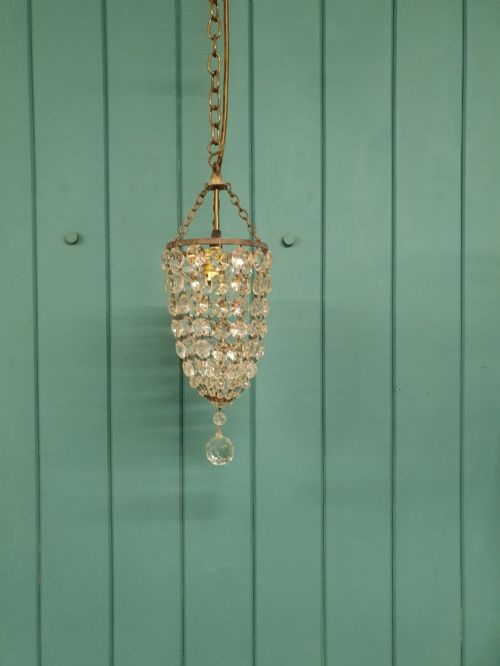
A bag style ceiling fitting combines brass or gilt brass frames with cascading crystal and cut glass drops to create a distinctive silhouette. These hanging light fixtures span the Edwardian era and the early twentieth century, appearing in forms such as chandeliers, pendant lights and basket lights.
Most examples on this page date from the Edwardian period through to 1930, capturing a specific decorative aesthetic that favours tiered glass drops and enclosed bag profiles. The inventory ranges from compact fixtures measuring a modest five inches to larger eighteen-inch statement pieces.
Makers and designers drew upon various stylistic influences, producing chandeliers that reflect French Empire, Regency and neoclassical design vocabularies. These pieces suit hallways, bedrooms and principal reception rooms where traditional overhead lighting is desired.
Materials and construction methods
The foundational framework relies on brass, gilt brass, and gilded bronze to support the weight of the glass elements. Wire secures individual crystal droplets and strings of beads into the characteristic bag or basket shapes that define these ceiling lights.
Cut glass and crystal components provide the refractive surfaces necessary for light dispersion, often shaped into tents, domes, and lower bag sections. Metal mounts and frames hold these glazed elements firmly in place while offering ornamental detail through cast or gilded finishes.
Bag Style Ceiling Fitting Retail Price Guide 2026
Typical asking prices for bag style ceiling fitting among the pieces listed under this phrase on Sellingantiques today, from the lower quarter to the upper quarter. They describe what is for sale here now, not the wider market.
Listings feature items spanning from 1890 to 1930, utilising brass, wire, gilt bronze and cut glass crystal.
Distinctions in craftsmanship and materials
Superior examples employ heavier cast brass or gilded bronze frameworks that maintain structural integrity over decades of use. The density and clarity of the cut glass or crystal drops also differ across the range, affecting how light refracts through the fixture.
The precision of the wirework and the uniformity of the glass beads determine the refinement of the finished silhouette. Finer pieces demonstrate meticulous hand-assembly where each crystal strand hangs with exact tension to preserve the intended geometric form.
The Bag Style Ceiling Fitting Glossary
- Bag chandelier
- A light fixture featuring a gathered lower section of glass drops resembling a small pouch or bag. This design directs and softens the illumination while maximising crystal sparkle.
- Tent and bag chandelier
- A lighting form combining an upper canopy of strings stretched into a tent shape above a gathered lower bag. It represents a classic eighteenth-century silhouette revived during the Edwardian era.
- Gilt brass
- A brass base metal treated with a thin layer of gold or gold-coloured finish. This technique provides the rich appearance of solid gold while utilising a more practical structural metal.
- Cut glass
- Glass shaped and faceted using abrasive wheels to create sharp patterns that catch and split light. It differs from moulded glass by possessing crisper edges and greater optical brilliance.
Bag Style Ceiling Fitting: Frequently Asked Questions
Where should I hang a bag style ceiling fitting?
These fixtures suit spaces with standard ceiling heights where a traditional pendant might hang too low, such as entrance halls or bedrooms.
Their compact silhouette provides decorative illumination without overwhelming smaller rooms or impeding circulation paths.
How do I clean a crystal bag chandelier?
Dust the glass elements regularly with a soft feather duster to maintain their refractive qualities.
For deeper cleaning, wipe individual crystals with a mild soapy solution while they remain attached to the frame, using a dry cloth afterwards.
What periods do these ceiling fittings represent?
The lighting fixtures on this page predominantly date from the late nineteenth century through to the 1930s.
Edwardian examples sit alongside pieces bearing French Empire and Regency stylistic influences from the early twentieth century.
Are these lights compatible with modern wiring?
Most antique ceiling fittings require professional rewiring to meet current safety standards and electrical regulations.
An electrician can easily adapt the internal lamp holders to accept standard modern bulbs while preserving the vintage exterior.