





Bachelors Writing Chest
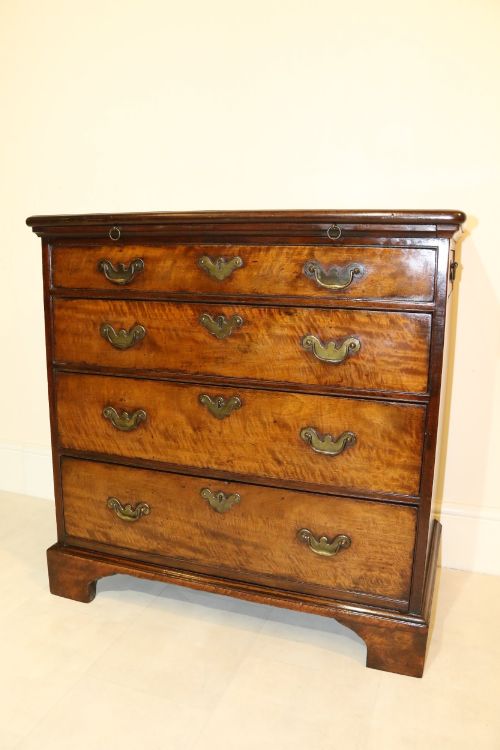
These bachelors writing chests combine the practicality of a writing desk with the storage of a chest of drawers.
Bachelors Writing Chest
A bachelors writing chest is a compact form that serves a dual purpose for writing and storage. These pieces date from the Georgian and 18th century periods, including George I and George II styles.
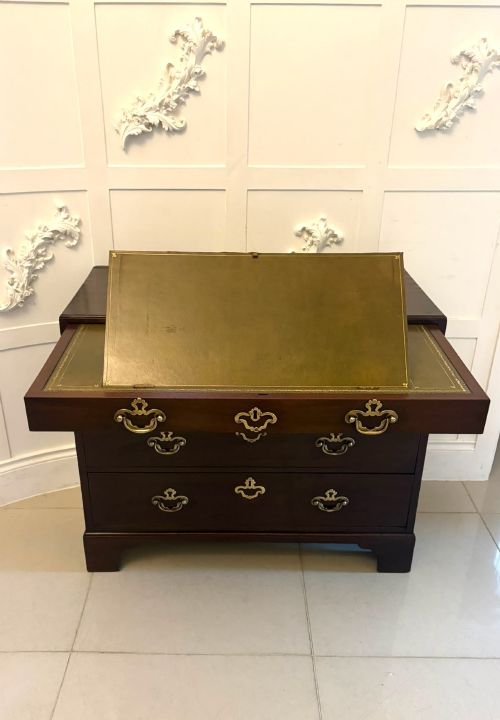
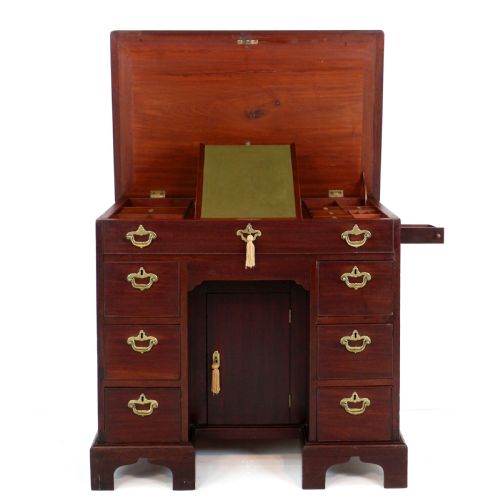
The form typically manifests as a chest of drawers incorporating a writing slide, a fitted writing desk, or a leather slope. Examples also include bowfront commode chests and kneehole fitted desks.
Most pieces seen here are constructed from mahogany or walnut, reflecting the cabinet-making standards of the eighteenth century. Small proportions, such as thirty-inch widths, frequently occur within these listings.
How they were made
Cabinet makers utilised solid timber and veneers, predominantly mahogany and red walnut, supported by secondary woods like oak. Surfaces often incorporate fitted writing interiors lined with leather or baize.
Metalwork relies on brass for handles and key escutcheons, fastened to drawers built with traditional joinery. The writing sections utilise pull-out slides or hinged slopes to provide a functional writing surface.
Bachelors Writing Chest Retail Price Guide 2026
Typical asking prices for bachelors writing chest among the pieces listed under this phrase on Sellingantiques today, from the lower quarter to the upper quarter. They describe what is for sale here now, not the wider market.
Listings for this phrase feature pieces from the Georgian period, specifically spanning the reigns of George I and George II.
What varies in quality
Quality depends upon the choice of timber figure, the integrity of the secondary woods, and the sophistication of the internal fittings. Early solid walnut and figured mahogany examples demonstrate superior cabinet work compared to standard utility pieces.
The complexity of the writing mechanism distinguishes different grades of execution, from simple pull-out slides to elaborate fitted kneehole desks with numerous small drawers and compartments.
Robert Gillows II
The Bachelors Writing Chest Glossary
- Writing slide
- A pull-out board located above the top drawer designed to provide a writing surface without opening a full desk drawer. This feature preserves the exterior appearance of a standard chest.
- Bowfront
- A curved cabinet front where the central section projects outward in an arc. This stylistic treatment appeared on Georgian commodes.
- Kneehole
- A recessed space beneath the central drawer of a desk or dressing table designed to accommodate the user's legs. Fitted versions often include concealed compartments behind the main pedestals.
- Baize
- A coarse woolen material resembling felt used to line writing surfaces within older desks and chests. It provides a soft layer for writing.
- Escutcheon
- A protective metal plate surrounding a keyhole, usually cast in brass on these period pieces.
Bachelors Writing Chest: Frequently Asked Questions
What is a bachelors writing chest?
A bachelors writing chest is a compact eighteenth-century case piece that combines multiple drawer storage with an integrated writing surface. These items were designed for smaller residences where dedicated desk furniture took up too much floor space.
Cabinet makers of the Georgian era built these pieces using dense hardwoods like mahogany and walnut. The inclusion of a pull-out slide or a hinged slope allowed the owner to write correspondence without disturbing other possessions stored in the chest.
How do you use a writing slide?
The writing slide pulls straight out from the upper section of the chest, sitting just above the top row of small drawers. It provides a shallow shelf at a comfortable height for standing or sitting to write.
Many slides are lined with leather or baize to create a smooth writing texture. Users pull the board out when needed and push it flush with the cabinet frame when finished.
How do I date a Georgian chest?
Dating relies on examining the timber species, construction methods, and hardware styles characteristic of the eighteenth century. Pieces from the George I and George II periods often feature walnut timbers or early mahogany figures combined with oak drawer linings.
Proportions also offer clues, as smaller examples measuring around thirty inches wide appeared frequently during the mid-eighteenth century. Secondary wood choices and dovetail construction help confirm the period of manufacture.
Where were these chests placed?
These chests functioned primarily in private bedchambers, studies, or dressing rooms where gentlemen managed personal correspondence. Their modest footprint allowed them to fit against bedroom walls alongside larger wardrobes.
The dual functionality meant an owner could store clothing in the lower drawers while keeping writing materials close at hand in the upper section.