

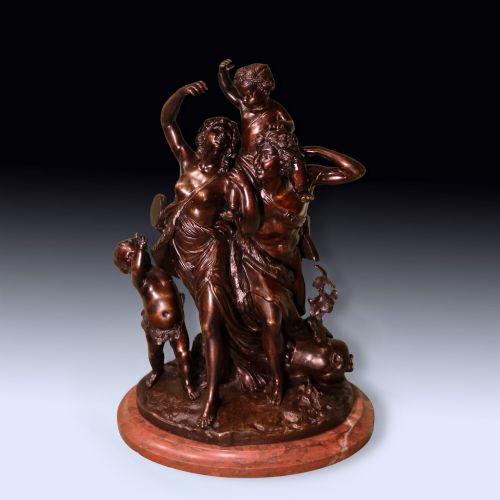


Bacchanalian Figure Sculpture
These bronze and porcelain pieces of bacchanalian figure sculpture capture classical revelry through figures of Bacchus, putti, and dancing maidens.
Bacchanalian Figure Sculpture
When you search for bacchanalian figure sculpture, you encounter nineteenth-century works depicting Bacchus, putti, children gathering grapes, and dancing maidens. These pieces draw heavily on classical mythology and the aesthetic of the sculptor Claude Michel, known as Clodion.
The objects on this page include bronze figure groups mounted on marble bases, patinated bronze statues, and hard-paste porcelain groups. Many are French in origin, reflecting Neoclassical and Rococo Revival styles from the eighteen-hundreds.
You will frequently meet groupings of multiple figures, such as putti playing with grapes or Silenus accompanied by revellers. These sculptural groups range from cabinet-sized decorative pieces to larger sculptural works.
Materials and methods of production
The metal sculptures on this page utilise cast bronze, often finished with a dark patination that highlights the musculature and drapery of the figures. Some works incorporate green marble for their bases, providing a contrasting classical plinth for the bronze groups.
Bacchanalian Figure Sculpture Retail Price Guide 2026
Typical asking prices for bacchanalian figure sculpture among the pieces listed under this phrase on Sellingantiques today, from the lower quarter to the upper quarter. They describe what is for sale here now, not the wider market.
The listings on this site feature nineteenth-century works executed in bronze, patinated bronze, and hard-paste porcelain, adhering to Neoclassical and Rococo Revival styles.
Distinctions in execution and design
The standard of a bacchanalian figure sculpture rests in the crispness of the casting and the fidelity of the chasing. Finer bronze examples retain sharp detail in the facial expressions, hair, and clusters of grapes, whereas lesser casts lose definition in the secondary elements.
The quality of the material preparation and the richness of the patination differentiate the output. Superior pieces display thoughtful integration between the bronze figures and their marble bases, maintaining balanced proportions across complex multi-figure compositions.
Clodion·Meissen Porcelain
The Bacchanalian Figure Sculpture Glossary
- Patinated bronze
- Bronze treated with chemical solutions to produce a specific surface colour and tone. This finish protects the metal and accentuates the sculptural details.
- Hard-paste porcelain
- A durable ceramic material fired at high temperatures, composed of kaolin and petuntse. It accepts enamel colours and gold leaf securely.
- Neoclassical
- A style drawing inspiration from the classical art and culture of ancient Greece and Rome. It emphasises restraint, proportion, and classical mythological themes.
- Putti
- Representations of small, winged infants or cherubs frequently depicted in classical art. In these sculptures, they often interact with Bacchus or gather grapes.
- Rococo Revival
- A nineteenth-century revival of the eighteenth-century Rococo style, characterised by asymmetry, scrollwork, and exuberant natural motifs.
Bacchanalian Figure Sculpture: Frequently Asked Questions
What do these sculptures depict?
These works depict mythological scenes involving Bacchus, satyrs, putti, and dancing maidens engaged in grape harvest or revelry. They draw directly upon classical imagery and earlier master models.
Most pieces portray energetic groupings of multiple figures interacting with vines and urns. The narrative focuses on classical celebration and mythology.
How were these figures displayed originally?
Nineteenth-century interiors often utilised these bronze and porcelain groups as centrepieces on mantelpieces, side tables, or cabinets. Their scale suited domestic display in formal reception rooms.
The inclusion of marble bases provided stability and a finished architectural plinth for tabletop exhibition. They functioned as ornamental art objects reflecting classical education and taste.
How do I care for bronze sculpture?
Bronze requires minimal intervention, primarily gentle dusting with a soft, dry cloth to prevent particulate accumulation. Avoid chemical cleaners or excessive handling that might strip the patinated surface.
Marble bases benefit from careful wiping with a dry cloth to protect the stone from moisture. Stable indoor humidity levels help preserve both the metal and the stone components.
How do I identify the period?
The dating relies on the casting quality, the composition of the metal or porcelain, and the style of the base. Nineteenth-century examples often exhibit specific patination techniques and revival aesthetic markers.
Signatures or foundry marks, when present, assist in narrowing the production era. Stylistic traits align closely with the nineteenth-century revival of French classical sculpture.