





Autumn Woodland Painting
An autumn woodland painting brings the quiet shift of the season indoors, capturing familiar trees and turning leaves on canvas or paper.
Autumn Woodland Painting
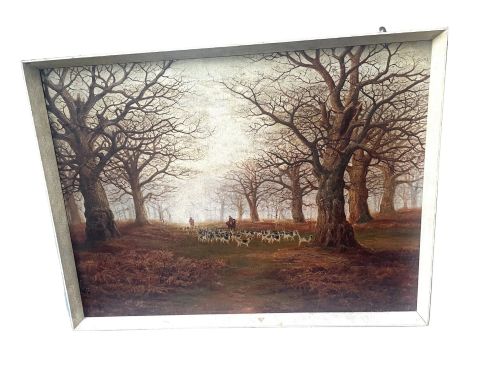
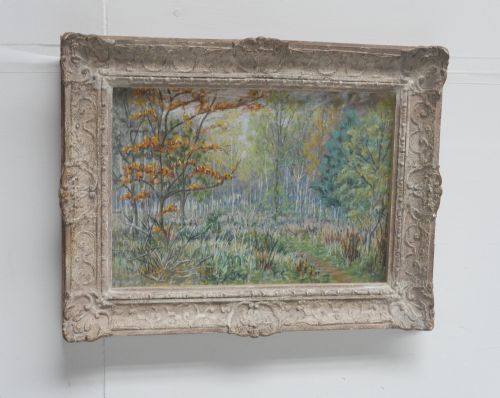
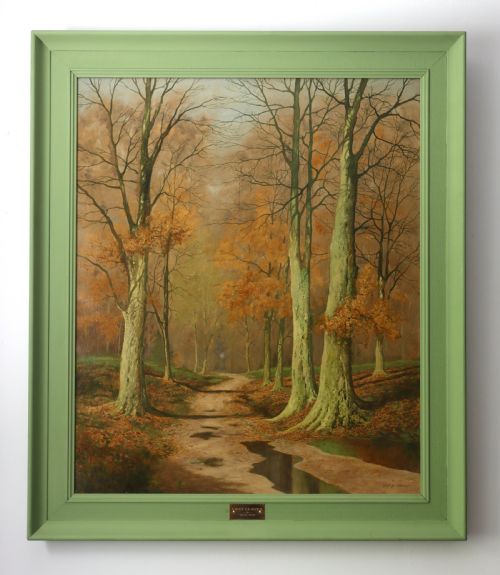
When you search for an autumn woodland painting, you are looking at works that record the changing colours of the season through woods, rivers, and countryside. These pieces span from the Victorian period through to the mid-twentieth century, capturing landscapes in oil and watercolour.
You are most likely to meet traditional realists and impressionist works on this page, framed in wood or gilded wood. The subjects range from Yorkshire river scenes to quiet forest floors painted across various decades.
How they were made
Artists worked primarily with oil on canvas and watercolour on paper, sometimes employing pastel to capture the soft light of the season. These pigments were applied to canvas or paper mounted securely within wooden or gilded frames.
The physical build relies on traditional stretching and mounting techniques suited to the period, with glass often protecting works on paper to preserve the delicate mediums used.
Autumn Woodland Painting Retail Price Guide 2026
Typical asking prices for autumn woodland painting among the pieces listed under this phrase on Sellingantiques today, from the lower quarter to the upper quarter. They describe what is for sale here now, not the wider market.
Several woodland scenes capture Yorkshire rivers, where artists clearly braved the chill of November to catch the leaves.
What varies in quality
Quality rests in the handling of light and the surety of the brushwork, separating straightforward topographical records from works with genuine atmospheric depth. The articulation of foliage and the rendering of water reveal the painter's capability.
The integrity of the original framing, particularly ornate gilded wood settings, contributes to the overall standing of a piece, alongside the preservation state of the canvas or paper surface.
Arthur Herbert Rigg·Owen Bowen·William Mellor·Walter Follen Bishop·Edmund George Warren·Charles James Adams·Ernest Higgins Rigg·Hans Kappel Øvre·Florence F Wilmot
The Autumn Woodland Painting Glossary
- Oil on canvas
- Pigment mixed with drying oil applied to a woven fabric stretched across a wooden frame. This medium allowed artists to build rich textures and deep autumnal hues.
- Watercolour on paper
- Water-soluble pigments applied to paper supports, offering translucent washes and immediate brushwork. It requires protection under glass to prevent moisture damage.
- Gilded wood
- Timber frames finished with a thin layer of gold leaf or metallic gilt. These ornate surrounds often complement the traditional subjects of the paintings.
- Pastel
- A dry drawing medium composed of powdered pigment and a binder, pressed into stick form. It produces velvety surfaces that capture soft woodland light.
- British Impressionism
- A painting style focusing on light and everyday subjects, prominent in domestic landscapes. It translates the changing seasons through broken brushstrokes.
Autumn Woodland Painting: Frequently Asked Questions
How do I date an autumn woodland painting?
Dating relies on stylistic clues, framing methods, and the recorded periods associated with the artist or medium. Victorian works often show meticulous detail, while later twentieth-century pieces adopt looser impressionist brushwork.
Examining the canvas backing, paper type, and any inscriptions on the reverse provides further confirmation of the era in which the work was created.
Where should I hang an oil painting?
Keep oil paintings away from direct sunlight and damp walls to protect both the canvas and the wooden frame. Stable indoor temperatures prevent the paint and ground layers from cracking over time.
Positioning the artwork at eye level in a room with gentle, indirect lighting allows the subtle tones of the woodland scene to be appreciated fully.
What is the difference between oil and watercolour?
Oil paint uses a drying oil binder that allows for thick application and rich, saturated colours built up in layers. Watercolour uses water-soluble pigments on paper, resulting in a lighter, more transparent finish.
Oils are typically stretched on canvas and displayed without glass, whereas watercolours require framing behind glass for physical protection.
How do I care for antique watercolours?
Watercolours on paper need protection from moisture and direct sunlight to prevent fading and paper degradation. Keeping them behind glass in a stable environment preserves the delicate pigments.
Avoid hanging them in humid spaces such as kitchens or unheated rooms where condensation might affect the paper support.