





Autumn Tree Artwork
Autumn tree artwork brings seasonal woodland colour into a room through oil, pastel and watercolour.
Autumn Tree Artwork
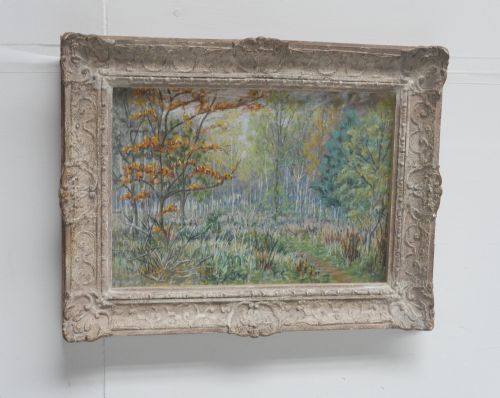
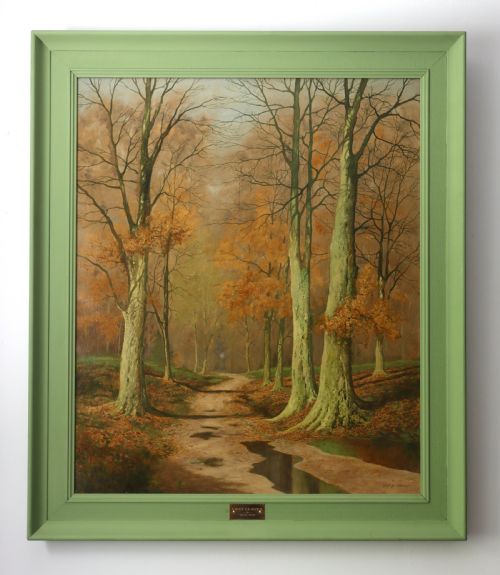
When you search for autumn tree artwork, you are looking at landscape paintings that capture woodland scenes in warmer seasonal tones. The pieces listed span from the Victorian period through to the mid-century modern era.
You are most likely to meet watercolours and oil paintings on this page, often framed under glass or stretched on canvas. These works focus heavily on British and Canadian countryside landscapes.
The objects take the form of wall art, ranging from intimate pastel woodland scenes to larger mid-century canvas paintings. Each piece records the changing foliage and rural paths of its specific period.
How they were made
Makers utilised traditional supports such as canvas, paper and wood panels to build these landscape scenes. Pigments were applied using oil paints or soft pastels to achieve rich autumn colour palettes.
Watercolour techniques allowed artists to capture transparent washes of light in woodland settings, whilst oils provided heavier texture on canvas and plaster surfaces. Protective glass was frequently employed to preserve works on paper.
Autumn Tree Artwork Retail Price Guide 2026
Typical asking prices for autumn tree artwork among the pieces listed under this phrase on Sellingantiques today, from the lower quarter to the upper quarter. They describe what is for sale here now, not the wider market.
The site listings span from the Victorian era to the mid-century modern period, using canvas, paper, wood, glass and plaster.
What varies in quality
Quality rests in the artist's ability to handle light and atmosphere within a woodland setting, distinguishing a flat record from a living landscape. The sensitivity of the brushwork or pastel stroke determines the depth of the foliage.
Materials also divide the range, from simple works on paper to substantial oil paintings on canvas framed with care. The strength of the composition anchors the stronger pieces on the page.
Samuel Timmins·Owen Bowen·Edmund George Warren·Berthe des Clayes·Charles James Adams·J McIntyre·Everett W Mellor
The Autumn Tree Artwork Glossary
- Pastel
- A dry painting medium consisting of powdered pigment and a binder, usually formed into sticks. It allows for soft blending and rich surface texture in landscape works.
- Watercolour
- A paint wherein the colourants are suspended in a water-soluble vehicle. This medium creates translucent washes that suit atmospheric skies and woodland light.
- Oil on canvas
- Pigment mixed with an oil medium and applied to stretched fabric. It remains the traditional choice for durable, textured country scenes.
- Impressionism
- A style of painting focusing on the visual impression of the moment, especially the shifting effects of light and colour. Works in this group often feature broken brushstrokes.
- Victorian Naturalism
- An artistic approach emphasising detailed observation of the natural world. Pieces from this period render trees and foliage with botanical accuracy.
Autumn Tree Artwork: Frequently Asked Questions
What periods do these paintings come from?
The selection spans from the Victorian era through the early twentieth century up to the mid-century modern period. Artists worked across several decades, capturing rural landscapes in changing styles.
Dates range across the nineteenth and twentieth centuries, reflecting shifting approaches to landscape painting in Britain and Canada.
Are these works painted on canvas or paper?
The listings include both oil paintings on canvas and works on paper using watercolour or pastel. Some pieces incorporate wood and plaster elements.
Works on paper are typically mounted under glass to protect the delicate medium from moisture and damage.
How do I hang a large oil painting?
Large oil paintings on canvas require secure picture hooks rated for the weight of the wooden stretcher frame. Ensure the wall fixings match the construction of your wall.
Position the artwork at eye level, away from direct heat sources and strong sunlight to protect the pigments.
What is the difference between watercolour and oil?
Watercolour uses water-soluble pigments on paper to create translucent, light-filled images. It requires framing behind glass for protection.
Oil paint utilises a slow-drying oil binder on canvas or wood, offering a heavier texture and a richer depth of colour.