




Autumn Tree Art
Autumn tree art captures woodland scenes and seasonal foliage across various periods from Victorian watercolours to mid-century canvases.
Autumn Tree Art
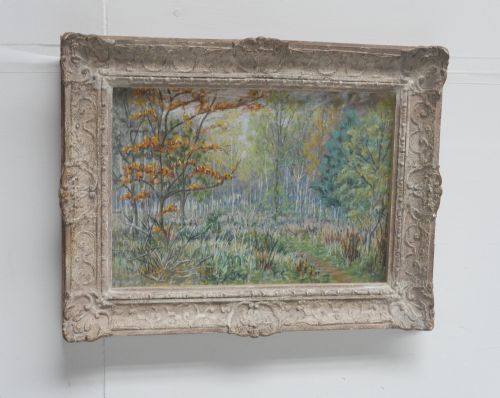
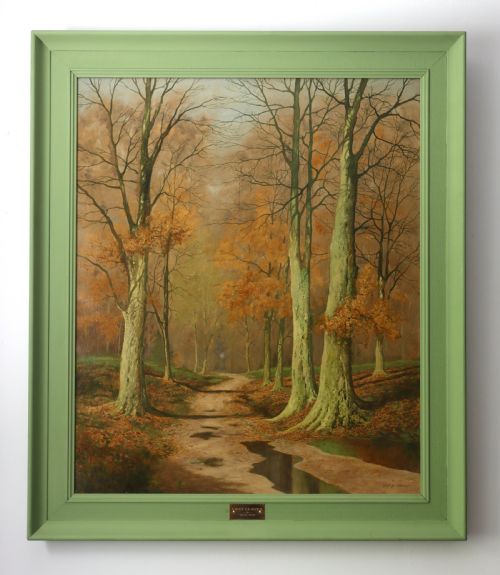
When you search for autumn tree art, you encounter landscape paintings depicting seasonal woodland scenes and country paths. The selection spans the Victorian era through to mid-century modern works.
You are most likely to meet watercolours and oil paintings on this page, capturing British and Canadian countryside landscapes. These works frequently date from the early twentieth century, alongside Victorian and post-war pieces.
The objects take the form of framed paintings and wall art executed in oil, watercolour, and pastel. They record natural settings, woodlands, and riversides during the autumn months.
How they were made
Artists utilise oil on canvas, watercolour, and pastel applied to paper or canvas supports. These traditional media capture the tonal variations of foliage and seasonal light.
Works are framed in wood, often paired with glass protection for works on paper such as watercolours and pastels. The construction reflects the framing standards of their respective periods, from Victorian mounts to mid-century mouldings.
Autumn Tree Art Retail Price Guide 2026
Typical asking prices for autumn tree art among the pieces listed under this phrase on Sellingantiques today, from the lower quarter to the upper quarter. They describe what is for sale here now, not the wider market.
Samuel Timmins managed to paint the Staffordshire countryside while living through five separate decades of artistic change.
What varies in quality
Quality rests in the handling of light and the atmospheric depiction of woodland scenery by named artists versus anonymous hands. Finer examples demonstrate confident brushwork in oils or delicate control in watercolour.
The depth of composition and the fidelity of the seasonal palette separate standard decorative pieces from accomplished landscape art. Provenance and attribution to listed painters elevate the standing of individual works.
Samuel Timmins·George Graham·Owen Bowen·Edmund George Warren·Berthe des Clayes·Charles James Adams·J McIntyre·Everett W Mellor
The Autumn Tree Art Glossary
- Watercolour
- A painting method where fine pigment is suspended in water-based solution, typically applied to paper. It offers translucent washes suitable for subtle atmospheric effects in landscape scenes.
- Pastel
- A dry medium composed of powdered pigment and a binder, formed into sticks. It permits rapid application of rich colour and soft blending, frequently utilised for woodland sketches.
- Impressionism
- An art style focused on accurate depiction of light in its changing qualities, visible in British and Canadian works here. It prioritises open brushwork and ordinary subject matter.
- Provenance
- The documented history of ownership of an artwork, establishing its authenticity. It links a piece to its creator or original exhibition.
Autumn Tree Art: Frequently Asked Questions
What periods do these paintings cover?
The selection spans from the Victorian era into the mid-twentieth century, including the 1900s, 1910s, 1920s, 1930s, 1950s, and 1960s.
These dates reflect changing artistic movements such as British Impressionism, Art Deco, and mid-century modern styles.
Which materials are most common?
Paintings appear primarily in oil on canvas, watercolour on paper, and pastel.
Support materials include wood frames, glass glazing for works on paper, and canvas stretched over wooden frames.
Where were these landscapes painted?
The subjects record countryside locations primarily in Britain, including Staffordshire and Yorkshire river scenes, alongside Canadian landscapes.
Artists set up their easels outdoors or worked from field studies to capture woodland paths and seasonal foliage.
How should I care for watercolours?
Works on paper require protection from direct sunlight to prevent fading of watercolours and pastel pigments.
Display them away from high humidity and ensure they remain behind protective glass with appropriate acid-free mounting.