






Autumn Scene Artwork
Autumn scene artwork captures the turning foliage and cooling rivers of the season through oils, watercolours, and pastels.
Autumn Scene Artwork
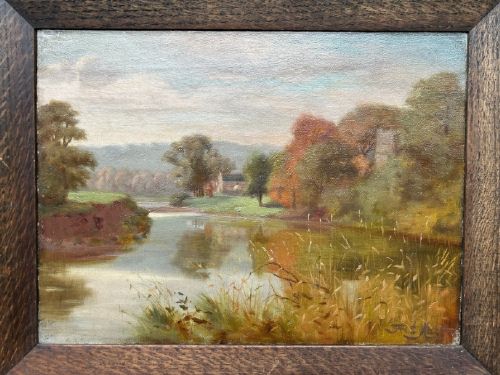
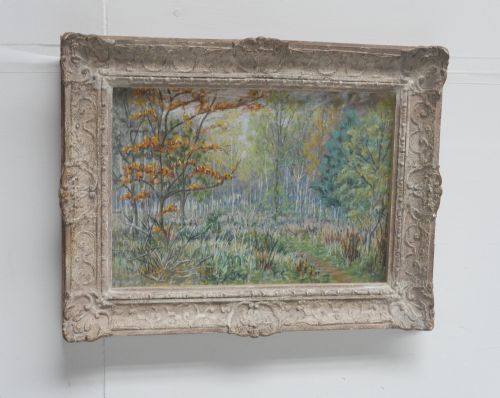
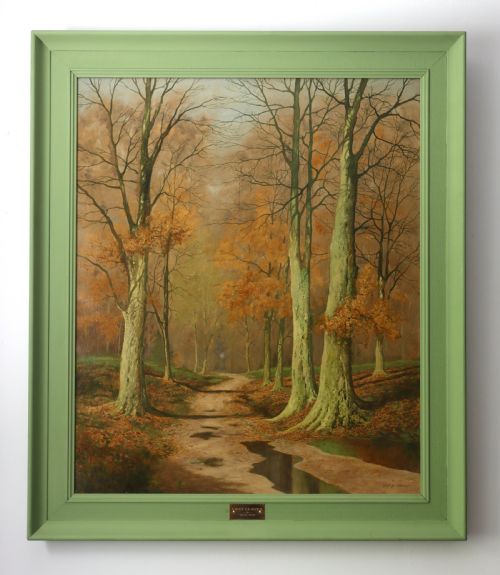
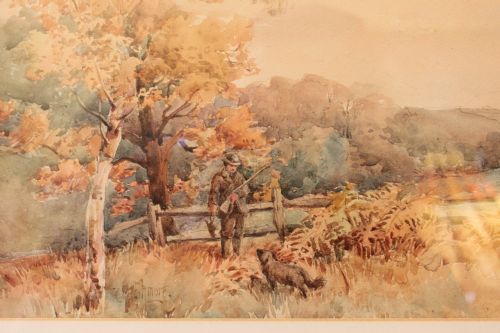
An autumn scene artwork brings together seasonal landscapes rendered in oil on canvas, wood panel, watercolour, and pastel. These pieces span from the late nineteenth century through the Victorian period, Art Deco years, and mid-century modern eras.
The most common examples on this page are British landscape paintings depicting rivers, woodlands, and country houses during the autumn months. Works range from intimate watercolours on paper to large oil paintings housed in traditional frames.
Materials and techniques
Artists deployed oil paint upon stretched canvas or wooden panels, building rich impasto layers to capture the texture of woodland foliage. Watercolour and pastel on paper offered a lighter touch for atmospheric country scenes and river views.
Makers applied pigments with brushwork characteristic of British Impressionism and Victorian realism, registering light through naturalistic colour palettes. Frames of wood and glass protected these works while completing the presentation.
Autumn Scene Artwork Retail Price Guide 2026
Typical asking prices for autumn scene artwork among the pieces listed under this phrase on Sellingantiques today, from the lower quarter to the upper quarter. They describe what is for sale here now, not the wider market.
Listings span from the 1870s through the mid-twentieth century, featuring oil paints, watercolours, and pastels on wood, canvas, and paper.
Distinctions in quality
Quality rests upon the artist's handling of light and seasonal tone, where assured brushwork brings depth to woodland canopies and river reflections. Strong compositions anchor the landscape rather than relying on formulaic formulas.
The integrity of the medium, whether stable oil on canvas or vibrant pastel on paper, determines the preservation of the piece. Signatures and documented attributions to known painters elevate the standing of individual works.
Frederick Marriott·Samuel Timmins·Arthur Herbert Rigg·Walter Follen Bishop·Edmund George Warren·Berthe des Clayes·Robert Lesley Howey·Charles James Adams·Ernest Moore·Augustus William Ennes·Everett Watson Mellor·Charles Ashmore
The Autumn Scene Artwork Glossary
- Oil on canvas
- Pigments bound in drying oil applied to a woven fabric support. This technique allows for deep colour saturation and layered textures.
- Watercolour
- Paint consisting of colour suspended in a water-soluble binder, traditionally applied to paper. It yields translucent washes well suited to atmospheric landscapes.
- Pastel
- A dry painting medium in the form of a stick, consisting of pure powdered pigment and a binder. It produces velvety surfaces with soft tonal transitions.
- Wood panel
- A rigid wooden support used by painters prior to or alongside stretched canvas. Panels offer a firm base for detailed brushwork.
- Impressionism
- A style of painting that focuses on the visual impression of the moment, particularly regarding shifting light and natural colours. Artists utilise visible brushstrokes to convey immediate atmosphere.
Autumn Scene Artwork: Frequently Asked Questions
What subjects appear in autumn scene artwork?
These works focus primarily on British countryside landscapes, including rivers, woodlands, country houses, and rural roads during the autumn months.
Scenes often incorporate specific locations such as Yorkshire riversides, Durham cathedral, and Staffordshire lanes alongside generalised woodland views.
How should I hang and display these paintings?
Protect paintings and watercolours from direct sunlight to prevent fading of oil pigments and paper supports. Maintain stable indoor humidity levels to preserve wood panels and canvas integrity.
Framing with appropriate glass is particularly important for watercolours and pastels on paper to shield the delicate mediums from atmospheric moisture.
How do I identify the period of a piece?
Dating relies on stylistic markers such as Victorian naturalism, British Impressionist brushwork, or Art Deco linear elements. Frame construction, canvas stamps, and artist signatures also provide chronological reference points.
Examining the back of the canvas or wooden panel often reveals period labels, artist inscriptions, or old gallery stamps.
What is the difference between oil and watercolour?
Oils use pigment suspended in drying oil on canvas or wood, creating rich textures and deep colour layering. Watercolours employ water-soluble pigments on paper, offering a luminous, translucent quality.
Oils are generally more robust and traditionally housed in heavy frames, whereas watercolours require glass protection against dust and moisture.