





Austrian Ceramic Sculpture
These robust Austrian ceramic sculpture works bring vivid character into a room, spanning the expressive styles of the late nineteenth and early twentieth centuries.
Austrian Ceramic Sculpture
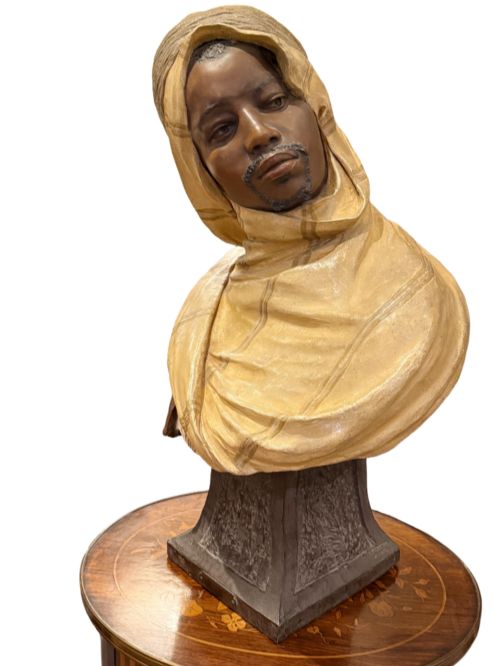
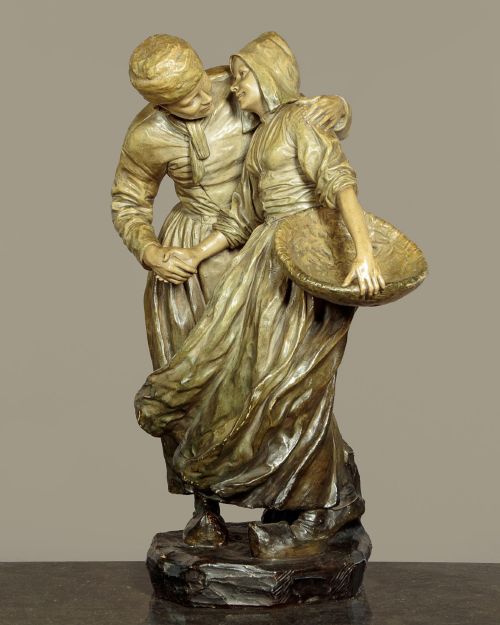
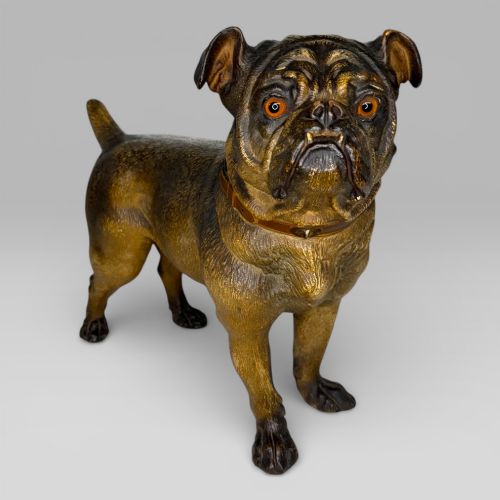
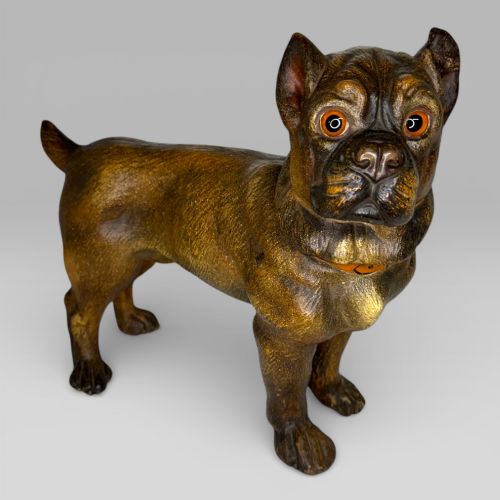
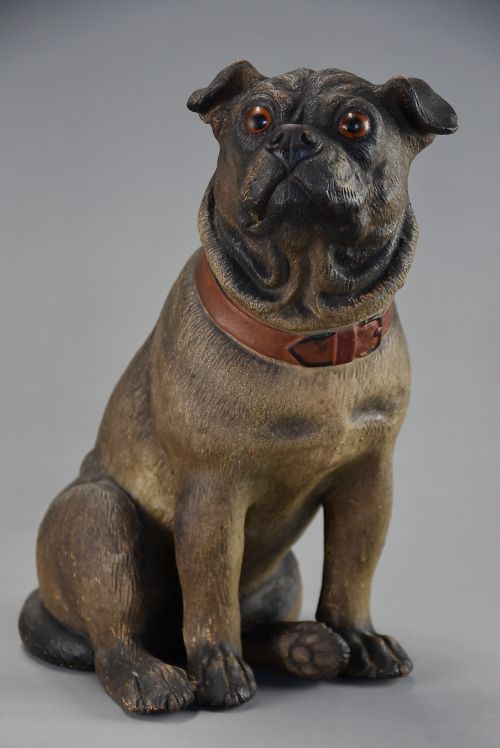
When you search for austrian ceramic sculpture, you encounter a diverse range of figurative works, portrait busts, wall plaques, and sculptural groups originating from central European workshops. The selection frequently includes detailed depictions of human figures, mythological subjects, animal studies such as life-size pugs, and decorative spill vases.
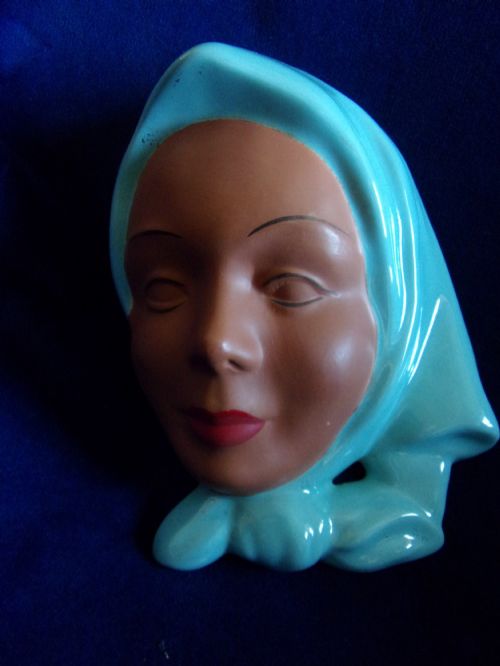
The objects span from the late nineteenth century into the 1930s, capturing distinct stylistic shifts from classical revivals and Orientalism into flowing Art Nouveau lines and geometric Art Deco forms. Human subjects range from classical Roman figures and religious saints to regional types like Moroccan men, gauchos, and country maidens.
Production methods across these decades favoured hand-finished earthenware and terracotta, often enriched with polychrome pigment, bronze slip, or gilt highlights. Larger pieces, such as life-size animal sculptures or substantial wall masques, demonstrate the ambition of major Viennese potteries in creating commanding decorative statements.
Materials and techniques
Surface finish defines much of the visual character, utilising polychrome paints, bronzed slip, and subtle gilt accents to articulate clothing, hair, and facial expressions. Earthenware and porcelain pastes allowed artists to achieve smooth, sweeping contours particularly prized in Art Nouveau designs.
Austrian Ceramic Sculpture Retail Price Guide 2026
Typical asking prices for austrian ceramic sculpture among the pieces listed under this phrase on Sellingantiques today, from the lower quarter to the upper quarter. They describe what is for sale here now, not the wider market.
Figurative works range from classical Roman subjects and religious saints to regional genre figures and domestic animals.
Distinctions in quality
Quality rests significantly on the crispness of the original modelling and the subtlety of the hand-painted polychrome or bronzed surface finish. Pieces bearing documented factory signatures or known artist collaborations generally display superior depth in facial expression and anatomical precision.
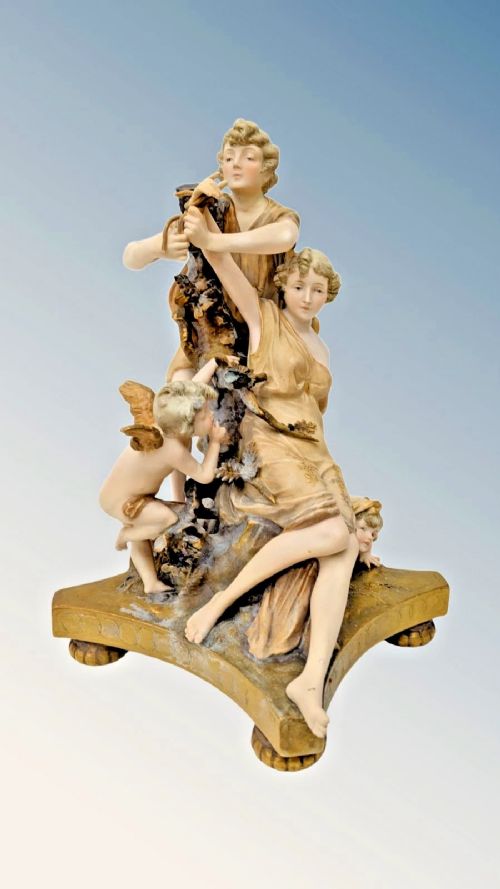
The ambition of the form also dictates standing, moving from smaller functional items like spill vases to substantial life-size animal figures or large gallery-scale portrait busts. Intricate multi-figure groups like pastoral or mythological pairings require high technical mastery during the kiln-firing process.
Goldscheider·Ernst Wahliss·Bernard Bloch·Gmundner·Ernst Wallace
The Austrian Ceramic Sculpture Glossary
- Terracotta
- A porous fired clay body that serves as the foundation for many figurative sculptures and large animal models. It takes fine detail well and is typically finished with pigmented slips or paints.
- Slip cast
- A manufacturing technique where liquid clay slip is poured into a plaster mould to create hollow ceramic figures with uniform walls. This method enabled efficient production of complex sculptural forms.
- Wall masque
- A decorative sculptural relief designed to be hung on a wall, often depicting a human face framed by flowing hair or botanical motifs. These pieces are strongly associated with Art Nouveau interiors.
- Polychrome
- The application of multiple distinct colours to the surface of a ceramic or terracotta sculpture. It brings realism and tactile depth to garments, skin tones, and background elements.
Austrian Ceramic Sculpture: Frequently Asked Questions
What periods do these sculptures cover?
The available selection primarily covers the late nineteenth century up through the Art Deco era of the 1930s. The majority cluster around the turn of the twentieth century during the height of Art Nouveau production in Vienna.
Earlier examples often lean towards classical revivals and Orientalist themes, while later pieces adopt streamlined modernist geometries.
Where were these ceramic figures made?
These works originated in Austria, with a strong concentration of major factories and workshops based in and around Vienna. Famous firms like Goldscheider and Ernst Wahliss operated prominent studios there.
Other regional potteries contributed distinct regional styles, ranging from domestic animal studies to large architectural wall masques.
What is a spill vase?
A spill vase is a decorative ceramic holder designed to store thin wooden spills used for lighting candles, pipes, or hearth fires. They often integrated figurative sculpture or floral motifs into their upright vessel design.
In Austrian ceramics, these utilitarian objects were elevated into artistic display pieces combining practicality with expressive modelling.