

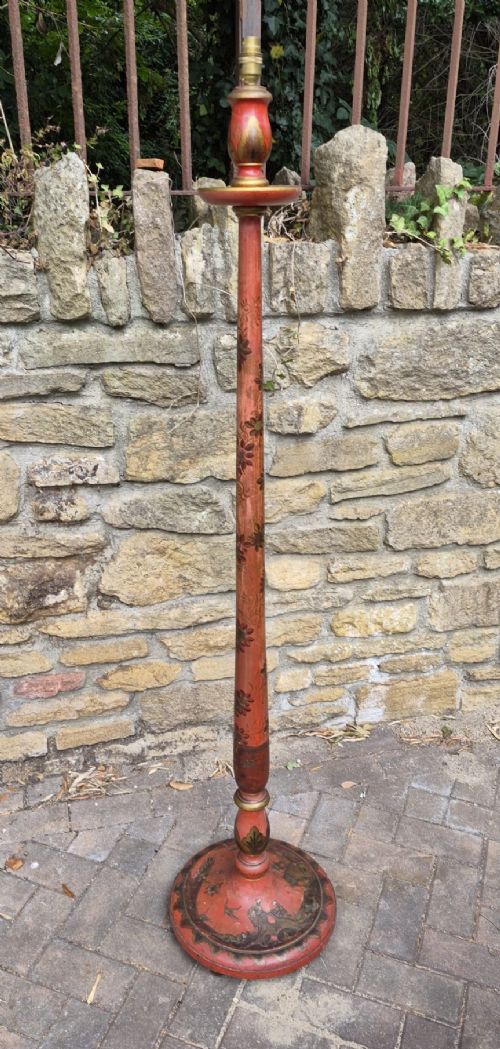


Asian Standard Lamp
These asian standard lamp pieces bring distinctive period character to a room, combining traditional oriental styles with practical illumination.
Asian Standard Lamp
An asian standard lamp provides elevated lighting through tall floor-standing designs rooted in eastern decorative traditions. These pieces combine functional illumination with the visual presence of traditional oriental furnishings.
The selection ranges from early twentieth-century examples to nineteenth-century forms. Common styles include Chinoiserie, Tibetan, and Chinese Qing interpretations that bring distinct cultural motifs into domestic spaces.
Forms vary from straightforward floor lamps to converted lantern stands and extending designs. Examples often feature hand-painted surfaces, carved details, or lacquered finishes appropriate for principal living areas.
How they were made
Construction relies heavily on dense timbers such as padauk and hardwood, alongside traditional lacquered wood. Carpenters shaped these materials into sturdy shafts and bases capable of supporting tall light fittings.
Surface decoration frequently involves layers of red or black lacquer, complemented by paint and gilt highlights. Some examples incorporate metal elements, including copper horns and brass fittings, alongside fabric components.
Asian Standard Lamp Retail Price Guide 2026
Typical asking prices for asian standard lamp among the pieces listed under this phrase on Sellingantiques today, from the lower quarter to the upper quarter. They describe what is for sale here now, not the wider market.
Current listings demonstrate a concentration of pieces from the Edwardian era through the nineteen-thirties, utilising lacquer, paint, and hardwoods.
What varies in quality
Quality rests upon the depth and execution of the decorative work, particularly the finesse of Chinoiserie painting and carved wood details. Finer examples display precise carving on dragon lantern stands or smooth, well-preserved lacquered surfaces.
The choice of primary material also dictates the standard of the piece, with dense exotic hardwoods and specialised metalwork marking out more ambitious production. Structural integrity in the extending mechanisms and shafts separates standard production from superior items.
The Asian Standard Lamp Glossary
- Chinoiserie
- European interpretation of Chinese and East Asian artistic traditions. This style frequently employs lacquered surfaces, painted motifs, and gilt decoration on furniture and lighting.
- Padauk
- A dense, durable tropical hardwood noted for its rich reddish-brown colour. It provides a solid foundation for carved oriental furniture and standard lamps.
- Lantern Stand
- A traditional piece adapted to hold modern lighting. These forms often feature intricate carving and elevated platforms designed originally for ceremonial or domestic lanterns.
- Lacquer
- A durable resin finish applied in multiple layers to wood. It creates a smooth, glossy surface that is often decorated with paint or gold leaf.
Asian Standard Lamp: Frequently Asked Questions
Where should I place an asian standard lamp?
These lamps suit living rooms, studies, or corners where height and ambient lighting are beneficial. Their decorative presence allows them to function as focal points within traditional or eclectic interior schemes.
Position them near seating areas to provide effective task or reading light while showcasing the carved woodwork and painted finishes.
How do I date an asian standard lamp?
Dating relies on stylistic markers, construction methods, and materials recorded in the specific piece. Edwardian and early twentieth-century examples often show distinct transitional wiring channels and specific lacquer formulations compared to nineteenth-century items.
Examine the wood patina, the style of any painted Chinoiserie motifs, and the type of base construction to help establish the period of manufacture.
What styles are common in these lamps?
The category encompasses Chinoiserie, Tibetan, and general Chinese aesthetic influences. Pieces range from red lacquered floor lamps to carved hardwood dragon lantern stands.
Understanding these distinct stylistic traditions helps identify whether a piece leans towards British interpretations of oriental design or direct historical imports.
Can these lamps handle modern electrical standards?
Most period lamps require inspection and potential rewiring by a qualified professional to meet current safety standards. Adapting older wiring ensures the lamp is safe for daily home use.
Consult an electrician to ensure that the internal fittings and cords comply with modern regulations without compromising the historic structure of the lamp.