





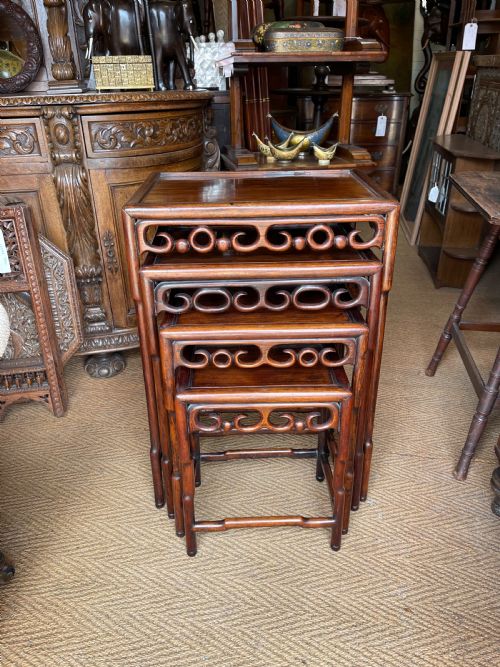

Asian Nesting Tables
Asian nesting tables are sets of graduated occasional furniture designed to slide neatly together, offering surface space that vanishes when not needed.
Asian Nesting Tables
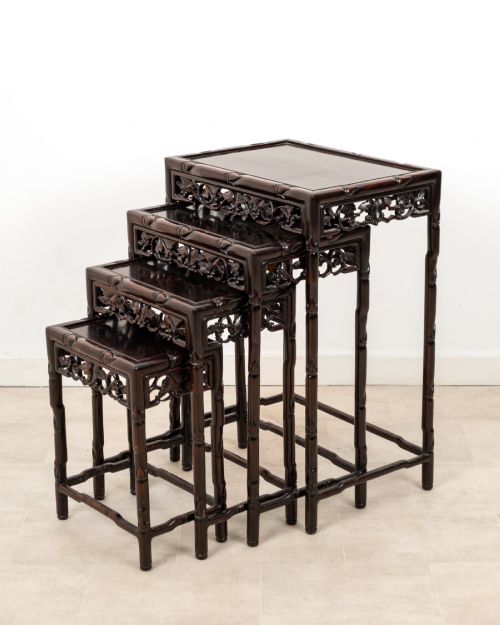
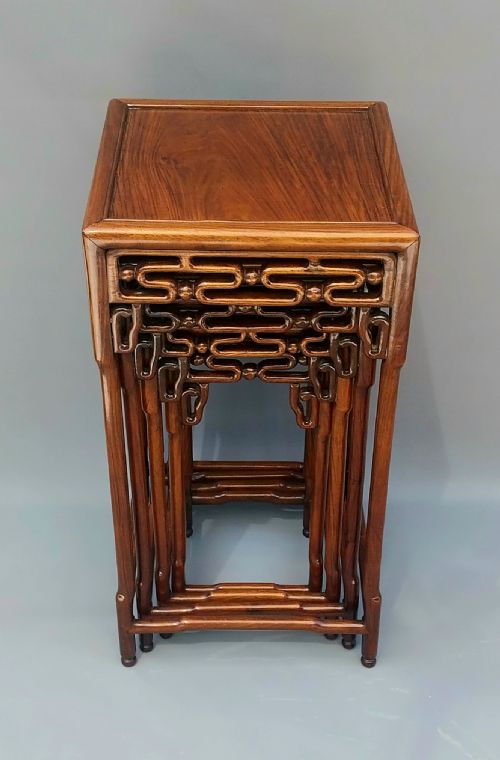
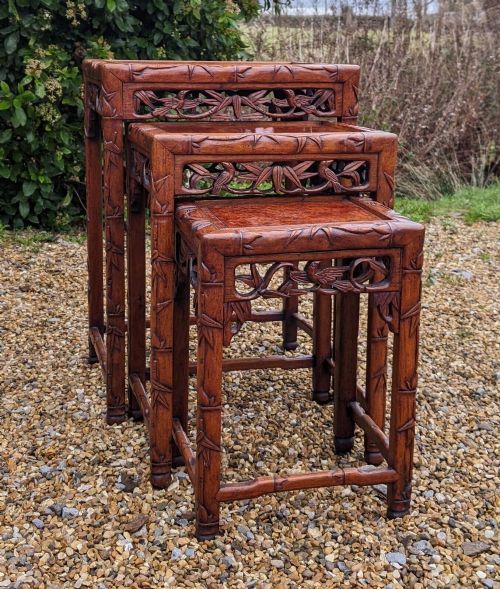
Asian nesting tables are multi-tiered sets typically comprising three or four graduated surfaces designed to slide neatly inside one another. When you search for asian nesting tables, you encounter pieces that serve multiple rooms, functioning easily as side tables, occasional coffee tables, or individual tea surfaces.
The selections span distinct periods including the nineteenth century, Victorian era, and early twentieth-century decades like 1900, 1910, 1920, and 1930. Forms range from traditional sets of four through to smaller configurations of three.
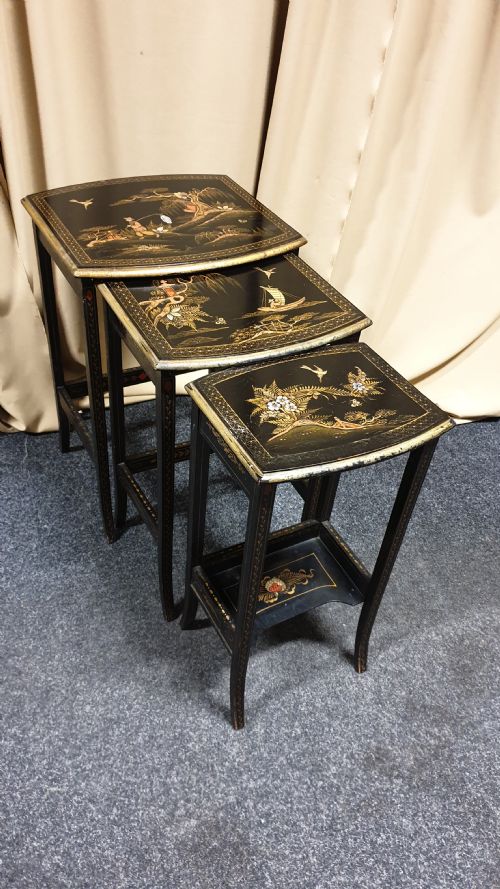
Origins and styling reflect diverse traditions, including Chinese Export, Qing Dynasty, Late Qing Dynasty, Chinoiserie, and Art Deco. These pieces blend utilitarian stacking capability with decorative carved wood surfaces.
Materials and Construction
Makers utilised dense timbers such as hardwood, rosewood, teak, hongmu, and huanghuali wood to construct durable frames capable of enduring repeated sliding. Burrwood also appears in select surfaces, adding distinctive grain patterns to the timber panels.
Carving serves as the primary decorative technique across the wooden frames, alongside smooth lacquered wood finishes. Certain Art Deco variations incorporate specific animal motifs like elephants into the carved woodwork.
Asian Nesting Tables Retail Price Guide 2026
Typical asking prices for asian nesting tables among the pieces listed under this phrase on Sellingantiques today, from the lower quarter to the upper quarter. They describe what is for sale here now, not the wider market.
Some Art Deco teak sets abandon floral motifs entirely in favour of hardworking elephants carved directly into the wood.
Assessing Quality and Craftsmanship
Quality rests significantly on the density and grain of the timber selected, with dense hardwoods like huanghuali and hongmu offering superior weight and durability compared to standard woods. The depth and crispness of the carving distinguish finer examples from simpler production.
The engineering of the gradations dictates how smoothly the tables slide into one another, ensuring a snug fit when stacked. Uniformity in colour and the preservation of natural grain patterns elevate the desirability of individual sets.
The Asian Nesting Tables Glossary
- Graduated
- Describing tables of decreasing dimensions designed to fit sequentially beneath one another. This allows the entire set to occupy the floor space of just the largest table.
- Hongmu
- A traditional Chinese term for dense hardwoods, frequently translated as red wood. It encompasses various heavy, dark timbers favoured for fine furniture.
- Quartetto
- A set of four pieces designed to be used together. The term often applies specifically to sets of four graduating occasional tables.
- Chinoiserie
- European decorative style reflecting Chinese artistic traditions. It appears on furniture produced for Western export markets during various historical periods.
Asian Nesting Tables: Frequently Asked Questions
How were asian nesting tables originally used?
These tables provided flexible surface space in traditional homes, deployed for serving tea, holding scholars' objects, or displaying decorative items.
Because they stack together tightly, households could store multiple tables in a corner and pull them out individually only when guests arrived.
What woods are typical for these tables?
Asian nesting tables frequently utilise dense exotic hardwoods such as rosewood, hongmu, teak, and huanghuali wood. These heavy timbers provided the structural stability required for frequent sliding and stacking.
Selected pieces also incorporate lacquered wood finishes or burrwood panels to enhance the visual texture of the top surfaces.
How do I distinguish between periods?
Nineteenth-century and Qing Dynasty examples often feature deep, traditional hand-carving and heavier hongmu or rosewood construction. Pieces from the 1920s and 1930s sometimes display Art Deco influences or distinct motifs like carved elephants.
Examining the joinery, timber weight, and stylistic motifs helps narrow down whether a set originates from the Victorian era or early twentieth century.
Are all sets made of four tables?
While sets of four are the most common configuration found in Asian nesting tables, sets of three also appear regularly in various materials. Both configurations use graduated dimensions so the smaller tables slide completely under the largest one.