



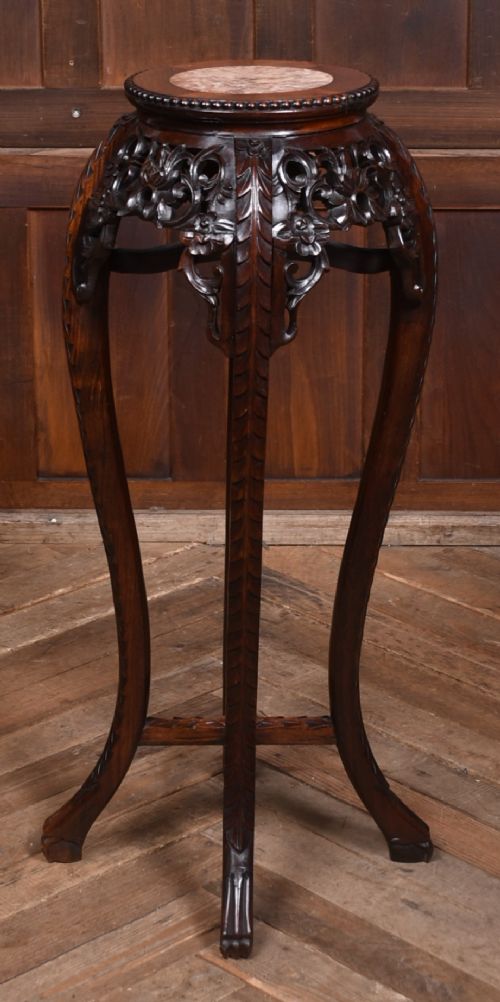


Asian Jardiniere Stand
An asian jardiniere stand holds heavy planters and decorative vessels, bringing substantial timber and stone into a room.
Asian Jardiniere Stand
An asian jardiniere stand is typically encountered as a sturdy timber table designed to elevate heavy planters, vases, and urns. The search phrase covers functional furniture pieces produced to display botanical displays within interior spaces.
Most examples appearing in current listings date from the nineteenth century, including the Victorian era and the Meiji period. These items originate from Chinese and Japanese workshops, reflecting traditional craftsmanship of those regions.
Common forms include low vase stands, tall plant supports, and occasional side tables with inset tops. They serve primarily to lift large ceramic planters or decorative objects off the floor for better visibility.
Materials and construction
Makers utilised dense timbers such as hardwood, rosewood, padouk, and ebonised wood to support heavy loads without buckling. These dark woods often received carved decoration depicting natural motifs, floral patterns, or traditional symbols.
Many surviving examples incorporate inset marble panels into the top surface to provide a cool, stable platform for wet pots and heavy porcelain vessels. Lacquer finishes and mother-of-pearl inlay occasionally appear to add decorative contrast to the dark grain.
Asian Jardiniere Stand Retail Price Guide 2026
Typical asking prices for asian jardiniere stand among the pieces listed under this phrase on Sellingantiques today, from the lower quarter to the upper quarter. They describe what is for sale here now, not the wider market.
Several stands double happily as emergency perches for very small, very determined house cats.
Factors determining quality
The density and selection of the timber dictate the structural integrity and weight of the stand. Superior pieces utilise heavy tropical hardwoods or padouk rather than lighter secondary timbers, ensuring stability under substantial ceramic loads.
The crispness and depth of the hand carving separate standard production from superior craftsmanship. Finely fitted marble inserts and precise joinery without excessive metal fasteners indicate higher workshop standards.
The Asian Jardiniere Stand Glossary
- Jardiniere
- A large ornamental pot or planter designed to hold growing plants. It sits atop a dedicated stand.
- Padouk
- A heavy, durable tropical hardwood prized for its rich colour and strength. It frequently appears in traditional furniture.
- Hongmu
- A category of dense Asian hardwoods often translated as red wood. It is utilised for high-status carved furnishings.
- Meiji Period
- The era in Japanese history spanning from eighteen sixty-eight to nineteen twelve. Pieces from this time often display intricate carved detailing.
- Qing Dynasty
- The final imperial dynasty of China, lasting from sixteen forty-four to nineteen twelve. Many surviving decorative stands date from its later decades.
Asian Jardiniere Stand: Frequently Asked Questions
What is an asian jardiniere stand used for?
These pieces were built to elevate heavy ceramic planters and decorative vases above floor level. They protect delicate flooring from moisture and display botanical arrangements at a more visible height.
Today, they function equally well as small side tables, lamp stands, or pedestals for sculptures and decorative objects.
How do I care for hardwood and marble tops?
Maintain the timber by dusting regularly and occasionally applying a suitable furniture wax to nourish the grain. Avoid placing untreated wet pots directly onto the wood surface to prevent water rings.
Clean the inset marble panels with a damp cloth and mild soap, avoiding harsh chemical cleaners that might etch or dull the polished stone surface.
How do I distinguish Chinese from Japanese stands?
Chinese stands often feature dense hardwoods like padouk or rosewood with deep, ornate carvings of dragons, foliage, or geometric borders. Qing Dynasty examples frequently incorporate marble inserts.
Japanese pieces from the Meiji period may utilise lacquered finishes or distinct wood-working traditions associated with specific regional workshops active during that era.
Can these stands support heavy modern planters?
Most of these tables were constructed from dense tropical hardwoods specifically engineered to bear the weight of large ceramic vessels filled with soil and water. Their robust joinery handles significant vertical loads.
It remains wise to check the overall stability of the joints and the integrity of the marble or timber top before placing exceptionally heavy objects on them.