


Asian Hardwood Display Cabinet
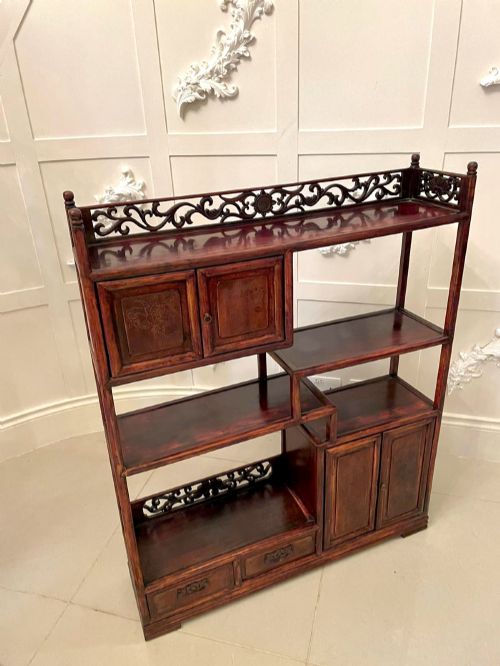
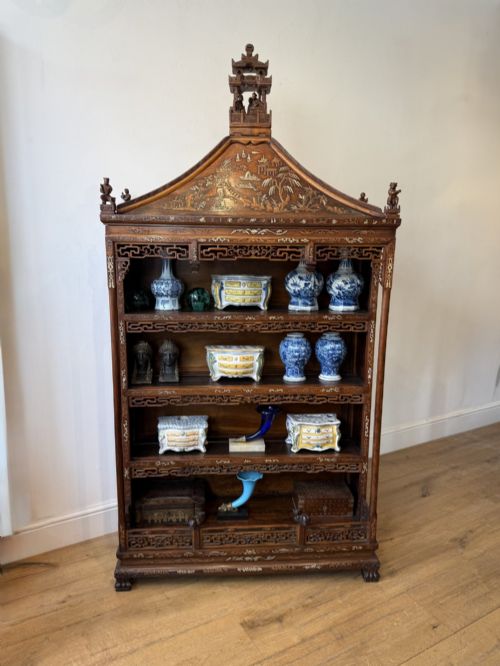
An asian hardwood display cabinet brings intricate carving and rich timber into a room, designed to showcase porcelain and curios.
Asian Hardwood Display Cabinet
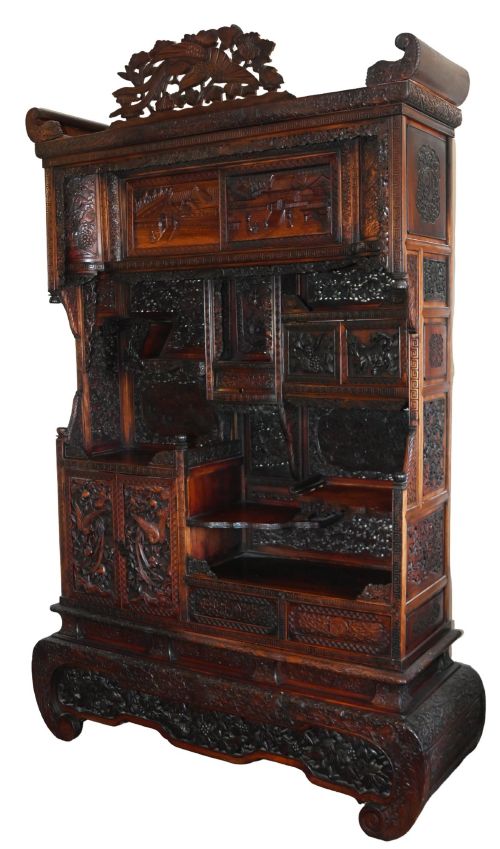
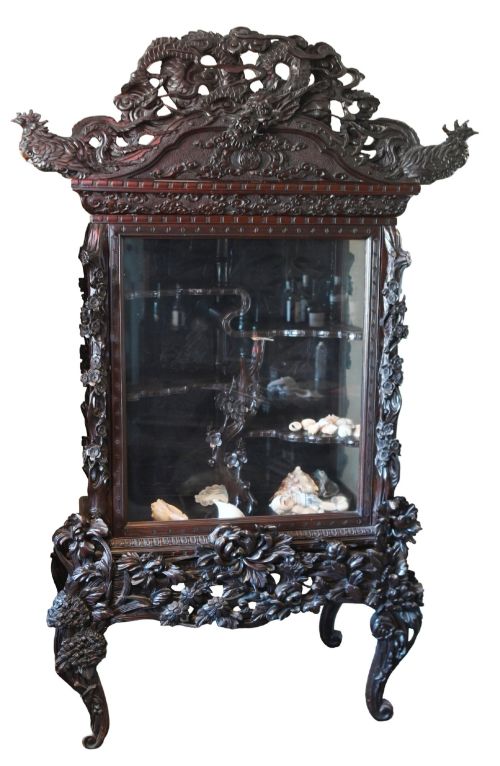
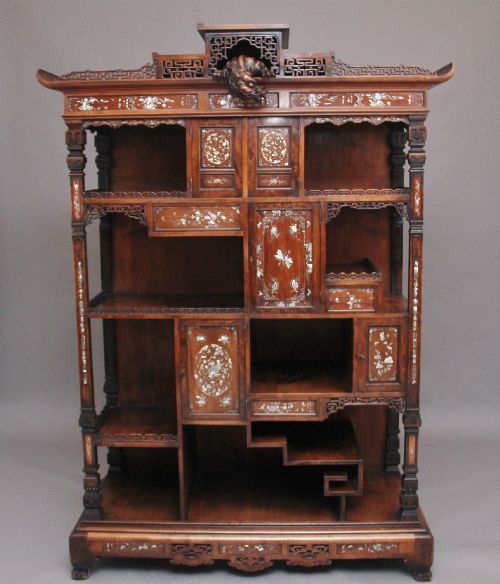
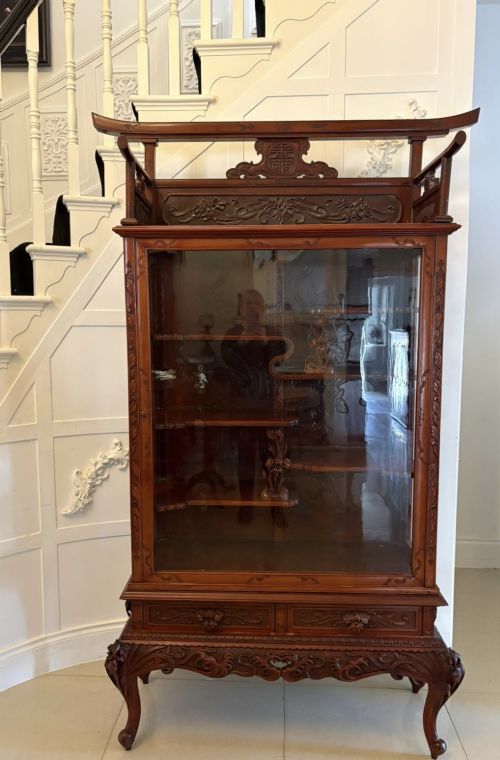
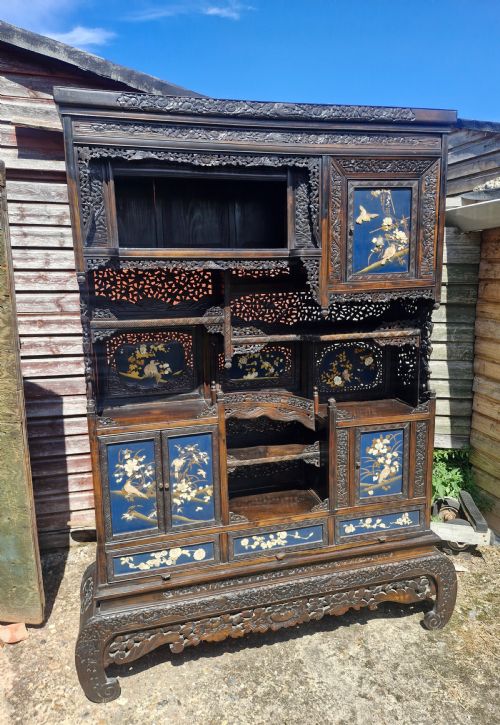
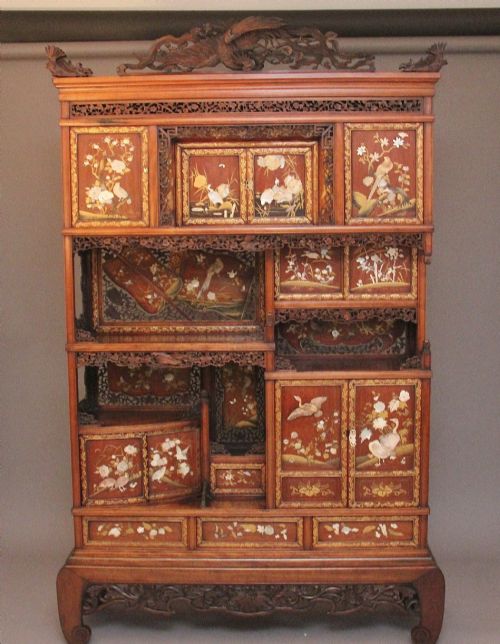
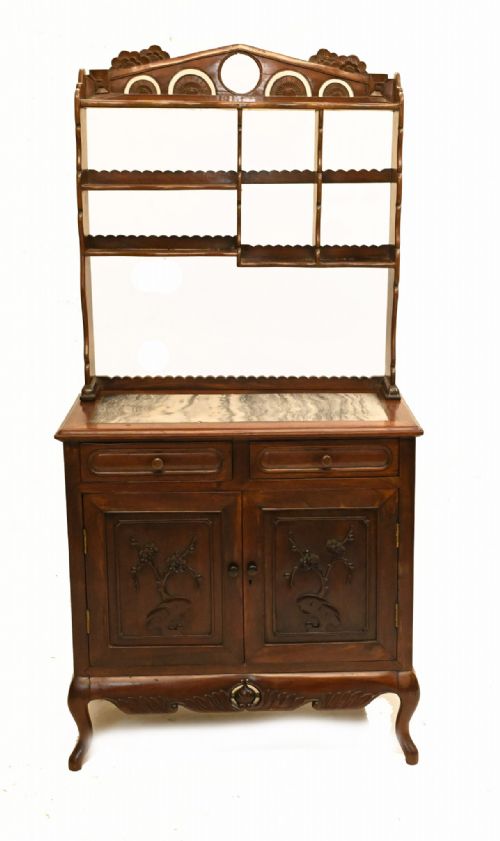
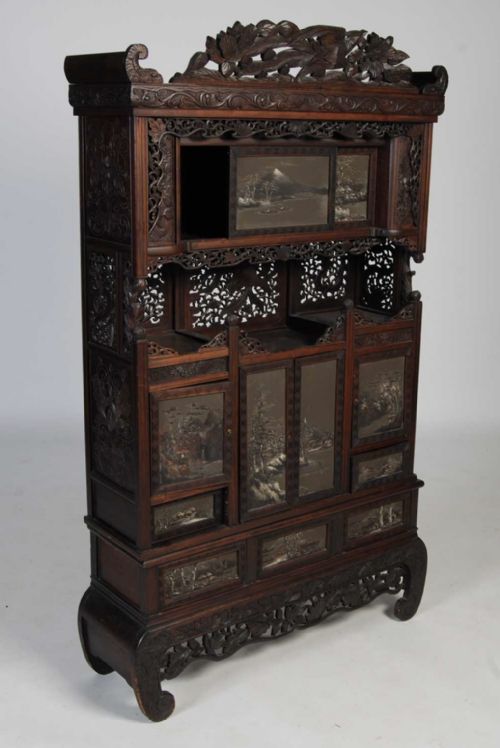
An asian hardwood display cabinet groups together items originating from Chinese and Japanese workshops, primarily spanning the nineteenth century. Buyers encountering this phrase will find forms ranging from multi-tiered Japanese shodana cabinets to carved Chinese glazed cupboards.
The material selection leans heavily toward dense timber such as hongmu and rosewood, often paired with glass panels or open shelving. Pieces frequently reflect stylistic periods including the Qing Dynasty and the Japanese Meiji period.
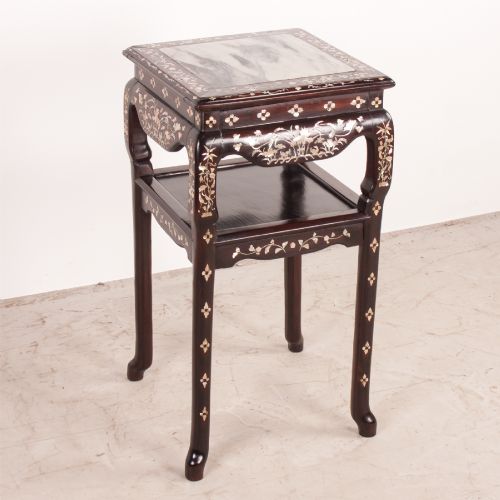
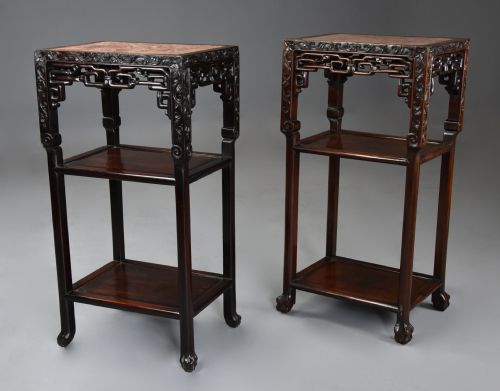
Objects on this page also encompass related forms like pot stands and occasional tables alongside standard display furniture. Construction dates cluster predominantly in the Victorian era and the late nineteenth century.
Variations in quality and execution
The depth and crispness of the carved ornamentation separate standard production from superior pieces. Profusely carved surfaces require skilled handwork to maintain clean lines across dense timber.
The integration of decorative inlays such as mother-of-pearl and bone dictates the refinement of an object. Better examples demonstrate precise fitting within the hardwood grain without visible gaps.
Several cabinets conceal tiny compartments behind sliding panels, originally intended for secret letters or miniature treasures.
The Asian Hardwood Display Cabinet Glossary
- Shodana
- A Japanese tabletop or freestanding display cabinet featuring staggered shelving and cupboards. These pieces typically date from the Meiji period.
- Hongmu
- A traditional Chinese term denoting dense, dark hardwoods used for fine furniture. It translates literally to red wood.
- Qing Dynasty
- The final imperial dynasty of China, spanning from sixteen forty-four to nineteen twelve. Furniture from this era often exhibits deep relief carving.
- Meiji Period
- The era of Japanese history lasting from eighteen sixty-eight to nineteen twelve. Cabinets from this time often incorporate complex asymmetrical compartments.
Asian Hardwood Display Cabinet: Frequently Asked Questions
What is a shodana cabinet?
A shodana is a traditional Japanese display cabinet featuring asymmetrical shelving, sliding doors and small cupboards. These pieces were constructed during the Meiji period for displaying small art objects.
The multi-tiered layout allows for varied arrangements of ceramics and bronzes. They function well as focal points in a modern interior.
How do I date Chinese hardwood furniture?
Dating relies upon stylistic markers, timber species and construction techniques observed across nineteenth-century examples. Qing Dynasty influences and Victorian-era documentation often help narrow the timeframe.
Changes in carving depth and hardware design provide further clues. Examination of the interior joinery confirms the manufacturing period.
Where should I place a display cabinet?
These cabinets suit living spaces or studies where they can house collections away from direct sunlight. Freestanding floor models require stable flooring to support their dense timber weight.
Smaller tabletop versions sit comfortably on sideboards or dedicated tables. Ensure adequate clearance for opening glazed or panelled doors.
What woods were used in these cabinets?
Maker workshops utilised dense tropical hardwoods including hongmu and rosewood for structural stability and dark colouration. Lacquer finishes also appear on specific Japanese export pieces.
Secondary materials include marble inserts for tabletops and brass for hinges. Mother-of-pearl and bone provide decorative contrast against the dark timber.